

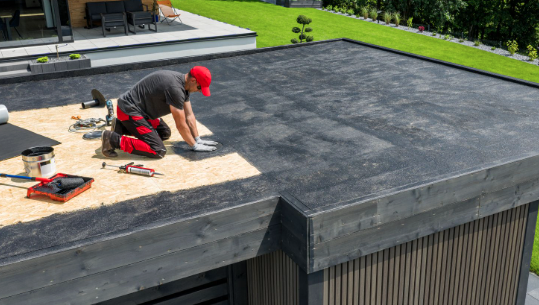
Garden rooms with flat roofs have become increasingly popular across the UK. Their clean, modern lines complement contemporary homes while offering practical advantages over pitched roof designs. But flat roofs come with one important consideration that every buyer should understand: water management.
This article explains why water management matters for flat roof garden rooms and how modern solutions keep these buildings dry, functional, and long lasting.
Why Flat Roofs Need Special Attention
Despite the name, flat roofs are never truly flat. They have a slight slope, usually between one and five degrees, that encourages water to drain away. Without this gradient, rainwater would pool on the surface, eventually finding its way through any weakness in the waterproofing.
Traditional flat roofs earned a poor reputation in the past. Older buildings with inadequate drainage and substandard materials often developed leaks. But modern flat roof construction has moved far beyond these problems. Today’s garden rooms use advanced membranes, proper drainage design, and quality installation methods that deliver reliable performance for decades.
The key is understanding how water behaves on a flat surface and planning for it from the start. A well designed flat roof garden room handles rainfall efficiently, protecting both the structure and everything inside.
The Challenge of Sudden Downpours
British weather brings frequent rain, and climate change is making heavy downpours more common. When intense rain falls on a flat roof, large volumes of water need somewhere to go. If drainage systems cannot cope, water backs up and increases the risk of leaks.
This problem affects more than individual buildings. In urban and suburban areas, hard surfaces like roofs, driveways, and patios prevent rainwater from soaking into the ground naturally. Instead, it rushes into drains and sewers, which can overflow during storms. This causes flooding in streets, gardens, and even homes.
Planning authorities now pay close attention to surface water drainage when approving new buildings. Garden room installations in many areas must demonstrate that they will not increase flood risk to neighbouring properties.
Modern Solutions for Roof Water
The construction industry has developed clever ways to manage rainwater on flat roofs. Rather than rushing water away as quickly as possible, some systems hold it temporarily and release it slowly.
Green roofs covered with plants absorb rainfall and release it gradually through evaporation. They also provide insulation and create habitats for wildlife. However, green roofs add weight and require ongoing maintenance that not every garden room owner wants.
Another approach involves blue roof solutions, which temporarily store rainwater on the roof surface before releasing it at a controlled rate. These systems use specially designed outlets that restrict flow, keeping water on the roof during heavy rain and letting it drain slowly over the following hours. This reduces peak flow into drainage systems and helps prevent flooding downstream.
Blue roof technology works particularly well for garden rooms because it adds minimal weight compared to green roofs and requires less maintenance. The water storage happens within a shallow layer above the waterproof membrane, invisible from below and requiring no special care from the owner.
Waterproofing Materials That Last
The waterproof membrane is the most critical component of any flat roof. This layer sits beneath any drainage system and provides the ultimate barrier against water penetration.
Modern membranes come in several types. Single ply membranes made from synthetic rubber or plastic offer durability and flexibility. They resist UV damage and can expand and contract with temperature changes without cracking.
Liquid applied membranes are painted or sprayed onto the roof surface, forming a seamless layer with no joints where leaks might develop. They work well on complex roof shapes and around penetrations like rooflights and vents.
Whatever membrane type is chosen, proper installation matters enormously. Corners, edges, and penetrations are the most vulnerable areas. Experienced installers understand how to detail these critical points to create a truly watertight system.
Drainage Design Matters
Every flat roof needs outlets to carry water away. These typically connect to downpipes that direct water to ground level drainage. The number and position of outlets depends on the roof size and the expected rainfall intensity.
Good designers calculate drainage requirements carefully. They consider the roof area, the local climate, and any restrictions on discharge rates imposed by planning conditions. Getting this wrong leads to either flooding on the roof or overwhelming the drainage system below.
Overflow provisions add an extra safety margin. If main outlets become blocked by leaves or debris, overflow outlets at a slightly higher level provide an escape route for water before it reaches a dangerous depth. This simple precaution has prevented countless leaks in buildings where drainage maintenance has been neglected.
Insulation and Condensation
Flat roof garden rooms need proper insulation to stay comfortable year round. In winter, insulation keeps heat inside. In summer, it prevents the building from overheating as the sun beats down on the roof surface.
Where insulation sits in relation to the waterproof membrane affects how the roof performs. In a warm roof construction, insulation goes above the structural deck with the waterproof membrane on top. This keeps the entire structure at a stable temperature and minimises condensation risk.
Cold roof designs place insulation between or below the rafters, leaving the structural deck exposed to temperature extremes. These roofs need careful ventilation to prevent moisture building up and causing rot or mould. For garden rooms intended for year round use, warm roof construction usually makes more sense.
Choosing a Quality Garden Room
When shopping for a flat roof garden room, ask questions about water management. A reputable supplier will explain their waterproofing system, drainage design, and any guarantees they offer against leaks.
Look for membrane warranties of at least 20 years. Check whether the installer has experience with flat roofs and can show examples of previous work. Ask about maintenance requirements and what happens if problems develop.
The cheapest garden room is rarely the best value. Cutting corners on waterproofing saves money initially but creates expensive problems later. A quality flat roof system costs more upfront but delivers reliable performance for the building’s entire lifetime.
Maintenance Keeps Roofs Working
Even the best flat roof needs occasional attention. Leaves, moss, and debris can block outlets and prevent proper drainage. Checking and clearing gutters and outlets twice a year takes just a few minutes but prevents most drainage problems.
Inspect the membrane surface annually for any signs of damage. Look for bubbles, cracks, or areas where the surface appears worn. Catching small problems early allows simple repairs before water penetration causes serious damage.
Keep records of any maintenance or repairs. This information helps if warranty claims become necessary and adds value if you ever sell the property.
Conclusion
Flat roof garden rooms offer attractive, practical spaces for modern living. Their success depends on properly managing the water that falls on them. Good design, quality materials, and correct installation create roofs that stay watertight for decades.
Understanding how water management works helps you ask the right questions when choosing a garden room. Whether through controlled drainage systems, quality membranes, or proper insulation details, every element contributes to a building that performs reliably in British weather.
With the right approach to water management, a flat roof garden room provides comfortable, leak free space for work, relaxation, or whatever purpose you have in mind.