

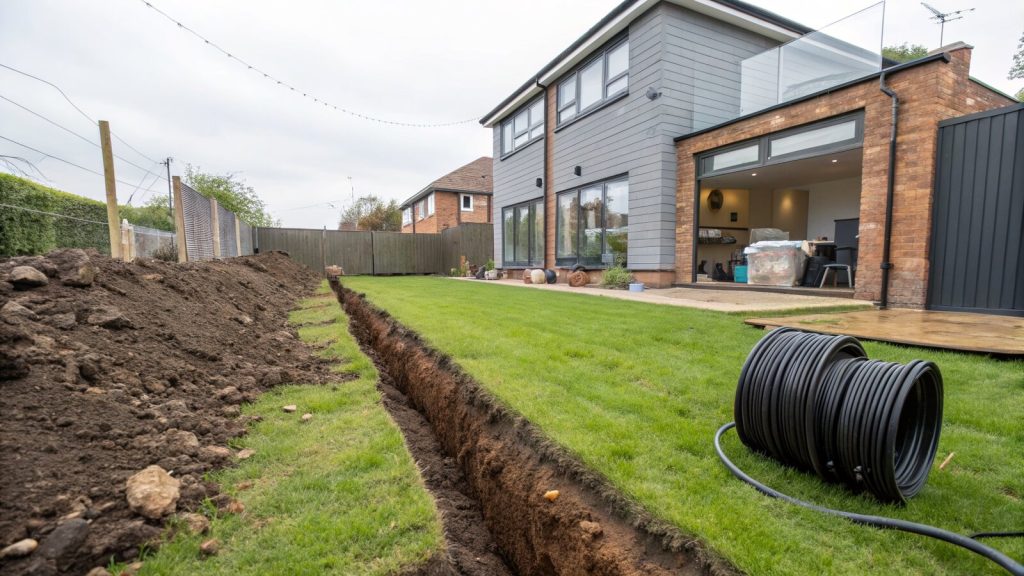
Most guides quote a single vague range for garden room electrics: somewhere between £950 and £3,000. That number is useless when you are trying to budget or check whether a quote is fair, because it lumps together a 5 metre run to a small office and a 30 metre run feeding a gym with electric heating. The price is driven by a handful of specific things, and once you understand each one you can roughly predict your own quote and spot when an installer is padding it.
This guide breaks the cost down by the parts that actually move the price: how far the cable has to travel, the trench, the cable itself, the consumer unit in the garden room, and the Part P certification that makes the whole job legal. If you want the wider picture on building budgets, our garden room guides cover the full project. Here we are only dealing with getting power to it.
What you are actually paying for
A proper garden room supply is almost never a plug trailing across the lawn. It is a dedicated circuit that runs from your house consumer unit (your fuse board), out through a buried armoured cable, and into a small separate consumer unit inside the garden room. That second unit then feeds the sockets, lights and any heating. A fault in the garden room trips its own board rather than knocking out the house.
So a quote is really covering five things:
- The connection at the house end: a new way (a spare slot) in your consumer unit, or a sub-main taken from it.
- The cable: steel wire armoured (SWA) cable, sized for the distance and the load.
- The trench: digging, laying, warning tape, and reinstating the ground.
- The garden room end: a small consumer unit, sockets, lights, switches, all IP rated where exposed.
- Testing and certification: the Part P notification and the electrical certificate.
When one installer quotes £900 and another quotes £2,400 for what sounds like the same job, the difference is almost always sitting in those five lines. Below is how each one behaves.
Cost driver 1: cable run distance
Distance is the single biggest variable, and it hits the price twice. A longer run needs more cable, and it usually needs thicker cable.
The thickness matters because of voltage drop. Under BS 7671 (the UK wiring regulations, currently the 18th Edition) the voltage drop between your consumer unit and the far point of the circuit should not exceed 5% for power and 3% for lighting. On a short run a 6mm² SWA cable is often enough. On a long run, or where you are feeding heavy loads like an electric heater or air conditioning, the electrician may have to step up to 10mm² to keep the voltage drop within those limits. On very long runs it is voltage drop, not the current rating, that decides the cable size.
SWA cable is not cheap by the metre, and the price climbs sharply as the cross section increases, so a 25 metre run in 10mm² can cost several times what a 6 metre run in 6mm² costs in cable alone. When you compare quotes, ask each electrician what cable size they have specified and over what length. If one has quoted 6mm² and another 10mm² for the same garden room, that is worth a conversation, because the larger cable may be future proofing or may be genuinely required by the load.
Cost driver 2: the trench
The cable has to be buried, and the trench is where labour costs hide. In a domestic garden the cable is normally laid around 450mm to 600mm deep, sat on a bed of fine soil or sand, with electrical warning tape laid above it so anyone digging later gets a warning before they hit the cable. BS 7671 does not set a single fixed figure; the rule is that the cable must be deep enough to avoid any reasonably foreseeable disturbance, which is why a route under a vegetable patch or a future flower bed is taken deeper.
Trenching is usually priced per metre, and the rate jumps depending on what you are digging through. A clear lawn is the cheapest. The price rises steeply if the route crosses:
- A patio, paving or a concrete path that has to be lifted and relaid.
- A driveway, especially block paving or tarmac.
- Tree roots, services, or rocky ground.
This is the one area where you can genuinely save money. The electrical connections must be done by a qualified electrician, but digging a straight trench across a lawn does not need a tradesperson. If you dig and backfill the trench yourself to the depth your electrician specifies, you take a meaningful chunk of labour off the bill. Agree the route, depth and width with the electrician first, and do not backfill until they have laid the cable and confirmed it is at the right depth with the warning tape in place.
Cost driver 3: the consumer unit and the garden room circuits
Inside the garden room you get a small consumer unit of its own, with its own RCD and the breakers for each circuit. Under BS 7671, socket-outlets and supplies used outdoors need 30mA RCD protection, and in an ordinary home there is no practical way around that for a garden room, so it is not an optional extra. It is the protection that trips the supply fast enough to prevent a serious shock if a cable is damaged or a fault develops in the damp.
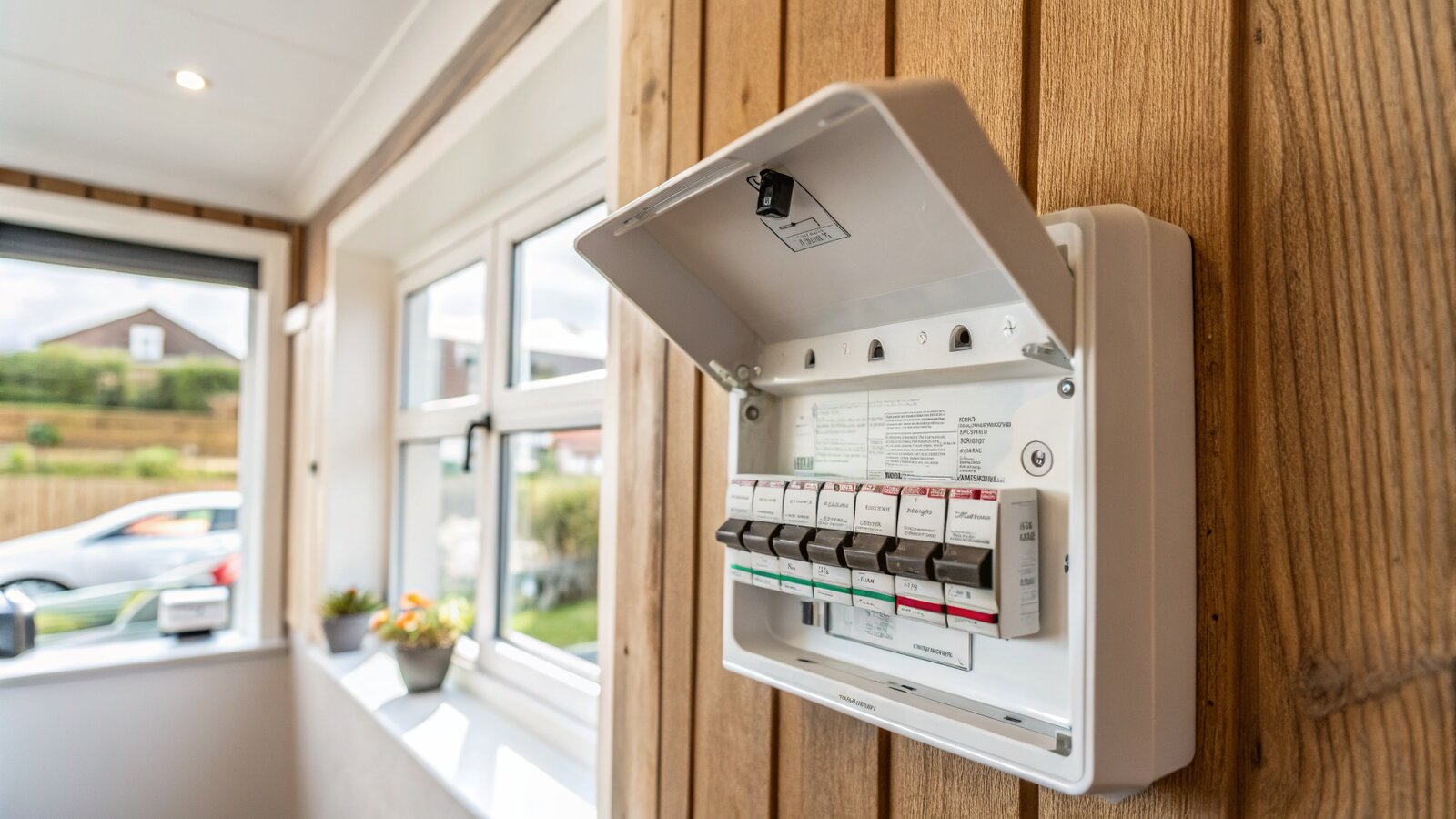
The cost here scales with how much you want the garden room to do:
- Basic: a few sockets, a couple of lights, one or two circuits. Fine for a quiet office.
- Mid: more sockets, separate lighting circuit, an outdoor IP rated socket and light, maybe a circuit set aside for heating.
- High spec: dedicated circuits for an electric heater or air conditioning, underfloor heating, a hot tub, or a small kitchen. This is also where the cable size at the house end usually has to go up.
Any fitting that is outdoors or exposed to damp needs to be IP rated to keep moisture out. The more circuits and the more outdoor fittings, the more labour and parts, so this line moves with the spec rather than the distance.
Cost driver 4: Part P and certification
Running a new circuit to a garden room is notifiable work under Part P of the Building Regulations in England and Wales. The IET is clear that Part P covers electrical installations in outbuildings and in the garden, and that installing a new circuit or fitting a new consumer unit is notifiable work. You cannot legally do this yourself and leave it uncertified.
There are two compliant routes:
- Use an electrician registered with a government approved competent person scheme (such as NICEIC or NAPIT). They self certify the work and notify building control, and you get an electrical installation certificate.
- Use an unregistered electrician and submit a building regulations application to your local authority, who inspect and certify the work. This route usually costs more in fees and is slower.
Almost everyone uses the first route because it is built into the electrician’s price. The certificate matters beyond compliance: it is the document your buildings insurer, and any future buyer’s surveyor, will expect to see. A cheap quote that skips notification is not a bargain, it is an uncertified circuit you will have to pay to put right later. You can read the IET’s own summary of what Part P covers in its Part P frequently asked questions, and the official position on the Planning Portal electrics page, which confirms the work must comply with Approved Document P.
Putting a realistic number on it
Prices vary a lot by region, by installer, and by every factor above, so treat these as broad ranges rather than fixed figures. As a rough shape for 2026:
- A short, simple run with a few sockets and lights, garden room close to the house, clear lawn to dig: this sits at the lower end, often somewhere in the high hundreds to around £1,000 plus VAT.
- A mid run of 10 to 20 metres with multiple circuits and a longer cable: typically in the low to mid thousands.
- A long run or high spec feeding heating, air conditioning or a small kitchen, with patios or a drive to cross: this is where you reach £2,500 to £3,000 or more.
To predict your own quote, measure the cable route from your consumer unit to the garden room, note what surfaces it crosses, and list the loads you want to run. An installer who quotes against those specifics is far more reliable than one who gives a round number over the phone. Get at least two or three quotes, and make sure each one states the cable size, the run length, who is digging the trench, and that Part P notification and the certificate are included.
How to avoid being overcharged
A few simple checks keep the price honest:
- Ask every quote to itemise cable, trenching, the garden room consumer unit, and certification separately. A single lump sum hides where the money goes.
- Confirm the cable size and length on each quote so you are comparing like for like.
- Offer to dig the trench yourself if the route is a clear lawn, and ask what that saves.
- Check the electrician is scheme registered (NICEIC, NAPIT or similar) so certification is included rather than an extra.
- Do not pay for capacity you will never use, but do think one step ahead. If you might add heating later, sizing the cable for it now is cheaper than digging the trench twice.
Frequently asked questions
Can I run electrics to my garden room myself?
You can do the spadework, digging the trench to the depth the electrician specifies and backfilling it once the cable is laid. The electrical connections, the consumer unit and the testing must be carried out by a qualified electrician, because the work is notifiable under Part P. Doing the digging yourself is the main legitimate way to cut the cost.
Do I need planning permission to add electrics to a garden room?
Adding the electrical supply itself does not normally need planning permission. It does need to comply with the Building Regulations, specifically Approved Document P. The garden room structure may or may not need planning permission depending on its size and siting, which is a separate question from the wiring.
What size SWA cable do I need for a garden room?
It depends on the run length and the load. 6mm² SWA is common for a typical office over a short to medium distance, while 10mm² is often needed for longer runs or where you are powering an electric heater, air conditioning or underfloor heating. The deciding factor on long runs is keeping voltage drop within the BS 7671 limits, so leave the final sizing to your electrician.
How deep does the cable trench need to be?
In a domestic garden the cable is usually buried around 450mm to 600mm deep, on a bed of soft soil or sand, with electrical warning tape laid above it. Go to the deeper end if the route crosses a vegetable patch or anywhere likely to be dug later. Always confirm the exact depth with your electrician before you start digging.
Does garden room wiring need a certificate?
Yes. The work is notifiable under Part P, so it must be certified, either by a scheme registered electrician who self certifies and notifies building control, or through a building regulations application to your local authority. You should receive an electrical installation certificate. Keep it, because your insurer and any future buyer’s surveyor will want to see it.
Is it cheaper to fit the electrics during the build or afterwards?
Usually during the build. If the garden room company coordinates with the electrician, the cable route can be planned before patios and landscaping go in, which avoids lifting paving later. Retrofitting once the garden is finished often means cutting through hard surfaces, which is the most expensive kind of trenching.
Related guides
- Garden Room Planning Permission UK: The 30m² and 50% Rules Explained
- How Much Does a Garden Room Cost to Run in Winter? Real UK Figures
- Garden Room vs Extension: Honest Cost, Value and When Each Wins
- Ground Screws vs Concrete Base: Which Garden Room Foundation Is Right for You?
- Do Garden Rooms Need Building Regulations? The 15, 30 and 1m Rules Explained
- Prefab vs Bespoke Garden Rooms: Which Is Right for You?
- Garden Room Buying Mistakes: 12 Costly Errors to Avoid
- How to Buy a Garden Room: The Complete UK Buyer’s Guide (2026)
- What to Look for in a Garden Room: 15 Things to Check Before You Buy
- Buying a Second-Hand Garden Room: Is It Worth It?
- Garden Room Kits vs Fully Installed: Should You Self-Build or Buy Turnkey?
- Garden Room Deposits, Contracts and Deliverables: Protecting Your Money
- How Long Does a Garden Room Last? Lifespan and Maintenance
- Garden Room Cost Per Square Metre: 2026 UK Rates Explained
- How Much Does a Garden Room Cost in the UK? (2026 Price Guide)
- Garden Room Prices by Size: From 3x3m to 8x4m and Beyond
- How Much Does a Garden Office Cost? (2026 UK Breakdown)
- How Much Does a Garden Room with a Bathroom Cost?
- Hidden Garden Room Costs: Foundations, VAT and the Extras Quotes Miss
- Garden Room Finance: Loans, Mortgages and Payment Options Explained
- Do Garden Rooms Add Value to Your House? What the UK Resale Data Shows
- Permitted Development Rights for Garden Rooms: Size, Height and the 2m Boundary Rule
- Do Garden Rooms Affect Council Tax? Business Rates and Reassessment
- How a Garden Room Is Built: Foundations to Finish (UK Guide)
- SIPs vs Timber Frame Garden Rooms: Which Construction Is Better?
- How Close to a Boundary Can a Garden Room Be? UK Rules Explained
- How to Apply for Garden Room Planning Permission: Step by Step
- Can You Build a Garden Room on Decking, Slabs or a Patio?
- Is a Garden Room Cheaper Than an Extension? 2026 Cost Comparison
- Garden Room Cladding: Cedar vs Composite vs Larch vs Render
- Garden Room Roof Guide: Flat vs Pitched and the Best Materials
- Garden Room Windows and Doors: Bifold, Sliding and Glazing
- How to Build a Garden Room: A DIY Step-by-Step Guide (UK)
- How Long Does It Take to Build a Garden Room?
- How to Make a Garden Room Usable All Year Round
- Garden Room Insulation: Best Materials and U-Values for the UK
- How to Heat a Garden Room: 9 Options Compared by Cost and Warmth
- Best Heating for a Garden Office: Warm Without a Huge Bill
- Air Conditioning for Garden Rooms: Cooling and Heating in One
- Stopping Condensation and Damp in a Garden Room (UK Guide)
- How to Get Wi-Fi in a Garden Office: 6 Ways That Actually Work
- Garden Office Ideas: Designing the Perfect Work-From-Home Space
- Garden Room Ideas: 20 Popular Uses to Inspire Your Build
- Garden Room Annexe: Rules, Costs and How to Build One
- Garden Bar Ideas: The Height Rules, Power and Layout
- Garden Room Business: What Changes Once Clients Visit
- Garden Studio Ideas: Sizes, Light and the 2.5m Rule
- Garden Room Lighting: IP20 Inside, IP65 Out, Part P Rules
- Landscaping Around a Garden Room: the 30cm Decking Trap
- Garden Room Design: Why 2.5m Decides Everything
- Garden Room Planning Permission: the 2.5m Boundary Rule
- Garden Saunas UK: Planning, Building Regs and Electrics
- Best Garden Room Companies UK: Guarantees of 10 to 25 Years
- Garden Room Electrics: The Rules Change on 15 Oct 2026
- Golf Simulator Garden Room: The 2.5m Rule That Stops It
- Garden Screens: the 2m Rule, and Why Trellis Counts
- Cheap Garden Rooms: What 19mm Walls Really Get You
- Green Retreats Review: 12-Year Cover, 60% Upfront
- Booths Garden Studios Review: Steel Build, 25 Years
- Eden Garden Rooms Review: £23,500 Start, 10-Year Cover
- Green Retreats vs Booths: 25-Year Steel or Timber?
- Garden Rooms London: 6 Companies and the 2.5m Limit
- Garden Room Bedroom: Why a Bed Changes the Rules
- Do I Need Planning Permission for a Garden Shed? Usually Not
- Garden Gym Ideas: Sizes, Ceilings and the 2.5m Height Rule
- Garden Gazebo Rules: 2.5m Near a Boundary, 4m Max
- Garden Arch: Wood or Metal, and the 2.7m Height Rule
- Garden Arbour: Sizes That Seat Two, and Wood vs Metal
- Wooden Garden Gates: Sizes, UC4 Posts and the 1m Rule
- Summer House Interior Ideas: 9 That Work in Winter
- Garden Trellis Panels: the 2m Rule Most Buyers Miss
- Garden Shelters: Six Types and When You Need Permission
- Garden Greenhouses: Glass Gives 90% Light, Plastic 80%
- Summer House Doors and Windows: 4mm Toughened or Styrene?
- Log Stores: Size, Siting and the 20% Moisture Rule
- Garden Shed Roof: Felt, EPDM or Onduline by Pitch
- Insulated Garden Shed: The 25mm Gap That Stops Damp
- Composite Garden Sheds: Rot-Proof, But Check These 6 Things
- How to Build a Garden Shed: Base, Frame and Roof in 5 Steps
- Garden Workshop: Size, Base, Power and the Planning Rules
- Plastic Garden Sheds: Who They Suit and 6 Checks First
- Metal Garden Sheds: Stop Condensation Before You Buy
- Garden Shed Storage Ideas: 12 That Free Up Floor Space
- Wooden Garden Sheds: 7 Specs That Decide How Long They Last
- 8×6 Garden Shed: Real Floor Size, Door Width and Base
- 6×4 Garden Shed: 59cm Door, 118cm Deep and What Fits
- Small Garden Shed: 88.5cm Wide Inside and What Fits