

A garden room is a four-figure or five-figure purchase sitting somewhere between a kitchen and an extension: most professionally installed buildings land between £15,000 and £35,000, the industry is unregulated, and the difference between a great outcome and an expensive headache comes down to decisions made before you hand over a penny. This guide walks the whole journey in order, from the first sketch to signing off the snag list.
Step 1: Define the use before you look at prices
Everything flows from what the room is for: use changes the specification, and specification changes the price more than size does.
- Home office: you will be in it for eight hours a day all year, so floor, wall and roof insulation is non-negotiable, along with double glazing and a dedicated electrical supply. An ethernet cable run in the power trench beats Wi-Fi at the end of the garden; decide early.
- Gym: floor strength matters more than finish. Ask suppliers about point loading for racks and heavy equipment, plan for rubber flooring, and prioritise ventilation and ceiling height over luxury cladding.
- Studio or hobby room: think about natural light direction, extra sockets, and acoustic insulation if you play instruments or record.
One use changes everything: sleeping accommodation triggers full building regulations whatever the size, so if an annexe or guest room is the real plan, tell suppliers from the first conversation.
Step 2: Set a realistic 2026 budget
Current UK cost guides put 2026 prices in three broad bands depending on the route you take:
- DIY kit: roughly £5,000 to £15,000 for most self-assembly buildings, or around £800 to £1,400 per square metre; the base, electrics and your own labour sit on top.
- Prefab modular, professionally installed: typically £15,000 to £30,000 for a usable office-sized building with insulation, glazing and electrics.
- Bespoke, built on site: mid-range projects commonly run £25,000 to £50,000, around £1,800 to £2,800 per square metre; high-end designs go well beyond.
The classic budgeting mistake is treating the headline price as the final price. Foundations alone can add £1,500 to £5,000 if they are not included, and groundworks, electrical connection, internal finishes, delivery and VAT can turn a £25,000 quote into a £35,000 project. Set your ceiling, then hold back 10 to 15 per cent as contingency.
Step 3: Check the planning position early
Most garden rooms in England are built without planning permission under permitted development rights for outbuildings. The headline rules: the building must be single storey; maximum overall height is 4 metres with a dual-pitched roof or 3 metres for any other roof, dropping to 2.5 metres if any part sits within 2 metres of a boundary; eaves height is capped at 2.5 metres; outbuildings and other additions must not cover more than half the land around the original house; and nothing can go forward of the principal elevation. Listed buildings and designated land carry tighter restrictions, and flats and maisonettes have no outbuilding permitted development rights at all. Check your own situation against the Planning Portal’s outbuildings guidance before you commit to a design.
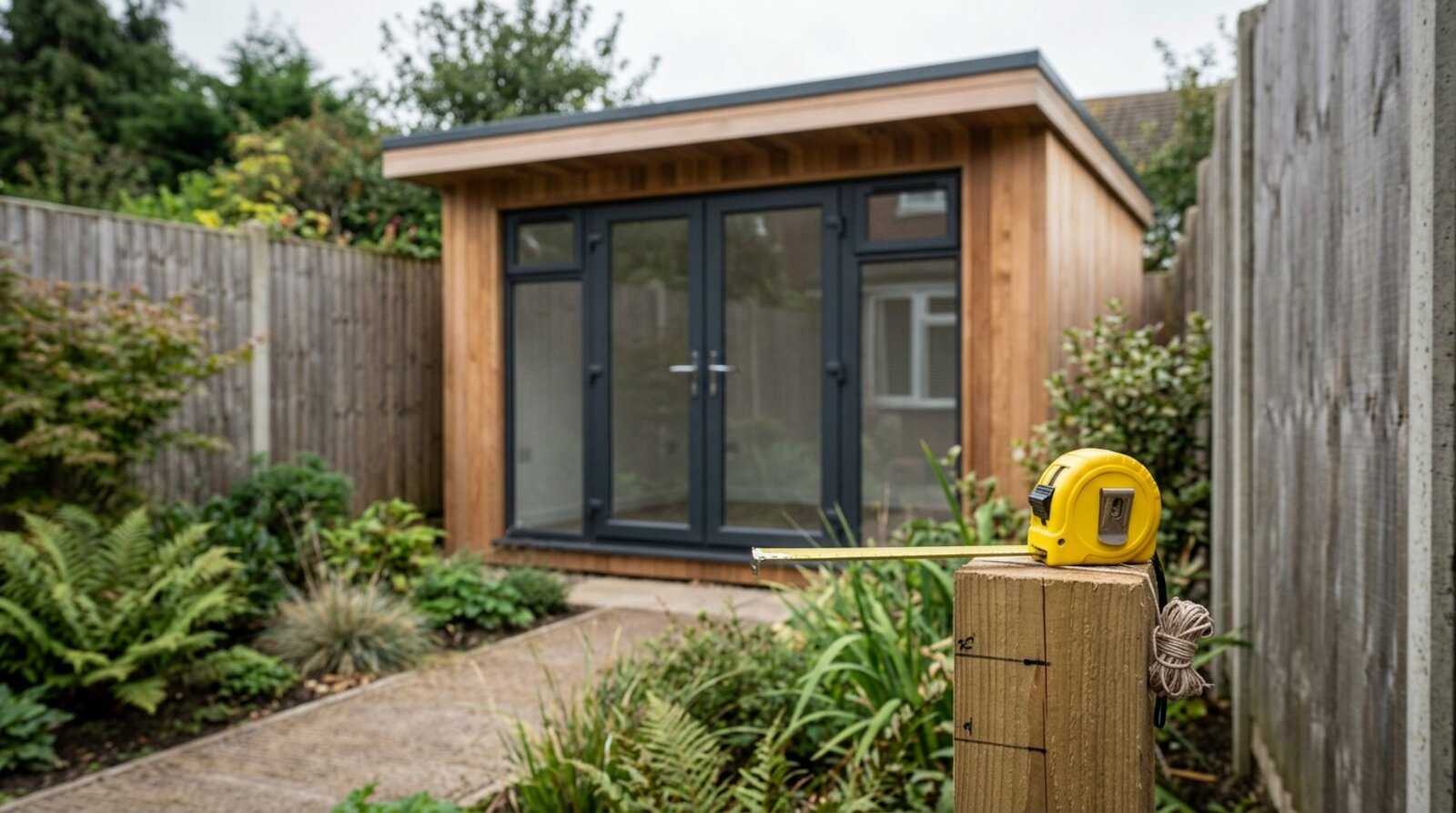
Building regulations are a separate question with two thresholds worth memorising: under 15 square metres of floor area, approval is not normally needed provided there is no sleeping accommodation; between 15 and 30 square metres, you also need the building either at least 1 metre from any boundary or built substantially of non-combustible materials. Our dedicated planning and building regulations guides cover the edge cases.
Step 4: Choose your route: kit, prefab or bespoke
There are three ways to get a garden room, and they trade money against time and effort:
- DIY kit: cheapest route, delivered as panels often within 3 to 4 weeks; you provide the labour, the base and a registered electrician. Suits confident DIYers with a straightforward site.
- Prefab modular: factory-built sections installed by the supplier’s crew, with several national firms quoting around 6 weeks from order to installation and days on site. The trade-off is a fixed range of sizes and finishes.
- Bespoke: designed and built on site to your plot and spec. The longest timeline, typically several months from first consultation to handover, and the highest price, in exchange for complete design freedom.
The prefab versus bespoke decision deserves more space than this guide can give it; the comparison guides at Best Garden Room weigh the two routes in depth.
Step 5: Vet suppliers before you shortlist
The garden room industry has low barriers to entry, and a polished website proves nothing. Before a company makes your shortlist:
- Trading history: look the company up on Companies House. How long has this legal entity traded, and has the same director dissolved similar firms before?
- Reviews: read Google and Trustpilot, not just on-site testimonials, and watch how complaints are handled rather than the star average.
- Real buildings: see a customer installation two or three winters old; cladding and seals reveal their quality with age, not on delivery day.
- Warranty substance: ask what is covered, for how long, and who underwrites it. An insurance-backed guarantee survives if the company stops trading; a promise on letterhead does not.
- Coverage: confirm they install in your area with their own crews, not subcontractors.
Step 6: Compare quotes like for like
Get three or four formal quotes after site surveys, then strip them back to the same scope before comparing. The items that most often hide in the small print:
- Foundations: included, excluded, or provisional pending a survey? A ground screw base and a concrete slab are very different jobs.
- Electrics: the fit-out inside the room only, or also the armoured cable run to the house, which must be carried out or certified by a qualified electrician?
- Delivery and access: distance, restricted access and crane hire can all be priced extras.
- VAT: confirm whether each price includes VAT at 20 per cent.
- Finish level: internal decoration, flooring, glazing spec and guttering all vary between quotes that look identical at headline level.
The cheapest headline quote is rarely the cheapest finished building; our piece on garden room buying mistakes catalogues the traps.
Step 7: Contracts, deposits and protecting your money
Insist on a written contract that states the full specification, the price, the timetable and the payment schedule. Deposits of 25 to 50 per cent are common when you confirm an order, sometimes preceded by a small reservation fee of £100 to £500; confirm in writing whether that fee is refundable. Tie stage payments to milestones you can verify, such as materials delivered to site, and hold back the final balance until you have signed off the finished building.
Two protections are worth using. First, pay any part of the deposit on a credit card, however small: because the building costs over £100 and up to £30,000, Section 75 of the Consumer Credit Act makes the card provider jointly liable for the whole purchase if the supplier fails. Second, ask whether the company offers deposit protection insurance, which covers your money if the firm fails before delivery. Be wary of any supplier who wants most of the price before anything arrives on site.
Step 8: Site preparation, access and installation day
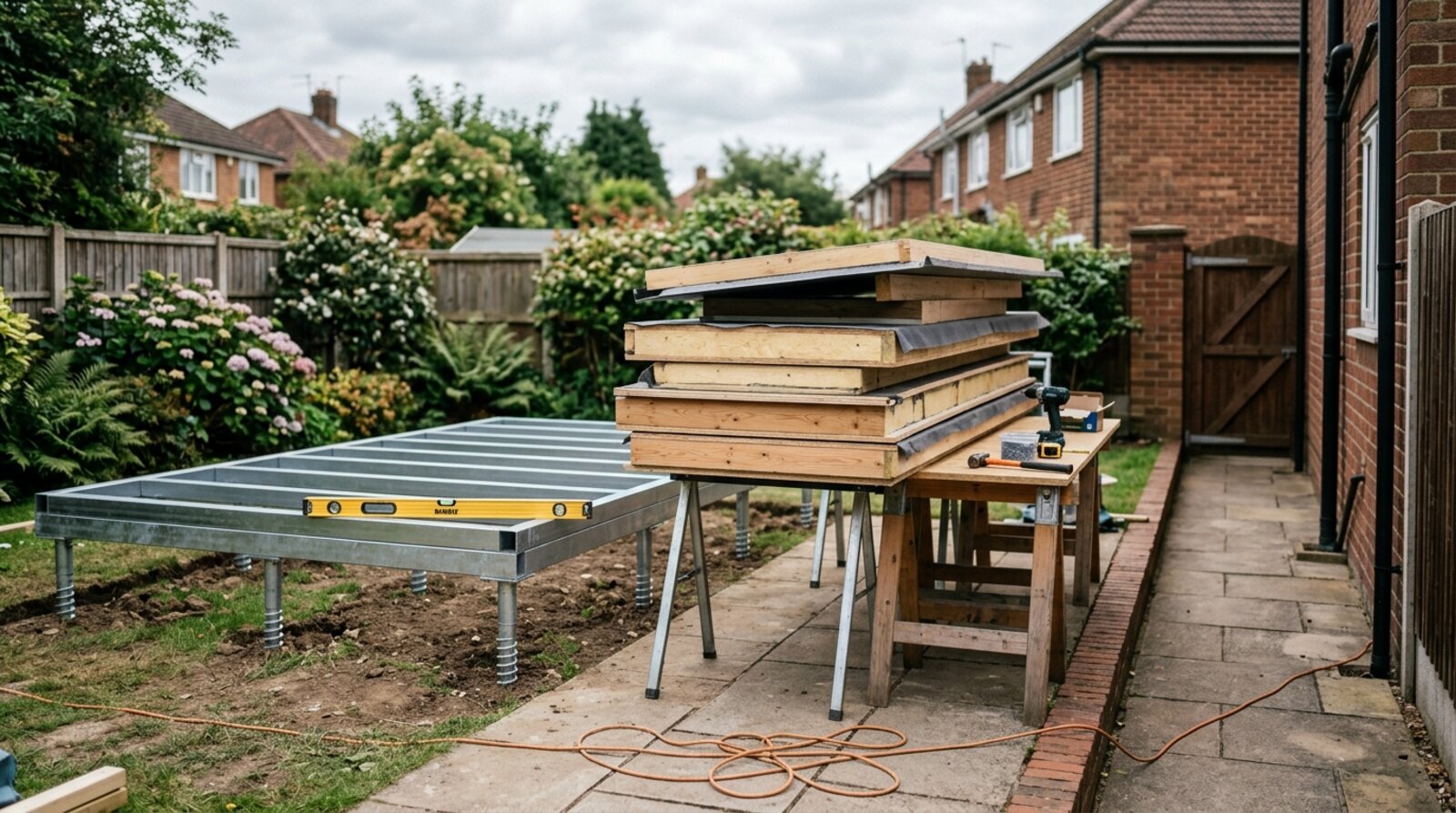
Good preparation makes installation boring, which is exactly what you want. Measure the narrowest pinch point on the route from road to build spot; prefab panels typically need side access of around a metre, and craning a building over the house is a priced extra, not a surprise on the morning. Agree who builds the base and when it must cure, have the power and data trench dug or scheduled, warn the neighbours, and sort crew parking and a spot for waste. Prefab buildings often go up in one to three days; bespoke builds run one to four weeks on site. Check deliveries against the order before signing anything.
Step 9: Snagging, sign-off and aftercare
Do not hand over the final payment at the door. Walk the building with the installer: every window, door, socket, light and heater tested, sealant lines checked inside and out, cladding undamaged, roof covering and guttering finished properly. Photograph anything wrong and agree a written snag list with a completion date; the final payment is the only hold you have over the snag list, so use it. Before the crew leaves, collect your paperwork: the electrical installation certificate, warranty documents and any base or structural guarantees. Then diarise the aftercare: timber cladding re-treated on the manufacturer’s schedule, gutters cleared each autumn, and seals and door adjustments checked annually while the workmanship warranty still applies.
Frequently asked questions
Do I need planning permission for a garden room?
Usually not. Most garden rooms in England fall under permitted development for outbuildings if they are single storey, no more than 2.5 metres tall within 2 metres of a boundary (4 metres with a dual-pitched roof elsewhere), and outbuildings cover no more than half the garden. Listed buildings, designated land and flats are the main exceptions, so check the Planning Portal if your situation is not straightforward.
How much should I budget for a garden room in 2026?
As broad bands: £5,000 to £15,000 for a DIY kit, £15,000 to £30,000 for a professionally installed prefab, and £25,000 to £50,000 or more for a bespoke build. Add foundations, electrics, delivery and VAT if they are not in the quote, and keep 10 to 15 per cent of your budget as contingency.
How long does it take from order to a finished building?
DIY kits often arrive within 3 to 4 weeks, then take as long as your weekends allow. Prefab suppliers commonly quote around 6 weeks from order to installation, with days on site. Bespoke builds typically take several months, including one to four weeks of construction.
What deposit is normal and how do I protect it?
Deposits of 25 to 50 per cent on order confirmation are typical. Pay any part of the deposit on a credit card: because the building costs over £100 and up to £30,000, the card provider is jointly liable for the whole purchase under Section 75. Also ask about deposit protection insurance, tie later payments to verifiable milestones and never pay the full balance before sign-off.
Can I sleep in a garden room?
Only if it complies with full building regulations, which apply to any outbuilding with sleeping accommodation regardless of size. A standard garden office specification does not meet them, so if overnight use is the plan, you need a building designed, approved and signed off for it from the start.
What is the single most important question to ask a supplier?
Ask who underwrites the warranty. A long guarantee only means something if an insurer stands behind it after the seller has gone; an insurance-backed guarantee is the clearest sign a supplier expects to be judged on the building years from now.
Related guides
- Garden Room Planning Permission UK: The 30m² and 50% Rules Explained
- How Much Does a Garden Room Cost to Run in Winter? Real UK Figures
- Garden Room vs Extension: Honest Cost, Value and When Each Wins
- How Much Does It Cost to Run Electrics to a Garden Room in 2026?
- Ground Screws vs Concrete Base: Which Garden Room Foundation Is Right for You?
- Do Garden Rooms Need Building Regulations? The 15, 30 and 1m Rules Explained
- Prefab vs Bespoke Garden Rooms: Which Is Right for You?
- Garden Room Buying Mistakes: 12 Costly Errors to Avoid
- Garden Room News: June 2026
- What to Look for in a Garden Room: 15 Things to Check Before You Buy
- Buying a Second-Hand Garden Room: Is It Worth It?
- Garden Room Kits vs Fully Installed: Should You Self-Build or Buy Turnkey?
- Garden Room Deposits, Contracts and Deliverables: Protecting Your Money
- How Long Does a Garden Room Last? Lifespan and Maintenance
- Garden Room Cost Per Square Metre: 2026 UK Rates Explained
- How Much Does a Garden Room Cost in the UK? (2026 Price Guide)
- Garden Room Prices by Size: From 3x3m to 8x4m and Beyond
- How Much Does a Garden Office Cost? (2026 UK Breakdown)
- Garden Room Planning News: Late June 2026
- How Much Does a Garden Room with a Bathroom Cost?
- Hidden Garden Room Costs: Foundations, VAT and the Extras Quotes Miss
- Garden Room Finance: Loans, Mortgages and Payment Options Explained
- Garden Room News: Early July 2026
- Do Garden Rooms Add Value to Your House? What the UK Resale Data Shows
- Permitted Development Rights for Garden Rooms: Size, Height and the 2m Boundary Rule
- Do Garden Rooms Affect Council Tax? Business Rates and Reassessment
- Garden Room News: Mid-July 2026
- How a Garden Room Is Built: Foundations to Finish (UK Guide)
- SIPs vs Timber Frame Garden Rooms: Which Construction Is Better?
- How Close to a Boundary Can a Garden Room Be? UK Rules Explained
- How to Apply for Garden Room Planning Permission: Step by Step
- Can You Build a Garden Room on Decking, Slabs or a Patio?
- Is a Garden Room Cheaper Than an Extension? 2026 Cost Comparison
- Garden Room News: Mid-July 2026
- Garden Room Cladding: Cedar vs Composite vs Larch vs Render
- Garden Room Roof Guide: Flat vs Pitched and the Best Materials