

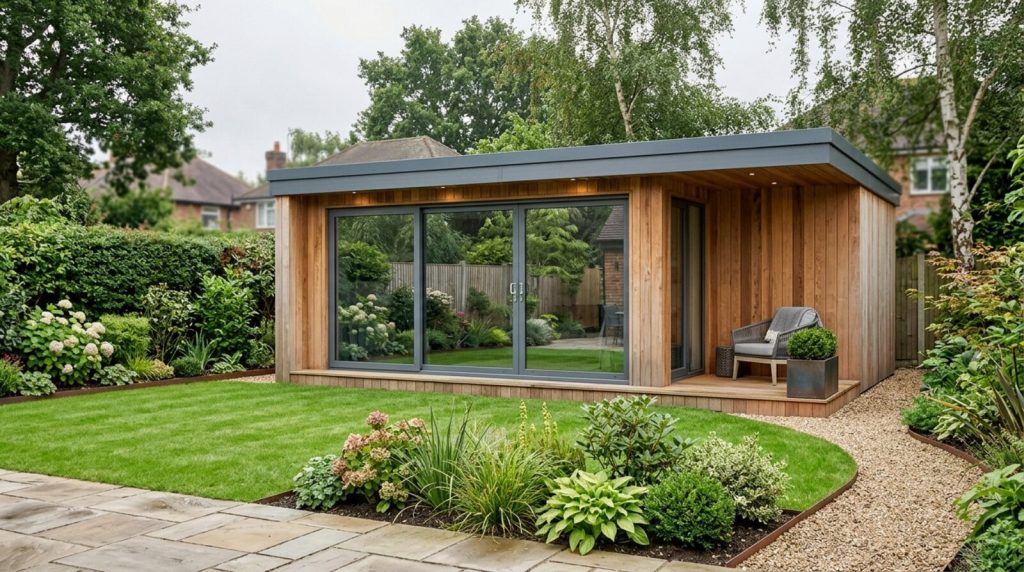
A garden room is one of the larger discretionary purchases a household makes, and the errors are easy to commit and hard to reverse once the build is up. Most regret comes down to a handful of decisions taken before the order is signed: where it sits relative to the boundary, how it is built rather than how it looks in the brochure, and who is putting it up. The points below are the failures that cost real money to fix, set out so you can check each one against a quote before you commit.
Planning and regulation mistakes
1. Ignoring the permitted development height and boundary limits
In England, an outbuilding usually falls under permitted development, so no planning application is needed, but only inside set limits. If any part of the structure sits within 2 metres of a boundary, the maximum overall height is 2.5 metres. Move it more than 2 metres from every boundary and you can go up to 4 metres for a dual-pitched roof or 3 metres for any other roof, with a maximum eaves height of 2.5 metres. People order a tall pitched-roof model, position it tight against the fence for privacy, and only then discover the height breaches the rules. Read the current limits on the Planning Portal outbuildings page before you agree a position.
2. Forgetting the 50% rule
Permitted development also caps how much of your garden you can cover. No more than half the area of land around the original house may be taken up by additions and outbuildings combined. That includes existing extensions, sheds, greenhouses and similar structures, not just the new room. If you already have a large extension and a shed, a generous garden room can tip you over the limit and force a planning application. Measure the existing footprint first.
3. Walking into the living-accommodation trap
Permitted development covers uses incidental to the house: an office, a gym, a studio, a hobby room. It does not cover sleeping accommodation or a self-contained living unit with its own kitchen and facilities. The moment you intend to sleep in the room, even occasionally, or treat it as a separate dwelling, you change its use and need planning permission. Sleeping use also triggers full Building Regulations regardless of floor area. Buyers who quietly plan a guest annexe or teenage bedroom often only learn this when they try to sell.
4. No Part P electrical certification
The electrical installation must comply with Part P of the Building Regulations, which covers electrical safety in and around the home. The work should be carried out by an electrician registered with a competent person scheme, who tests it and issues an Electrical Installation Certificate along with a Building Regulations compliance certificate. Those certificates are your proof the supply is safe and legal, and a buyer’s surveyor or solicitor will look for them. A cheap quote that runs an extension lead from the house, or uses an uncertified handyman, leaves you with an installation you cannot evidence and may have to redo. Note also the wider Building Regulations thresholds: a room with an internal floor area under 15 square metres and no sleeping use is normally exempt from the rest of the regulations; between 15 and 30 square metres it can be exempt if it sits at least 1 metre from any boundary or is built substantially of non-combustible materials, again with no sleeping use; and over 30 square metres full approval is required.
Build specification mistakes
5. Under-speccing the insulation
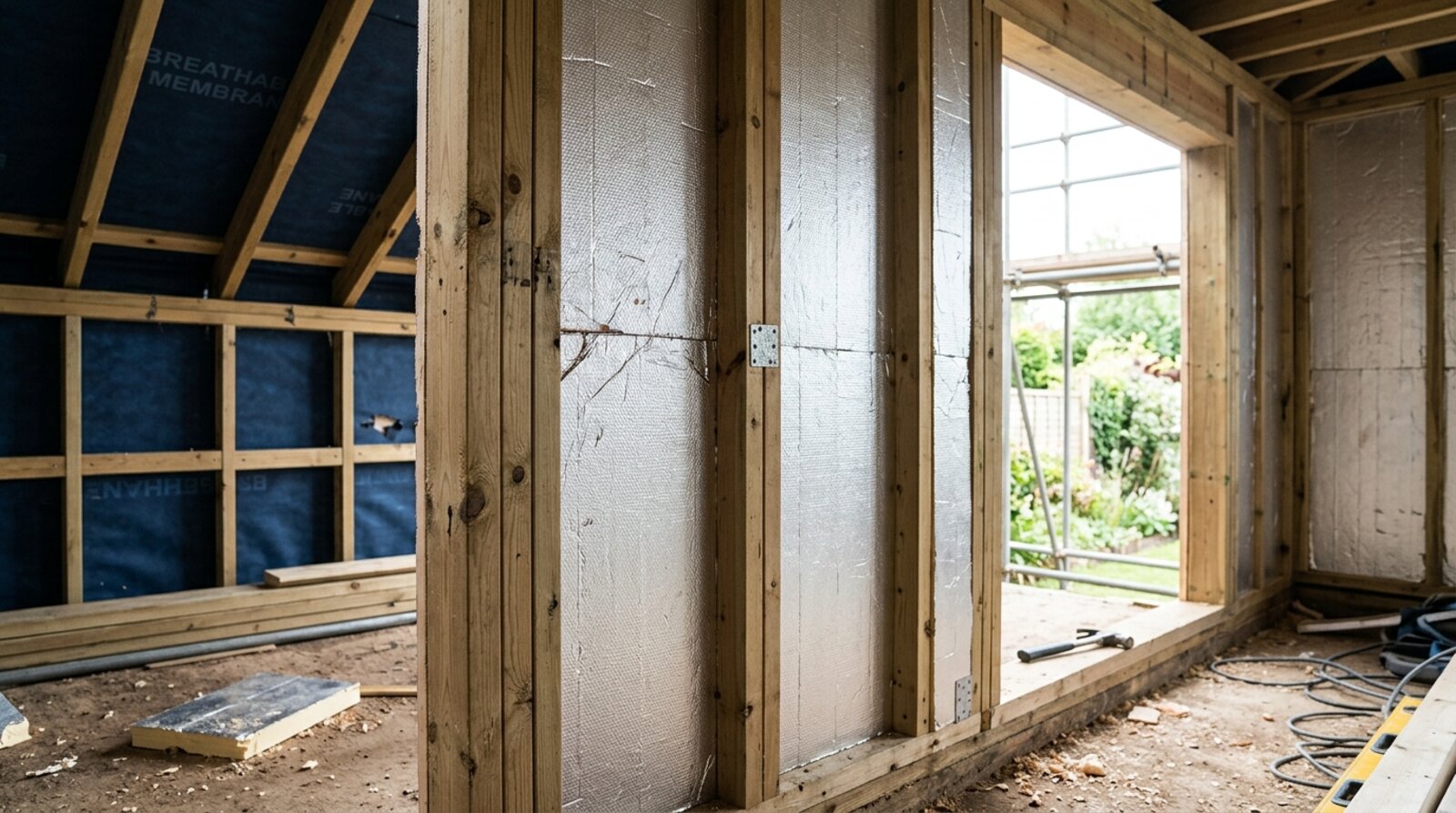
This is the failure that turns a garden room into a summer-only shed. A room that is comfortable in May becomes unusable in January if the floor, walls and roof are barely insulated. Look for insulation specified by type and thickness in all three planes, not a vague claim that the room is “fully insulated”. Rigid PIR board is widely used because it gives a low U-value in a slim profile, which preserves internal space. Ask what U-values the quote is targeting and get them in writing. Retrofitting insulation after the cladding is on is expensive and disruptive.
6. Skimping on the base or foundation
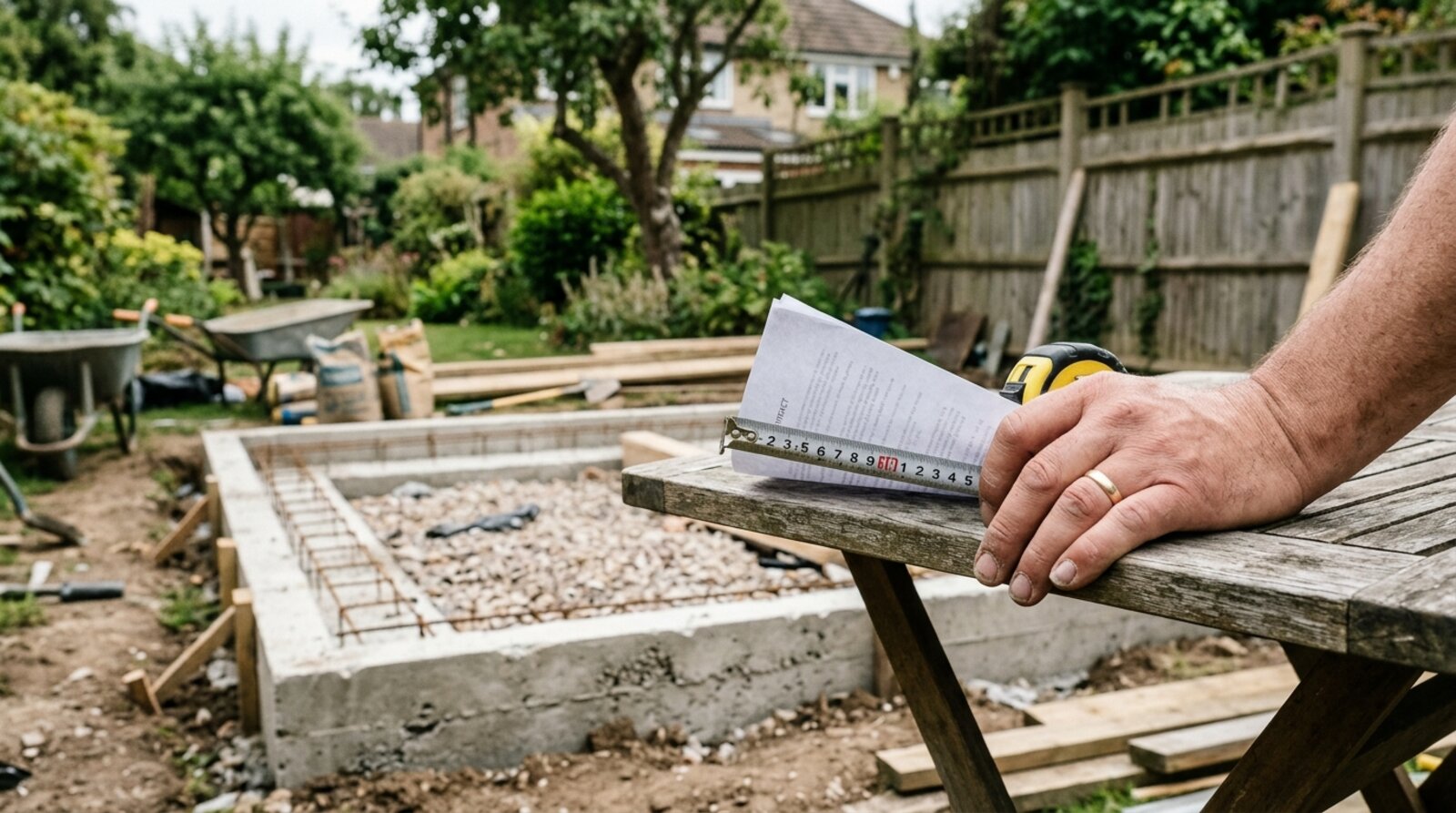
The base carries the entire building and decides whether doors still close in five years. Concrete slabs, ground-screw systems and engineered grid bases all work, but the right choice depends on your ground conditions and slope. A base that is too thin, poorly drained or laid on soft ground will move, and the building moves with it. Treat a suspiciously cheap base as a warning. Ask how the ground was assessed and what the base is rated to carry.
7. No heating, cooling or ventilation plan
Insulation slows heat loss but does not create warmth, and a well-sealed room can overheat in summer and grow condensation in winter. Decide before purchase how the room will be heated, whether that is an electric panel heater, an air-source unit or underfloor heating, and how it will stay cool and ventilated in summer. Trickle vents and a means of purge ventilation matter for damp control. Bolting this on afterwards usually means more wiring and another visit you are paying for.
8. Choosing on headline price, not build spec
Two quotes for the “same size” room can differ enormously underneath. Cheaper builds often use thinner timber framing, lower-grade insulation, single glazing or low-spec doors, and a minimal base. Compare like for like: frame dimensions and centres, glazing units, insulation type and thickness, cladding, base specification, and what the electrics include. The lowest number on the page is rarely the cheapest room to own once you account for heating bills and early repairs.
9. Forgetting drainage and guttering
A flat or shallow roof sheds a surprising volume of water. Without guttering and a planned soakaway or connection, that water runs off against the base, saturates the surrounding ground and undermines the foundation you paid for. Many basic quotes leave guttering off entirely. Confirm that rainwater is collected and taken somewhere sensible, and that surface water around the base has somewhere to drain.
Buying and aftercare mistakes
10. Poor installer vetting
The garden room sector has no single mandatory licence, so vetting is on you. Be cautious with any firm asking for a large upfront deposit, and never pay in full before work starts. Ask for a written contract that sets out the specification, payment stages, start and finish dates, and what happens if dates slip. Check that the company holds public liability insurance, look for trading history and genuine reviews, and confirm the electrical work is done by a registered electrician. A deposit handed to an uninsured one-man operation with no contract is the most common way buyers lose money outright.
11. Undersizing the room and getting access wrong
Two practical errors sit together here. First, people buy the smallest room that fits today’s use, then find a desk, storage and a sofa bed will not coexist; allow for the furniture and the function, not just the floor. Second, delivery and access are often overlooked. Panels, glazing and base materials have to reach the bottom of the garden. A narrow side passage, locked rear access, steps or a neighbour’s land in the way can stop a delivery or add crane and manual-handling charges. Confirm the access route and any restrictions with the installer before ordering.
12. Ignoring business rates, warranty and aftercare
If the room is used purely as a personal home office, business rates are unlikely to apply. They can become relevant where the space is used wholly for business, you receive customers there, you employ staff in it, or it has been adapted specifically for commercial use. The Valuation Office Agency assesses each case, and GOV.UK sets out the position on working from home and business rates. Separately, pin down the warranty before you buy: what it covers, for how long, and whether it survives if the installer ceases trading. Ask how aftercare and snagging are handled. A long warranty from a firm with no history is worth little.
Frequently asked questions
Do I need planning permission for a garden room?
In most cases no, because garden rooms usually fall under permitted development. You stay within those rights only if you meet the height and boundary limits, the 50% land coverage rule, and the single-storey requirement, and if the use is incidental to the house. Sleeping in it or making it a self-contained living unit takes it outside permitted development and you would need to apply. Always check the current limits on the Planning Portal for your specific plot.
Can I use a garden room all year round?
Yes, if it is built for it. A room with insulated floor, walls and roof, decent glazing, a certified electrical supply and a sensible heating and ventilation plan stays comfortable through a UK winter. A poorly insulated room with token heating will be cold, damp and expensive to run, which is why insulation specification matters more than the appearance.
Does a garden room need building regulations approval?
Often not for the structure itself. A room under 15 square metres internally with no sleeping use is normally exempt, and between 15 and 30 square metres it can be exempt if it sits at least 1 metre from any boundary or is built substantially of non-combustible materials. Above 30 square metres, or any sleeping use, triggers full approval. Regardless of all that, the electrical installation must comply with Part P and be certified.
What should I check before paying a deposit?
Get a written contract with the full specification, staged payments and dates, confirm the company holds public liability insurance and has a real trading history, check the electrics will be done by a registered electrician, and avoid large upfront deposits or full payment before work begins. Confirm the base specification, drainage, and the delivery access route too.
Will I pay business rates on a garden office?
Usually not for ordinary personal use. Liability is more likely where the room is used solely for business, customers visit, staff work there, or it has been adapted specifically for commercial purposes. The Valuation Office Agency decides on a case-by-case basis, and many small users qualify for small business rate relief even where rates technically apply.
Run every quote past these twelve points before you sign. The cheapest-looking room is rarely the cheapest to own, and the decisions that cost the most to fix are all made before the first panel arrives: position, base, insulation and who builds it. For more buying guides and comparisons, see bestgardenroom.co.uk.
Related guides
- Garden Room Planning Permission UK: The 30m² and 50% Rules Explained
- How Much Does a Garden Room Cost to Run in Winter? Real UK Figures
- Garden Room vs Extension: Honest Cost, Value and When Each Wins
- How Much Does It Cost to Run Electrics to a Garden Room in 2026?
- Ground Screws vs Concrete Base: Which Garden Room Foundation Is Right for You?
- Do Garden Rooms Need Building Regulations? The 15, 30 and 1m Rules Explained
- Prefab vs Bespoke Garden Rooms: Which Is Right for You?
- Garden Room News: June 2026
- How to Buy a Garden Room: The Complete UK Buyer’s Guide (2026)
- What to Look for in a Garden Room: 15 Things to Check Before You Buy
- Buying a Second-Hand Garden Room: Is It Worth It?
- Garden Room Kits vs Fully Installed: Should You Self-Build or Buy Turnkey?
- Garden Room Deposits, Contracts and Deliverables: Protecting Your Money
- How Long Does a Garden Room Last? Lifespan and Maintenance
- Garden Room Cost Per Square Metre: 2026 UK Rates Explained
- How Much Does a Garden Room Cost in the UK? (2026 Price Guide)
- Garden Room Prices by Size: From 3x3m to 8x4m and Beyond
- How Much Does a Garden Office Cost? (2026 UK Breakdown)
- Garden Room Planning News: Late June 2026
- How Much Does a Garden Room with a Bathroom Cost?
- Hidden Garden Room Costs: Foundations, VAT and the Extras Quotes Miss
- Garden Room Finance: Loans, Mortgages and Payment Options Explained
- Garden Room News: Early July 2026
- Do Garden Rooms Add Value to Your House? What the UK Resale Data Shows
- Permitted Development Rights for Garden Rooms: Size, Height and the 2m Boundary Rule
- Do Garden Rooms Affect Council Tax? Business Rates and Reassessment
- Garden Room News: Mid-July 2026
- How a Garden Room Is Built: Foundations to Finish (UK Guide)
- SIPs vs Timber Frame Garden Rooms: Which Construction Is Better?
- How Close to a Boundary Can a Garden Room Be? UK Rules Explained
- How to Apply for Garden Room Planning Permission: Step by Step
- Can You Build a Garden Room on Decking, Slabs or a Patio?
- Is a Garden Room Cheaper Than an Extension? 2026 Cost Comparison
- Garden Room News: Mid-July 2026
- Garden Room Cladding: Cedar vs Composite vs Larch vs Render
- Garden Room Roof Guide: Flat vs Pitched and the Best Materials
- Garden Room Windows and Doors: Bifold, Sliding and Glazing
- How to Build a Garden Room: A DIY Step-by-Step Guide (UK)
- How Long Does It Take to Build a Garden Room?
- How to Make a Garden Room Usable All Year Round
- Garden Room Insulation: Best Materials and U-Values for the UK
- How to Heat a Garden Room: 9 Options Compared by Cost and Warmth
- Best Heating for a Garden Office: Warm Without a Huge Bill
- Air Conditioning for Garden Rooms: Cooling and Heating in One
- Stopping Condensation and Damp in a Garden Room (UK Guide)
- How to Get Wi-Fi in a Garden Office: 6 Ways That Actually Work
- Garden Office Ideas: Designing the Perfect Work-From-Home Space
- Garden Room Ideas: 20 Popular Uses to Inspire Your Build
- Garden Room Annexe: Rules, Costs and How to Build One
- Garden Bar Ideas: The Height Rules, Power and Layout
- Garden Room Business: What Changes Once Clients Visit
- Garden Studio Ideas: Sizes, Light and the 2.5m Rule
- Garden Room Lighting: IP20 Inside, IP65 Out, Part P Rules
- Landscaping Around a Garden Room: the 30cm Decking Trap
- Garden Room Design: Why 2.5m Decides Everything
- Garden Room Planning Permission: the 2.5m Boundary Rule
- Garden Room News: New NPPF Lands, PD Rules Unchanged
- Garden Saunas UK: Planning, Building Regs and Electrics
- Best Garden Room Companies UK: Guarantees of 10 to 25 Years
- Garden Room Electrics: The Rules Change on 15 Oct 2026
- Golf Simulator Garden Room: The 2.5m Rule That Stops It
- Garden Screens: the 2m Rule, and Why Trellis Counts
- Cheap Garden Rooms: What 19mm Walls Really Get You
- Green Retreats Review: 12-Year Cover, 60% Upfront
- Booths Garden Studios Review: Steel Build, 25 Years
- Eden Garden Rooms Review: £23,500 Start, 10-Year Cover
- Green Retreats vs Booths: 25-Year Steel or Timber?
- Garden Rooms London: 6 Companies and the 2.5m Limit
- Garden Room Bedroom: Why a Bed Changes the Rules
- Do I Need Planning Permission for a Garden Shed? Usually Not
- Garden Room News: Staged Payments Arrive, Timber Stays Dear
- Garden Gym Ideas: Sizes, Ceilings and the 2.5m Height Rule
- Garden Gazebo Rules: 2.5m Near a Boundary, 4m Max
- Garden Arch: Wood or Metal, and the 2.7m Height Rule
- Garden Arbour: Sizes That Seat Two, and Wood vs Metal
- Wooden Garden Gates: Sizes, UC4 Posts and the 1m Rule
- Garden Room News: Rates Held, Materials Up 5.9%
- Summer House Interior Ideas: 9 That Work in Winter
- Garden Trellis Panels: the 2m Rule Most Buyers Miss
- Garden Shelters: Six Types and When You Need Permission
- Garden Greenhouses: Glass Gives 90% Light, Plastic 80%
- Summer House Doors and Windows: 4mm Toughened or Styrene?
- Log Stores: Size, Siting and the 20% Moisture Rule
- Garden Shed Roof: Felt, EPDM or Onduline by Pitch
- Insulated Garden Shed: The 25mm Gap That Stops Damp
- Composite Garden Sheds: Rot-Proof, But Check These 6 Things
- How to Build a Garden Shed: Base, Frame and Roof in 5 Steps
- Garden Room News: Power 26.32p a kWh, VAT-Free to March
- Garden Workshop: Size, Base, Power and the Planning Rules
- Plastic Garden Sheds: Who They Suit and 6 Checks First
- Metal Garden Sheds: Stop Condensation Before You Buy
- Garden Shed Storage Ideas: 12 That Free Up Floor Space
- Wooden Garden Sheds: 7 Specs That Decide How Long They Last
- 8×6 Garden Shed: Real Floor Size, Door Width and Base
- 6×4 Garden Shed: 59cm Door, 118cm Deep and What Fits
- Small Garden Shed: 88.5cm Wide Inside and What Fits
- Garden Room News: Building Control Fees Change 6 Nov
- 6×10 Garden Shed: 295 x 182.6cm Inside, and What Fits
- Bike Shed for Garden: Sizes, Ground Anchors and the Locks
- Shed With Log Store: Sizes, Layout and the 2.5m Rule
- Garden Bin Storage: Sizes, Lids and the Front Garden Rule