

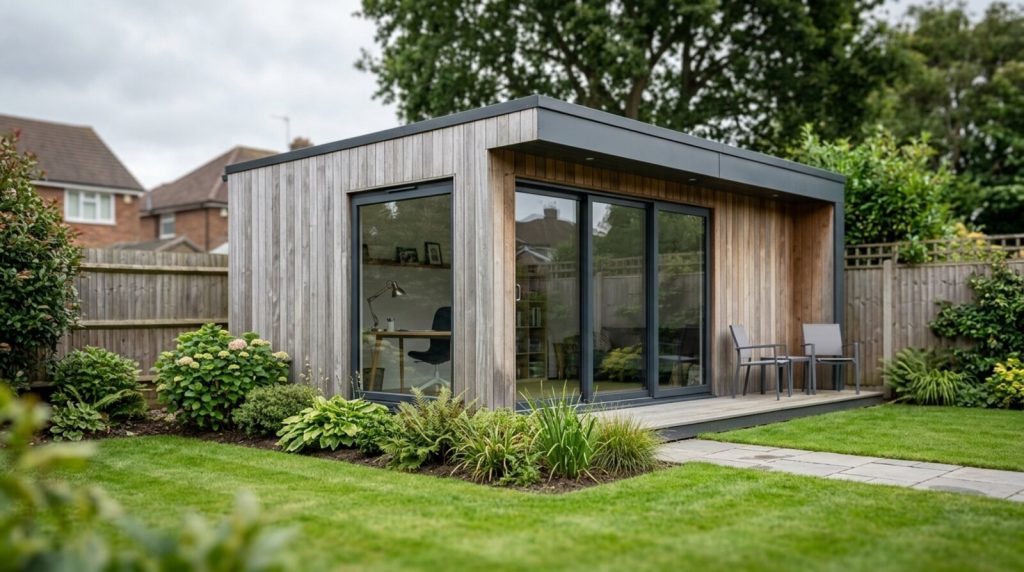
A second-hand garden room sounds like a clean win: someone else took the depreciation hit, and you collect a near-new building for a fraction of the cost. Sometimes it works out that way. Other times the sticker price is the cheapest part: by the time you have dismantled it, moved it, fixed what broke in transit and poured a fresh base, you would have been better off buying new.
This guide covers where used garden rooms sell, the real saving once hidden costs are counted, the common catches, and how to inspect and value one before you pay.
Where to find a second-hand garden room
Used garden rooms turn up in a few predictable places, each with trade-offs.
- General marketplaces: Facebook Marketplace, Gumtree and Preloved carry the most listings. Prices are keen and you deal directly with the owner, but there is no vetting or recourse, and you handle everything from inspection to removal.
- Specialist resellers and manufacturers: some firms whose buildings are designed to be dismantled and reassembled keep a list of used units, and a few broker private sales or handle the relocation. Booths Garden Studios, for example, build transportable studios and move owners’ buildings between homes.
- Ex-display and clearance models: not strictly second-hand, but worth knowing about. Manufacturers periodically sell off show-site buildings and end-of-line stock at a discount, and these come with a base, a warranty and professional installation.
The realistic saving once you count the hidden costs
The listing price is rarely the price you pay. A used garden room is almost never sold in place: you are buying a building that has to come down, travel and go back up elsewhere, and each stage costs money.
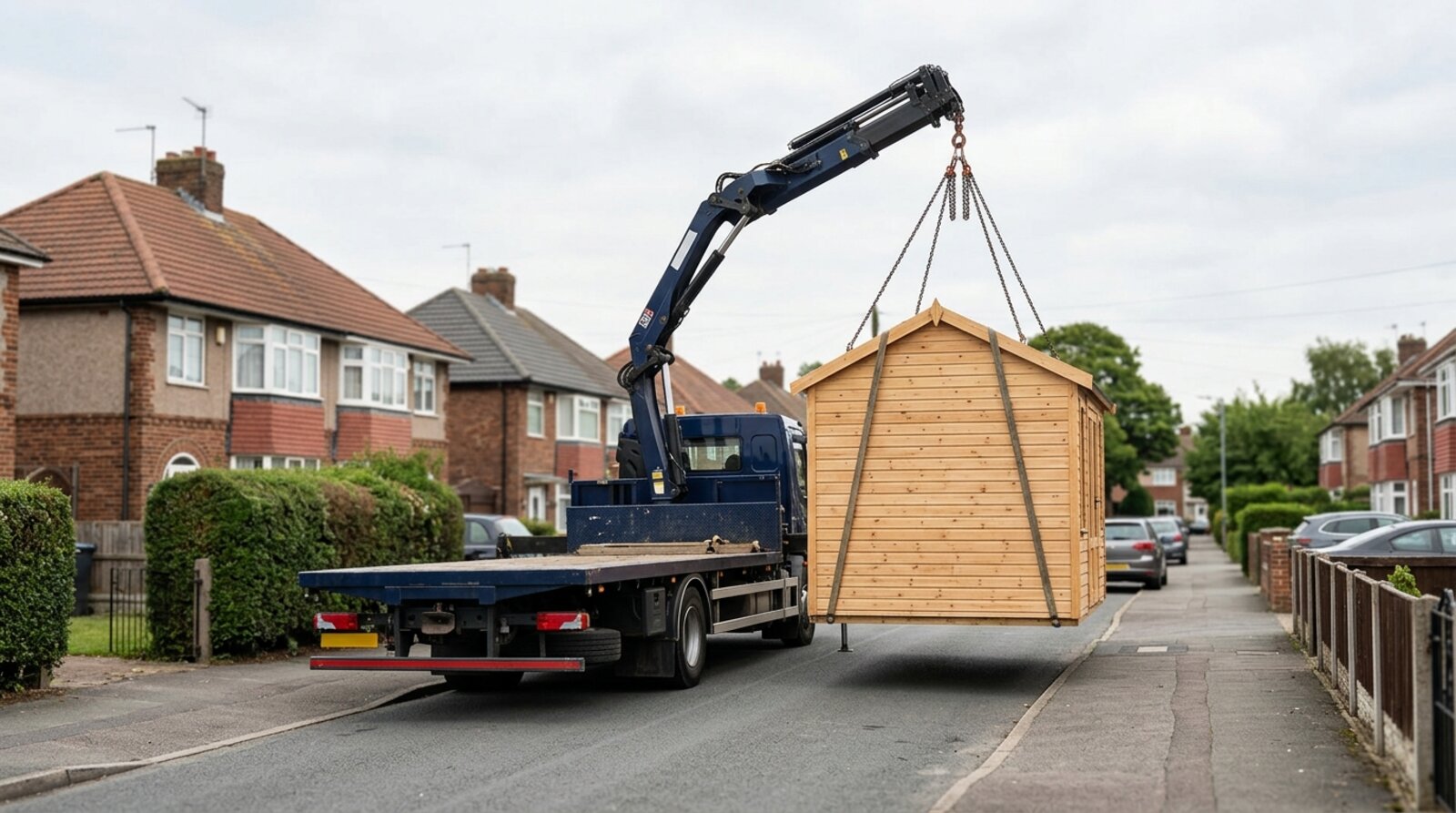
There are broadly two ways to move one, and they price very differently:
- Dismantle and rebuild. Modular units bolted together in panels, and anything without a plastered or skimmed interior, can be taken apart, moved flat and reassembled. It is labour-heavy, so use the original installer or a competent joiner to get panels back together square and weathertight.
- Lift whole. Smaller buildings can be craned or hiabbed onto a lorry in one piece if there is road access close to the garden. Where access is poor, you may need a larger crane to reach over the house, which gets expensive fast.
Relocation cost depends on the size of the building, the access at both ends, and the distance travelled, and it can run to a few thousand pounds. Add a new foundation at your end, any reinstatement of the seller’s garden, and the materials you replace because they did not survive the move. A unit advertised at half new price can quietly close most of that gap once the lorry, the crew and the base are paid.
Treat a second-hand garden room as a bargain only when price plus dismantle, transport, new base and repairs lands comfortably below a new equivalent. Work that sum out before you commit, not after.
The big catches buyers miss
The foundations are almost never included
You are buying the building, not the ground it stands on. Whatever base the previous owner used, a concrete slab, a timber deck, or a ground-screw system, it stays behind or is destroyed in removal. You need a level, load-bearing, properly drained base ready before the building arrives. Get it wrong and you get doors that bind, floors that flex and damp creeping in.

Warranties usually do not transfer
Most garden room guarantees are issued to the original purchaser and tied to the original installation, so dismantling and moving the building almost always voids whatever cover remained. Assume no warranty and no manufacturer support, and price accordingly. Ask the seller in writing and check the manufacturer’s terms rather than taking their word for it.
The fabric may be tired in ways you cannot see
The shell can look smart while the parts that matter are past their best. The usual weak points are the flat roof covering (EPDM rubber and felt have finite lives, and dismantling can damage them), the insulation (compressed, damp or rodent-disturbed insulation performs poorly and is buried inside walls and roof), the cladding (cedar silvers and splits with age), and the window and door seals. None is necessarily a deal-breaker, but each is a cost you may inherit.
The electrics need checking, not assuming
A garden room supply is a real electrical installation that must comply with the IET Wiring Regulations, BS 7671. When you move a building, that supply has to be disconnected and reinstated at the new location by a competent person. The sensible move is to commission an Electrical Installation Condition Report (EICR), which assesses the condition and safety of the installation and flags defects, then have the new connection certified once it is reinstalled. Reusing the old armoured cable, consumer unit and fittings without inspection is a false economy and a safety risk.
Planning and building rules still apply to you
A used building does not come with grandfather rights. Once it lands in your garden it is judged like any new outbuilding. Under permitted development in England, an outbuilding within two metres of a boundary must not exceed 2.5 metres in height, must be single storey, and overall height is capped at four metres for a dual-pitched roof or three metres for any other roof; outbuildings must not cover more than half the land around the original house. Check the current rules on the Planning Portal before you buy, and remember that conservation areas, National Parks, Areas of Outstanding Natural Beauty and listed-building curtilages are tighter. Building regulations are a separate question that can bite if the floor area is large or you intend to sleep in it.
What to inspect before you buy
View it in daylight, in person, ideally still standing and connected. Take a torch and a spirit level.
- Roof: look for ponding, splits, lifting edges and patched repairs, and ask its age and material.
- Walls and floor: press for soft spots, check corners and skirtings for damp or a musty smell, and run the level over the floor.
- Cladding: check for rot where timber meets the ground, splits, and how recently it was treated.
- Windows and doors: open and close everything. Sticking, draughts and failed double-glazing units (misting between panes) all cost money.
- Insulation: ask what is in the walls, floor and roof, and whether there has been a leak or rodent problem.
- Construction type: establish whether it is bolted panels (dismantle-friendly) or a built-in-place frame with a plastered interior (much harder to move intact).
If the seller will not let you inspect properly, or cannot say how it was built or how it comes apart, walk away.
How to value a used garden room fairly
Start from the cost of a comparable new building to the same spec, then subtract for age, condition and what you will spend to make it yours:
- Begin with what an equivalent new unit costs today.
- Deduct for age and wear: roof and cladding near the end of their life, dated glazing and tired insulation.
- Subtract a real dismantle and transport quote from a remover or the original installer, not a guess.
- Subtract a new base at your end and any garden reinstatement.
- Add a contingency for repairs and replaced materials, because moves rarely go perfectly.
If the number is well under a new equivalent and the building is genuinely sound, it is a good buy. If the gap has shrunk to almost nothing, you are paying near-new money for a used building with no warranty and an unknown history.
When buying new is actually better value
Second-hand stops making sense in several situations. If access at either property is poor and a crane is needed, the move alone can swallow the saving. If the building is large and built in place with a plastered interior, dismantling risks wrecking it. If the roof, insulation or electrics are spent, you are buying a project, not a shortcut. And if you want a warranty, professional installation and a base included, an ex-display or clearance unit often costs little more than a private used building once relocation is counted, with far less risk.
New prefab also wins when certainty matters: a known specification, a current roof and glazing, an installation certified from day one, and somebody to call if something goes wrong. For more on costs and planning, see our garden room guides.
A used garden room can be a smart, sustainable buy when the building is sound, the construction is move-friendly and the full sum works in your favour. Price the whole job, not the headline, and inspect with a torch rather than optimism.
Frequently asked questions
How much can you really save buying a second-hand garden room?
It varies enormously and depends almost entirely on relocation cost. A used building can be much cheaper than new on paper, but once you add dismantling, transport, a fresh base and likely repairs, the real saving is often smaller than the listing suggests. Calculate the full delivered-and-installed cost before deciding.
Does a garden room warranty transfer to a new owner?
Usually not. Most warranties are tied to the original buyer and the original installation, and moving the building tends to void any remaining cover. Confirm in writing with the seller and check the manufacturer’s terms; assume no warranty unless told otherwise.
Do I need an EICR for a second-hand garden room?
It is strongly advisable. An EICR assesses the condition and safety of the existing installation against BS 7671 and flags defects. Because the supply is disconnected and reinstated when the building moves, have a competent electrician inspect the wiring and certify the new connection rather than reusing old electrics on trust.
Are the foundations included when I buy a used garden room?
No. You buy the building only. The previous base stays behind or is destroyed during removal, so you need a level, load-bearing, well-drained foundation ready at your property before the building arrives. That is a separate cost to budget for.
Does a used garden room still need planning permission?
It is judged on your plot like any new outbuilding. Permitted development in England limits height to 2.5 metres within two metres of a boundary, requires a single storey, and caps coverage at half the land around the original house. Conservation areas, National Parks and listed-building curtilages are stricter, so check the Planning Portal.
What is the hardest type of garden room to move?
A large building constructed in place with a plastered or skimmed interior. These do not come apart in panels, so they either have to be craned whole, which needs good access, or risk serious damage during dismantling. Bolted modular units without wet plaster are far easier to relocate intact.
Related guides
- Garden Room Planning Permission UK: The 30m² and 50% Rules Explained
- How Much Does a Garden Room Cost to Run in Winter? Real UK Figures
- Garden Room vs Extension: Honest Cost, Value and When Each Wins
- How Much Does It Cost to Run Electrics to a Garden Room in 2026?
- Ground Screws vs Concrete Base: Which Garden Room Foundation Is Right for You?
- Do Garden Rooms Need Building Regulations? The 15, 30 and 1m Rules Explained
- Prefab vs Bespoke Garden Rooms: Which Is Right for You?
- Garden Room Buying Mistakes: 12 Costly Errors to Avoid
- Garden Room News: June 2026
- How to Buy a Garden Room: The Complete UK Buyer’s Guide (2026)
- What to Look for in a Garden Room: 15 Things to Check Before You Buy
- Garden Room Kits vs Fully Installed: Should You Self-Build or Buy Turnkey?
- Garden Room Deposits, Contracts and Deliverables: Protecting Your Money
- How Long Does a Garden Room Last? Lifespan and Maintenance
- Garden Room Cost Per Square Metre: 2026 UK Rates Explained
- How Much Does a Garden Room Cost in the UK? (2026 Price Guide)
- Garden Room Prices by Size: From 3x3m to 8x4m and Beyond
- How Much Does a Garden Office Cost? (2026 UK Breakdown)
- Garden Room Planning News: Late June 2026
- How Much Does a Garden Room with a Bathroom Cost?
- Hidden Garden Room Costs: Foundations, VAT and the Extras Quotes Miss
- Garden Room Finance: Loans, Mortgages and Payment Options Explained
- Garden Room News: Early July 2026
- Do Garden Rooms Add Value to Your House? What the UK Resale Data Shows
- Permitted Development Rights for Garden Rooms: Size, Height and the 2m Boundary Rule
- Do Garden Rooms Affect Council Tax? Business Rates and Reassessment
- Garden Room News: Mid-July 2026
- How a Garden Room Is Built: Foundations to Finish (UK Guide)
- SIPs vs Timber Frame Garden Rooms: Which Construction Is Better?
- How Close to a Boundary Can a Garden Room Be? UK Rules Explained
- How to Apply for Garden Room Planning Permission: Step by Step
- Can You Build a Garden Room on Decking, Slabs or a Patio?
- Is a Garden Room Cheaper Than an Extension? 2026 Cost Comparison
- Garden Room News: Mid-July 2026
- Garden Room Cladding: Cedar vs Composite vs Larch vs Render
- Garden Room Roof Guide: Flat vs Pitched and the Best Materials
- Garden Room Windows and Doors: Bifold, Sliding and Glazing
- How to Build a Garden Room: A DIY Step-by-Step Guide (UK)
- How Long Does It Take to Build a Garden Room?
- How to Make a Garden Room Usable All Year Round
- Garden Room Insulation: Best Materials and U-Values for the UK
- How to Heat a Garden Room: 9 Options Compared by Cost and Warmth
- Best Heating for a Garden Office: Warm Without a Huge Bill
- Air Conditioning for Garden Rooms: Cooling and Heating in One
- Stopping Condensation and Damp in a Garden Room (UK Guide)
- How to Get Wi-Fi in a Garden Office: 6 Ways That Actually Work
- Garden Office Ideas: Designing the Perfect Work-From-Home Space
- Garden Room Ideas: 20 Popular Uses to Inspire Your Build
- Garden Room Annexe: Rules, Costs and How to Build One
- Garden Bar Ideas: The Height Rules, Power and Layout
- Garden Room Business: What Changes Once Clients Visit
- Garden Studio Ideas: Sizes, Light and the 2.5m Rule
- Garden Room Lighting: IP20 Inside, IP65 Out, Part P Rules
- Landscaping Around a Garden Room: the 30cm Decking Trap
- Garden Room Design: Why 2.5m Decides Everything
- Garden Room Planning Permission: the 2.5m Boundary Rule
- Garden Room News: New NPPF Lands, PD Rules Unchanged
- Garden Saunas UK: Planning, Building Regs and Electrics
- Best Garden Room Companies UK: Guarantees of 10 to 25 Years
- Garden Room Electrics: The Rules Change on 15 Oct 2026
- Golf Simulator Garden Room: The 2.5m Rule That Stops It
- Garden Screens: the 2m Rule, and Why Trellis Counts
- Cheap Garden Rooms: What 19mm Walls Really Get You
- Green Retreats Review: 12-Year Cover, 60% Upfront
- Booths Garden Studios Review: Steel Build, 25 Years
- Eden Garden Rooms Review: £23,500 Start, 10-Year Cover
- Green Retreats vs Booths: 25-Year Steel or Timber?
- Garden Rooms London: 6 Companies and the 2.5m Limit
- Garden Room Bedroom: Why a Bed Changes the Rules
- Do I Need Planning Permission for a Garden Shed? Usually Not
- Garden Room News: Staged Payments Arrive, Timber Stays Dear
- Garden Gym Ideas: Sizes, Ceilings and the 2.5m Height Rule
- Garden Gazebo Rules: 2.5m Near a Boundary, 4m Max
- Garden Arch: Wood or Metal, and the 2.7m Height Rule
- Garden Arbour: Sizes That Seat Two, and Wood vs Metal
- Wooden Garden Gates: Sizes, UC4 Posts and the 1m Rule
- Garden Room News: Rates Held, Materials Up 5.9%
- Summer House Interior Ideas: 9 That Work in Winter