

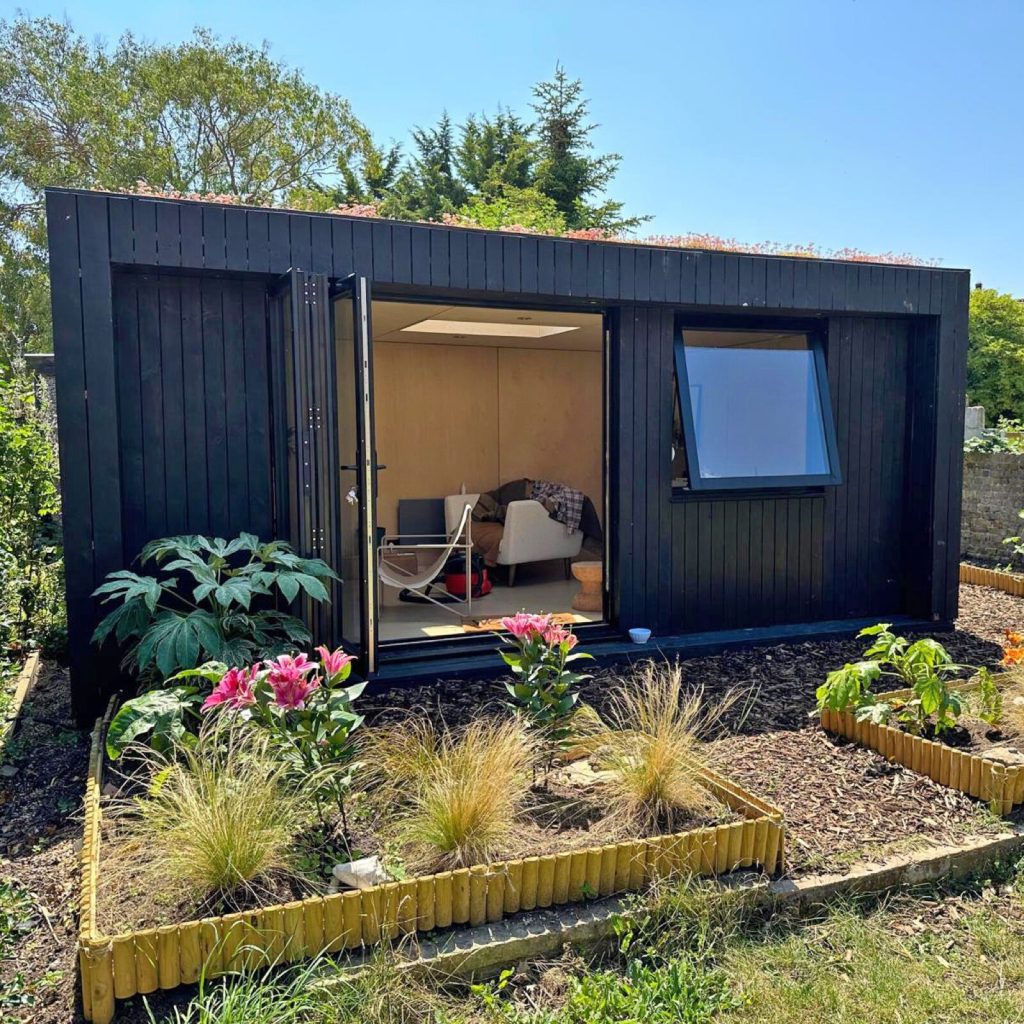
Running a garden room business is legal, common and mostly unremarkable, right up to the moment a paying customer walks down your garden path. That is the line. A garden room you work in alone is treated as part of your house. A garden room clients visit is, in the eyes of the planning system, the Valuation Office and quite possibly your insurer, something closer to commercial premises.
Nobody sells you a garden room on that basis, so here is what actually changes, and in what order to deal with it.
The line between a home office and a garden room business
The Planning Portal frames it as four questions. Permission is probably needed if you answer yes to any of them:
- Will your home no longer be used mainly as a private residence?
- Will your business result in a marked rise in traffic or people calling?
- Will your business involve any activities unusual in a residential area?
- Will your business disturb your neighbours at unreasonable hours, or create other nuisance such as noise or smells?
A consultant taking video calls answers no to all four. A dog groomer with six appointments a day, a compressor running and vans parking on a cul-de-sac answers yes to at least two. The legal test is whether there has been a material change of use, and it turns on scale and impact rather than on whether money changes hands.
If you are close to the line and want certainty, apply to your council for a Certificate of Lawfulness for an existing or proposed use. It costs a fee and takes weeks, but it is a formal confirmation that what you are doing does not need permission, and it is exactly the document a buyer’s solicitor will want later.
When you need planning permission for a change of use
Assume you need it if any of these apply: clients attend regularly, you employ someone who works in the building, you display signage, you store commercial stock in quantity, or you are converting the garden room into something a neighbour would describe as a shop, salon or clinic.
Worth separating two things that often get muddled. Building the garden room is usually permitted development, subject to the familiar limits on height, position and how much of the garden it covers. Using it for a business that draws visitors is a separate question with a separate answer. You can have a lawfully built garden room and an unlawful use inside it.
Also check your title deeds and, if you are leasehold, your lease. Restrictive covenants forbidding “trade or business” on the land are common on estates built since the 1980s and are enforceable regardless of what the council says.
Business rates: the four triggers
Government guidance is unusually clear on this. You do not usually pay business rates if you use a small part of your home for business, such as a bedroom as an office. You may need to pay if:
- your property is part business and part domestic;
- you sell goods or services to people who visit your property;
- you employ other people to work at your property;
- you have made changes to your home for your business, such as converting a garage to a hairdresser’s.
A garden room used exclusively as a treatment room that clients attend hits at least two of those. In practice the Valuation Office Agency may assess that part of the property separately, and you would then pay business rates on it while the house stays in council tax. Small business rate relief means many single-premises operations pay nothing, but relief is something you claim, not something that happens automatically, and being rated is not the same as being charged.
Which businesses actually work in a garden room
The garden rooms that succeed commercially tend to share three traits: one client at a time, quiet, and no delivery traffic. Therapy and counselling rooms, one-to-one coaching, physiotherapy and sports massage, nail and brow studios, private tutoring, photography and pottery studios, and small workshop trades all fit that shape.
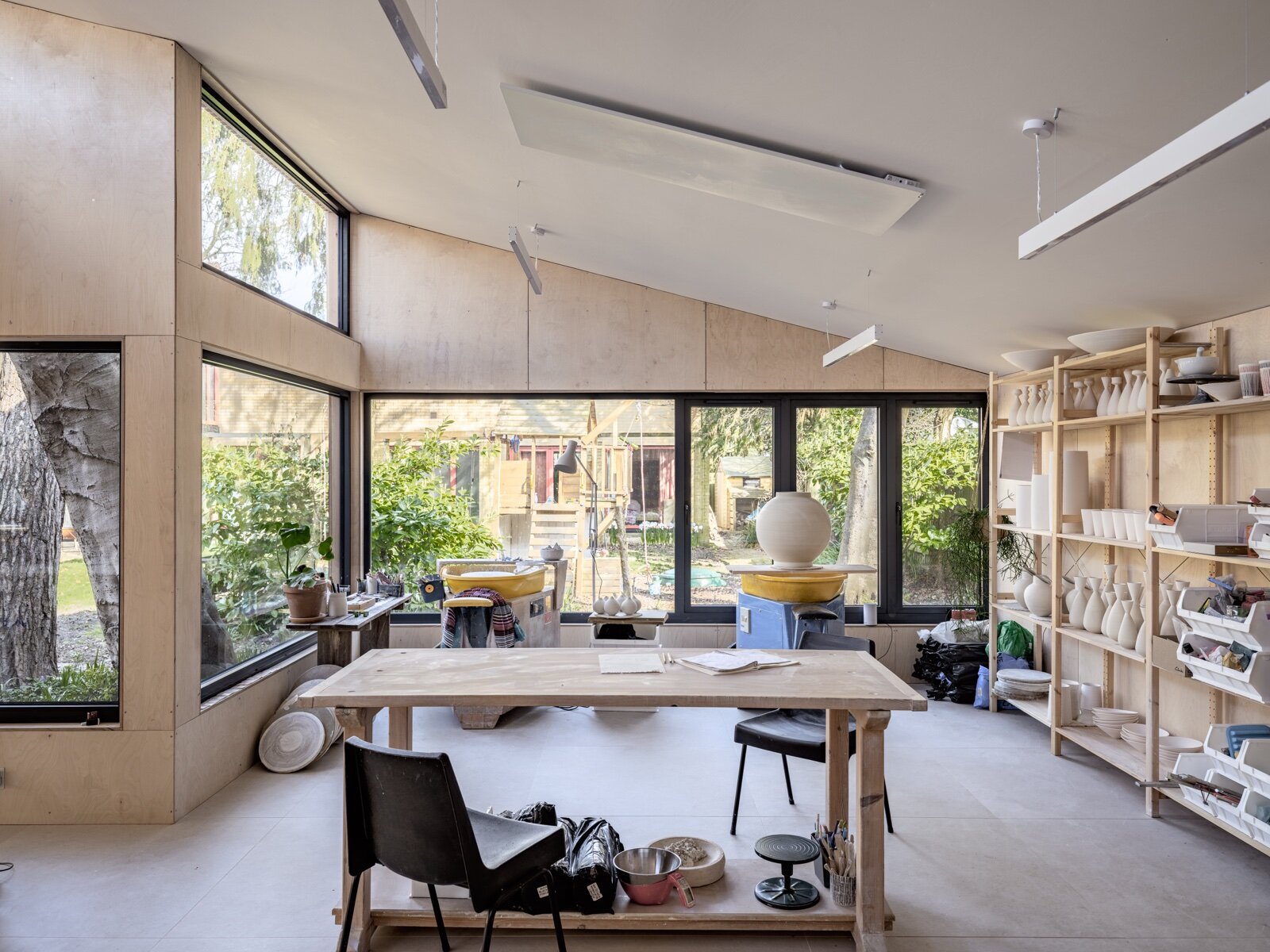
The ones that go wrong are the ones with volume. Dog grooming and boarding bring noise and parking. Food production brings deliveries, waste and a separate regulatory regime. Anything with a queue outside is a planning application waiting to happen.
Two design decisions matter more than any interior finish if clients will visit: a route to the building that does not go through your kitchen, and a lavatory.
Building regulations do not care that you are trading
The exemption thresholds are about the building, not the use. A detached single-storey outbuilding under 15 square metres internal floor area with no sleeping accommodation is normally exempt from building regulations approval. Between 15 and 30 square metres it is still normally exempt provided there is no sleeping accommodation and it is either at least one metre from any boundary or built substantially of non-combustible materials. Over 30 square metres, full approval is required with no exceptions.
Three things that catch people out. Electrics are never exempt: Part P applies whatever the size, and running a new supply circuit out to an outbuilding is notifiable work that needs signing off. Sleeping accommodation removes the exemption at any size, which matters if you were thinking of letting the room out between clients. And adding a WC brings drainage into scope.
An exempt building is also an uninsulated-to-no-standard building unless you specify otherwise. If clients will sit in it in January, you are buying the insulation and heating for comfort, not for compliance, and that needs to be in the brief you give the supplier.
Licences and registrations by trade
This is the part most garden room buyers have never heard of, and it is trade-specific:
- Tattooing, cosmetic piercing, semi-permanent skin colouring, electrolysis and acupuncture. Section 15 of the Local Government (Miscellaneous Provisions) Act 1982 requires both the person and the premises to be registered with the local authority. Operating from unregistered premises is an offence. Your garden room is the premises.
- Anywhere in a London borough, a much wider list. Part II of the London Local Authorities Act 1991 requires a special treatment licence for massage, manicure, acupuncture, chiropody, electrolysis, saunas, sunbeds, lasers and facials, among others. Councils can refuse on grounds including unsuitable structure, poor ventilation or inadequate fire precautions, which is a real risk for a lightly built garden building.
- Food. Any food business, including one run from home, must register with the local authority at least 28 days before it starts trading.
- Animals. Dog day care, home boarding and breeding need a licence under the animal activities licensing regime, with an inspection of the premises.
Check with your own council’s licensing team before you order the building, not after. Ventilation, washbasin provision and surface finishes are all things a licensing officer may specify, and they are far cheaper to build in than to retrofit.
Insurance, fire safety and the tax sting
Standard home insurance does not cover business use. Three separate gaps open up: the building and its contents once they are commercial assets, public liability if a client is injured on your property, and treatment risk if the thing you did to them is the injury. Public liability is not legally required, but employers’ liability insurance is: the Employers’ Liability (Compulsory Insurance) Act 1969 requires a minimum of £5m cover if you have any employee, and that includes a part-time assistant or an unpaid trainee.
Fire safety law also changes. The Regulatory Reform (Fire Safety) Order 2005 applies to premises where people are employed or members of the public attend, bringing a duty to carry out a fire risk assessment. For a single treatment room that is a short document, but it needs to exist and to have led to something: a working alarm, a clear exit route, an extinguisher.
Finally, the tax point almost nobody plans for. If part of your property is used exclusively for business, that proportion of the gain does not qualify for Private Residence Relief when you sell, and the gain is apportioned on a just and reasonable basis, usually by floor area. Occasional working from a room does not trigger it. A dedicated treatment room that is never used for anything else can. HMRC sets this out in its Private Residence Relief helpsheet. On a modest garden room the sums are usually small, but it is worth a conversation with an accountant before you describe the building as exclusively business use anywhere in writing.
For the build side of the decision, read our garden room building regulations guide and the detail on planning permission and the 30 square metre rule. If the rating question worries you, our note on garden rooms and council tax covers the domestic side.
Frequently asked questions
Can I run a business from a garden room without planning permission?
Usually yes, if you are the only person working there and clients do not visit. Permission is needed where there is a material change of use, which the Planning Portal tests by asking whether the home is still mainly a private residence, whether traffic or callers rise markedly, whether the activity is unusual for a residential area, and whether it causes nuisance.
Will I have to pay business rates on a garden room?
Possibly. Government guidance says business rates may apply where you sell goods or services to people who visit your property, where you employ people to work there, or where you have altered the property for the business. A garden room used as a client-facing treatment room meets those tests. Small business rate relief may reduce the bill to nothing, but you have to claim it.
Do I need building regulations approval for a garden room I work from?
Not usually, if it is a detached single-storey building under 30 square metres with no sleeping accommodation, and it is either a metre from the boundary or substantially non-combustible. Under 15 square metres those siting and material conditions do not apply. The electrics always need to comply with Part P regardless of size.
Can I have clients visit a garden room in a conservation area?
The conservation area designation affects what you can build and how it looks, not directly whether you can trade from it. The change-of-use question is assessed the same way anywhere. In practice councils apply more scrutiny to visible alterations, signage and parking pressure in conservation areas, so expect a harder conversation on both fronts.
Does a garden room business affect my home insurance?
Yes. Home policies exclude business use, so the building, its contents, public liability and any treatment risk need commercial cover. If you employ anyone at all, including part-time or unpaid helpers, employers’ liability insurance with at least £5m of cover is a legal requirement.
What licence do I need for a beauty or therapy room in a garden building?
It depends where you are and what you do. Tattooing, cosmetic piercing, electrolysis and acupuncture require registration of both practitioner and premises with the council under the Local Government (Miscellaneous Provisions) Act 1982. In London boroughs, a far wider range including massage, manicure, chiropody, saunas and lasers needs a special treatment licence under the London Local Authorities Act 1991. Ask your council’s licensing team before you buy the building.
Related guides
- Garden Room Planning Permission UK: The 30m² and 50% Rules Explained
- How Much Does a Garden Room Cost to Run in Winter? Real UK Figures
- Garden Room vs Extension: Honest Cost, Value and When Each Wins
- How Much Does It Cost to Run Electrics to a Garden Room in 2026?
- Ground Screws vs Concrete Base: Which Garden Room Foundation Is Right for You?
- Do Garden Rooms Need Building Regulations? The 15, 30 and 1m Rules Explained
- Prefab vs Bespoke Garden Rooms: Which Is Right for You?
- Garden Room Buying Mistakes: 12 Costly Errors to Avoid
- Garden Room News: June 2026
- How to Buy a Garden Room: The Complete UK Buyer’s Guide (2026)
- What to Look for in a Garden Room: 15 Things to Check Before You Buy
- Buying a Second-Hand Garden Room: Is It Worth It?
- Garden Room Kits vs Fully Installed: Should You Self-Build or Buy Turnkey?
- Garden Room Deposits, Contracts and Deliverables: Protecting Your Money
- How Long Does a Garden Room Last? Lifespan and Maintenance
- Garden Room Cost Per Square Metre: 2026 UK Rates Explained
- How Much Does a Garden Room Cost in the UK? (2026 Price Guide)
- Garden Room Prices by Size: From 3x3m to 8x4m and Beyond
- How Much Does a Garden Office Cost? (2026 UK Breakdown)
- Garden Room Planning News: Late June 2026
- How Much Does a Garden Room with a Bathroom Cost?
- Hidden Garden Room Costs: Foundations, VAT and the Extras Quotes Miss
- Garden Room Finance: Loans, Mortgages and Payment Options Explained
- Garden Room News: Early July 2026
- Do Garden Rooms Add Value to Your House? What the UK Resale Data Shows
- Permitted Development Rights for Garden Rooms: Size, Height and the 2m Boundary Rule
- Do Garden Rooms Affect Council Tax? Business Rates and Reassessment
- Garden Room News: Mid-July 2026
- How a Garden Room Is Built: Foundations to Finish (UK Guide)
- SIPs vs Timber Frame Garden Rooms: Which Construction Is Better?
- How Close to a Boundary Can a Garden Room Be? UK Rules Explained
- How to Apply for Garden Room Planning Permission: Step by Step
- Can You Build a Garden Room on Decking, Slabs or a Patio?
- Is a Garden Room Cheaper Than an Extension? 2026 Cost Comparison
- Garden Room News: Mid-July 2026
- Garden Room Cladding: Cedar vs Composite vs Larch vs Render
- Garden Room Roof Guide: Flat vs Pitched and the Best Materials
- Garden Room Windows and Doors: Bifold, Sliding and Glazing
- How to Build a Garden Room: A DIY Step-by-Step Guide (UK)
- How Long Does It Take to Build a Garden Room?
- How to Make a Garden Room Usable All Year Round
- Garden Room Insulation: Best Materials and U-Values for the UK
- How to Heat a Garden Room: 9 Options Compared by Cost and Warmth
- Best Heating for a Garden Office: Warm Without a Huge Bill
- Air Conditioning for Garden Rooms: Cooling and Heating in One
- Stopping Condensation and Damp in a Garden Room (UK Guide)
- How to Get Wi-Fi in a Garden Office: 6 Ways That Actually Work
- Garden Office Ideas: Designing the Perfect Work-From-Home Space
- Garden Room Ideas: 20 Popular Uses to Inspire Your Build
- Garden Room Annexe: Rules, Costs and How to Build One
- Garden Bar Ideas: The Height Rules, Power and Layout
- Garden Studio Ideas: Sizes, Light and the 2.5m Rule
- Garden Room Lighting: IP20 Inside, IP65 Out, Part P Rules
- Landscaping Around a Garden Room: the 30cm Decking Trap
- Garden Room Design: Why 2.5m Decides Everything
- Garden Room Planning Permission: the 2.5m Boundary Rule
- Garden Room News: New NPPF Lands, PD Rules Unchanged
- Garden Saunas UK: Planning, Building Regs and Electrics
- Best Garden Room Companies UK: Guarantees of 10 to 25 Years
- Garden Room Electrics: The Rules Change on 15 Oct 2026
- Golf Simulator Garden Room: The 2.5m Rule That Stops It
- Garden Screens: the 2m Rule, and Why Trellis Counts
- Cheap Garden Rooms: What 19mm Walls Really Get You
- Green Retreats Review: 12-Year Cover, 60% Upfront
- Booths Garden Studios Review: Steel Build, 25 Years
- Eden Garden Rooms Review: £23,500 Start, 10-Year Cover
- Green Retreats vs Booths: 25-Year Steel or Timber?
- Garden Rooms London: 6 Companies and the 2.5m Limit
- Garden Room Bedroom: Why a Bed Changes the Rules
- Do I Need Planning Permission for a Garden Shed? Usually Not
- Garden Room News: Staged Payments Arrive, Timber Stays Dear
- Garden Gym Ideas: Sizes, Ceilings and the 2.5m Height Rule
- Garden Gazebo Rules: 2.5m Near a Boundary, 4m Max
- Garden Arch: Wood or Metal, and the 2.7m Height Rule
- Garden Arbour: Sizes That Seat Two, and Wood vs Metal
- Wooden Garden Gates: Sizes, UC4 Posts and the 1m Rule
- Garden Room News: Rates Held, Materials Up 5.9%
- Summer House Interior Ideas: 9 That Work in Winter
- Garden Trellis Panels: the 2m Rule Most Buyers Miss
- Garden Shelters: Six Types and When You Need Permission
- Garden Greenhouses: Glass Gives 90% Light, Plastic 80%
- Summer House Doors and Windows: 4mm Toughened or Styrene?
- Log Stores: Size, Siting and the 20% Moisture Rule