

Wooden garden gates fail in one of two places: the post rots at ground level, or the gate drops on its hinges until the latch no longer lines up. Both are avoidable when buying, and neither shows in a product photo. This page covers the styles, how to size a side gate, the treatment rating a gate post actually needs, hanging a gate so it stays square, and the planning rule that catches out front gates. It also covers when a metal gate is the better buy.
Wooden gate styles and what each suits
- Ledged and braced: vertical boards on horizontal rails with a diagonal brace. The standard side gate, cheap and easy to trim.
- Framed, ledged and braced: the same with a full outer frame. Stiffer, so it holds its shape longer and suits taller or wider openings.
- Tongue and groove or closeboard: solid, private side gates that match closeboard fencing. Heavy and wind-catching, so they need strong posts and hinges.
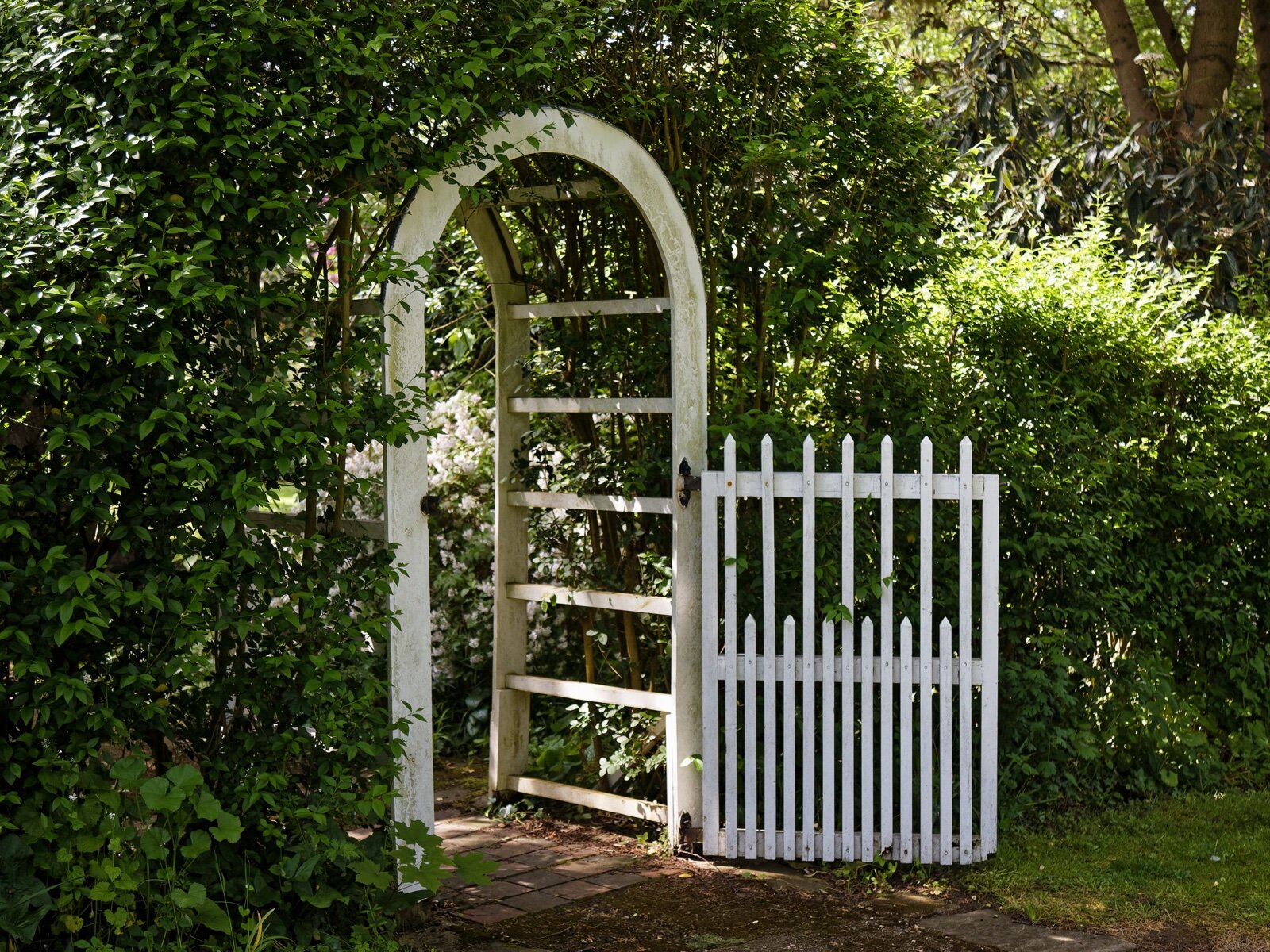
- Picket: spaced vertical pales, usually low. A front garden or cottage look that lets the view through.
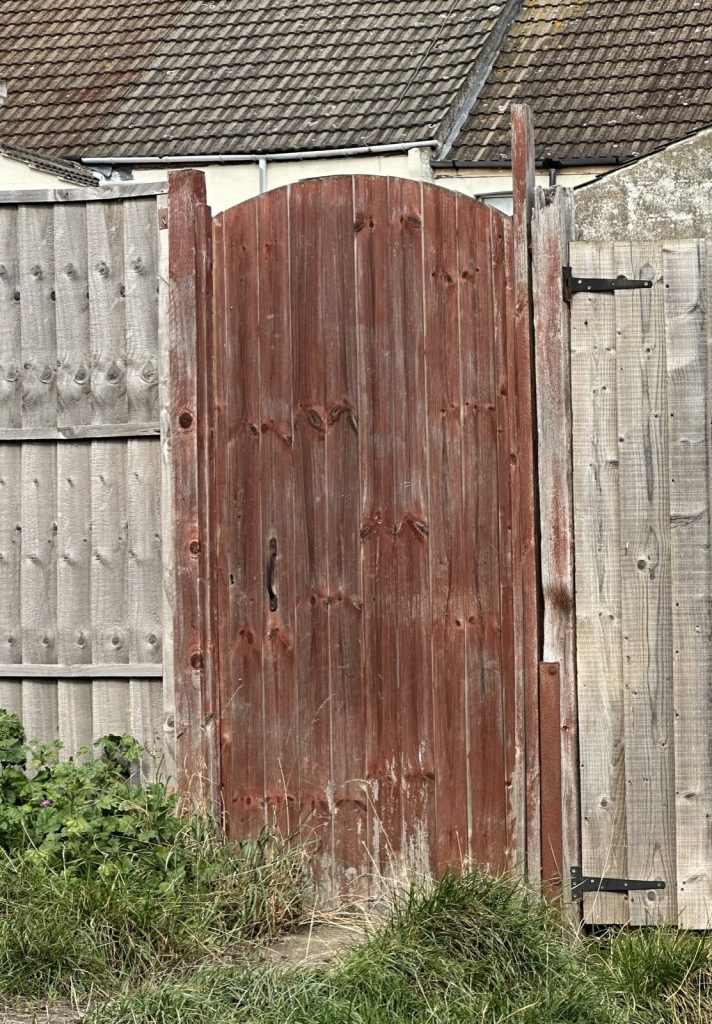
- Arched or bow top: a curved top rail. Purely visual, but it lifts a plain side return.
- Five-bar and field gates: for driveways and larger openings, usually hung as a pair or on heavy posts.
Softwood gates are pressure treated pine or spruce. Hardwood gates in oak or iroko cost more and move less, but still need proper posts and ironmongery.
Sizing a wooden side gate
Measure the opening between the posts (or between where the posts will go) at the top, middle and bottom, and take the smallest figure. Then allow for gaps:
- Hinge side and latch side: a gap of roughly 10mm each side lets the gate swing without binding when the timber swells in winter.
- Ground clearance: leave around 50mm under the gate, more if the path rises in the direction it opens.
Before choosing a width, measure the widest thing that has to pass through: the wheelie bins, the mower, a wheelbarrow, or a bike with panniers. A side return is often the only route to the back garden, and a gate that is a few centimetres too narrow will be irritating every bin day. Ready-made softwood gates are cut down easily, but only from the frame edges; never cut through a brace joint.
Height is a privacy decision, but it is also a planning one, covered below.
Gate posts: the part that decides how long a gate lasts
A gate puts a constant sideways load on its hinge post, and the post sits in wet ground. That is why posts rot and lean long before the gate itself wears out.
Use Class 4 treatment
Timber in contact with the ground needs Use Class 4 (UC4) preservative treatment under BS 8417. The Wood Protection Association runs its “Make sure it’s 4” campaign because posts treated only for above-ground use are sold for outdoor jobs and fail early. Ask for the Use Class on the label or invoice and keep the paperwork. In August 2026 Fencing and Landscaping News reported a WPA investigation into four treated gate posts installed in 2021 that decayed at ground level: the preservative had penetrated the wood, but the amount retained was well below the Use Class 4 minimum. The contractor had no treatment records, so could not claim against the supplier.
Setting posts in the ground
The WPA’s best practice guidance on installing treated posts is specific:
- Put the uncut, factory-treated end in the ground. A cross-cut end must never be buried, even after brushing on preservative.
- If you cut a post to height, give the new surface two liberal brush coats of end grain preservative and cut the top at an angle or fit a cap.
- Put 150mm of gravel in the bottom of the hole so water drains away. Do not form a concrete “boot” around the foot of the post, which keeps it wet.
- If you use concrete or post mix, finish it above ground level and slope the top away from the post.
Use a thicker post on the hinge side than you would for a fence panel, and set it deep. For heavy closeboard or double gates, a steel post or a timber post bolted to a brick pier resists the pull far better.
Hanging a wooden gate so it does not drop
- Brace direction: the diagonal brace must run from the bottom on the hinge side up to the top on the latch side. Hung the other way, it does nothing and the gate sags.
- Hinges: use tee hinges or, for heavier gates, hook and band hinges, with the strap screwed across the ledges rather than into board ends. Galvanised or powder-coated ironmongery lasts outdoors; bright zinc rusts quickly.
- Fixings: coach screws or bolts through the hinge into the post, not short wood screws.
- Latch and stop: fit a gate stop so the gate closes against it rather than straining the latch. Thumb latches and ring latches suit ledged gates; a lockable bolt on the garden side adds security to a side return.
- Which way it opens: swing a side gate into your property, away from the path.
Planning permission and the highway rules
Gates come under Class A of Part 2 of the General Permitted Development Order 2015, which covers gates, fences and walls in England. Without a planning application:
- a gate next to a highway used by vehicles can be up to 1 metre high;
- a gate anywhere else can be up to 2 metres high;
- a replacement cannot go higher than the old gate or those limits, whichever is greater.
Those rights do not apply within the curtilage of a listed building, and an Article 4 direction, most often found in conservation areas, can remove them, so check with your council first. The height is measured from ground level, and a road does not need to be busy to count.
Separately, section 153 of the Highways Act 1980 says a gate that opens on to a street must not open outwards. The council or highway authority can serve notice requiring you to rehang it. Hang front gates to swing inward.
Wooden or metal garden gates?
Metal gates are slimmer, do not rot and are harder to kick through, which suits side returns where security matters. They are colder-looking, can rust at welds if the coating chips, and are harder to trim to a non-standard opening. Wooden garden gates are easy to size, match timber fencing and give full privacy, at the cost of re-treating every few years and posts that need replacing eventually. A common compromise is a solid wooden gate hung on steel posts or brick piers.
Looking after a wooden gate
- Clear soil, gravel and leaves from around the foot of the posts.
- Re-coat with a stain or preservative treatment every couple of years, especially the end grain at the bottom of the boards.
- Tighten hinge fixings each spring. A sagging gate often only needs longer screws or a turnbuckle brace kit.
- Oil hinges and latches once a year.
Frequently asked questions
Do I need planning permission for a wooden garden gate?
Not usually in England. A gate beside a road used by vehicles can be up to 1 metre high, and elsewhere up to 2 metres. Listed buildings and properties covered by an Article 4 direction are the exceptions.
How wide should a garden side gate be?
Wide enough for the biggest thing that goes through it, usually the wheelie bins or the mower. Measure those, then allow roughly 10mm gaps at each side of the gate.
Why has my wooden gate post rotted?
Usually because it was not treated to Use Class 4 for ground contact, a cut end was buried, or concrete around the foot held water against the timber.
Which way should the brace go on a wooden gate?
From the bottom corner on the hinge side up to the top corner on the latch side. That puts the brace in compression and stops the gate dropping.
Can a front garden gate open onto the pavement?
No. Section 153 of the Highways Act 1980 says gates opening on to a street must not open outwards, and the council can require you to change it.
Are wooden or metal garden gates more secure?
Metal gates are generally harder to break through. A solid wooden gate with strong posts, coach-screwed hinges and a lockable bolt on the inside is a reasonable alternative.
For more on garden structures, sheds and garden rooms, browse the guides on the Best Garden Room homepage.
Related guides
- Garden Arbour: Sizes That Seat Two, and Wood vs Metal
- Garden Arch: Wood or Metal, and the 2.7m Height Rule
- Garden Gazebo Rules: 2.5m Near a Boundary, 4m Max
- Garden Screens: the 2m Rule, and Why Trellis Counts
- Do I Need Planning Permission for a Garden Shed? Usually Not
- Landscaping Around a Garden Room: the 30cm Decking Trap