

A bike shed for the garden has one job a normal shed does not: keeping something light, valuable and easy to wheel away from being wheeled away. That changes what to look for. Size matters, because bikes are long and awkward and a shed that fits them on paper can be miserable to use. But the parts that decide whether the bikes are still there in a year are the base, the fixings, the lock and what is bolted to the floor inside.
This page covers how to size a bike store, the main types and how they compare, the security standards police-backed guidance actually asks for, and the planning rule that catches out anyone who wants a bike store in the front garden.
How big a bike shed do you need?
Measure your bikes rather than trusting a listing that says “fits 2 bikes”. Lay a tape along each bike from the front of the tyre to the back of the rear wheel, and across the handlebars at their widest. A typical adult bike is roughly 1.7 to 1.9 metres long; e-bikes, cargo bikes and anything with a child seat or panniers fitted can be considerably bigger, and handlebar width varies a lot between road, hybrid and mountain bikes.
Then check three internal dimensions on the shed’s specification, not its nominal size:
- Internal depth or length: the bike’s length plus a little room to get the wheel past the door frame. Nominal “6ft” or “7ft” sizes are external and include the roof overhang, so the inside is always smaller.
- Door opening width: handlebars, pedals and panniers all have to pass through it. Single doors on budget sheds can be too narrow to wheel a bike in square.
- Height at the eaves: on a low pent or horizontal store, check you can lift a bike in without tipping it onto its saddle.
Our measured pages on the 6×4 garden shed and the small garden shed show how far real internal sizes fall short of the name on the box.
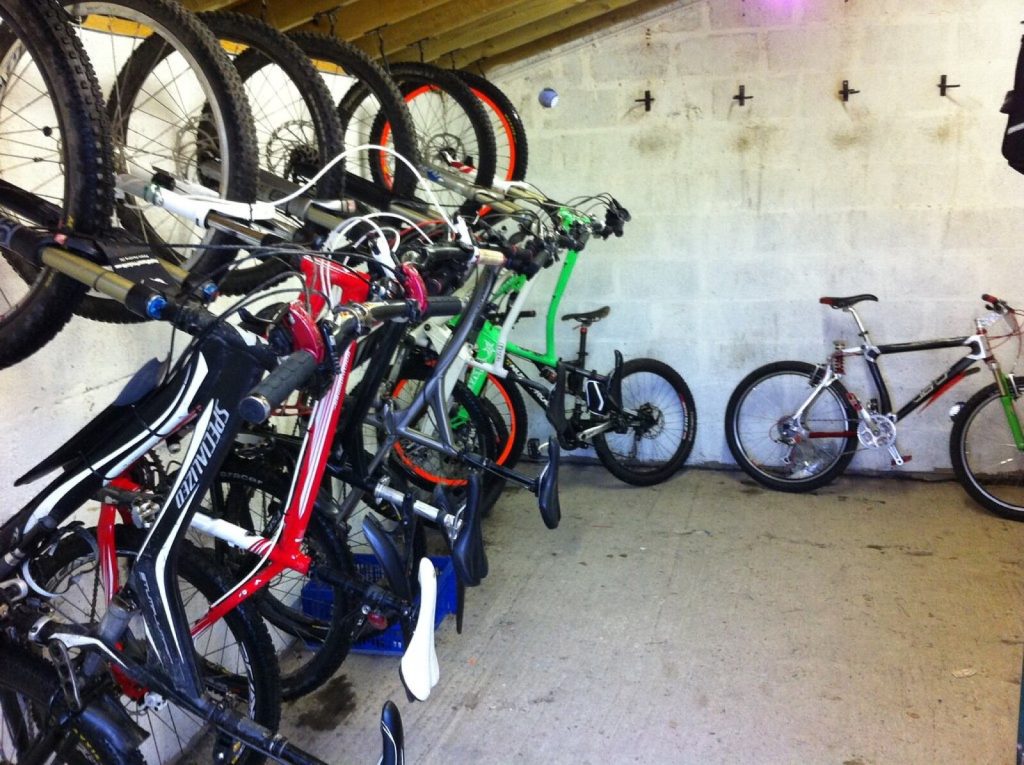
As a rough guide, two bikes side by side need a store deep enough for the longer bike and wide enough for both sets of handlebars, offset so the bars do not clash. Three or more usually works better on wall hooks or a floor rack inside a standard shed than crammed into a purpose-built two-bike unit.
The main types of garden bike storage
Horizontal bike stores
Low, wide boxes with a lift-up lid and front doors, usually in metal, plastic or timber. They tuck under a window or along a side return and are the usual answer for a small garden or a terraced house. The trade-off is that bikes go in flat, so the store needs to be as long as your longest bike.
Metal bike sheds and lockers
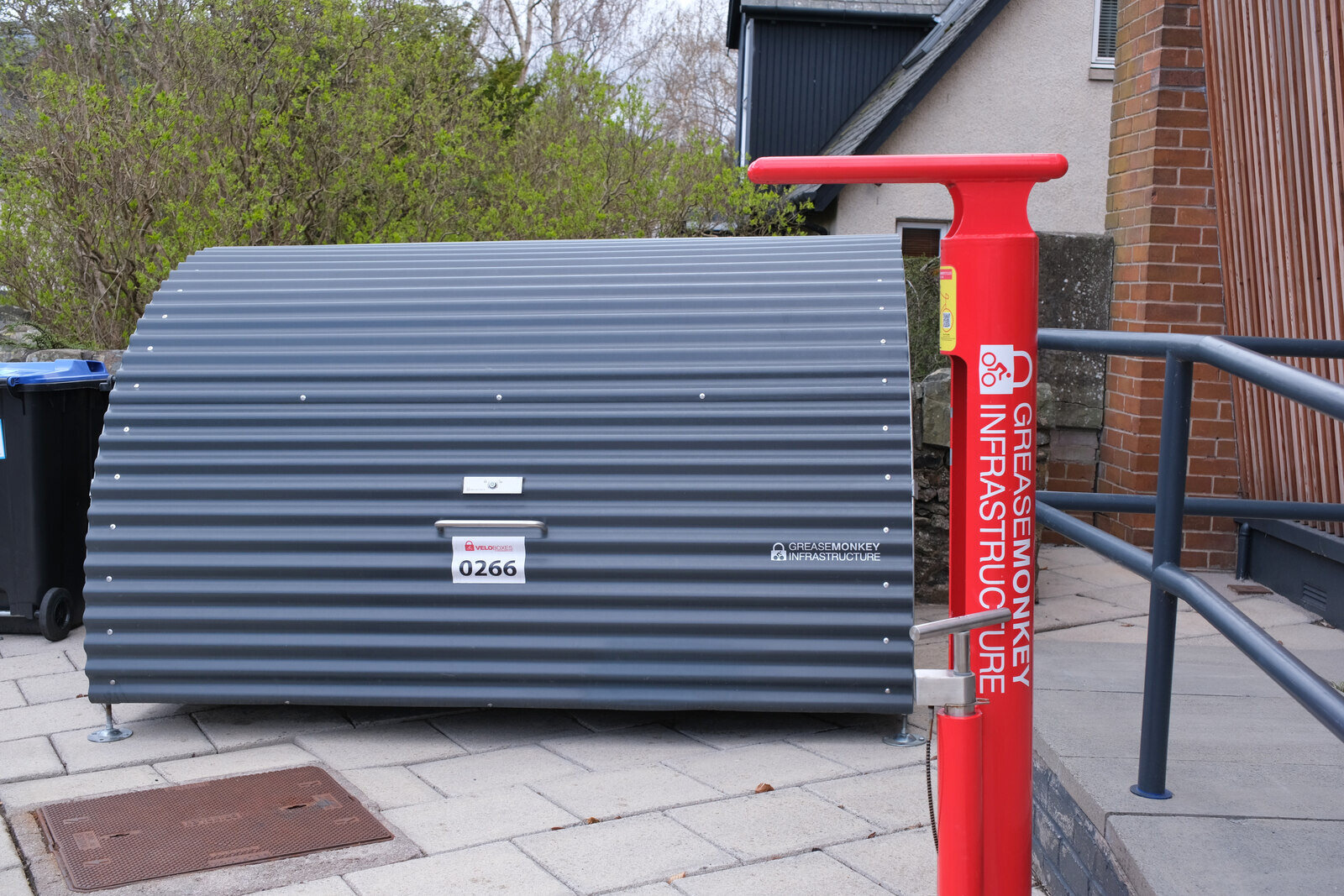
Steel units built for bikes, often with a floor-fixing kit. Metal resists cutting better than thin timber or plastic, but it gets hot in sun and suffers from condensation, which matters for chains and gears. Our page on metal garden sheds covers condensation, bases and anchoring.
Timber sheds fitted out for bikes
A standard wooden shed with a ground anchor, wall hooks and a better lock is often the most practical option if you also need room for tools. Thicker cladding and solid framing give the fixings something to bite into. See our wooden garden sheds page for what the board thickness and framing numbers mean.
Plastic and resin stores
Low maintenance and quick to assemble, but thin panels and lightweight floors make them the hardest to secure. They are best for low-value bikes or used with a separate ground anchor set into the base beneath. Our plastic garden sheds page covers anchoring them.
Security: what police-backed guidance asks for
Secured by Design, the police crime prevention initiative, set out what it expects of bike storage at new homes in its New Homes 2010 guidance. It is a useful benchmark for any garden, because it is specific:
- Purpose-made bike containers should be certificated to LPS 1175 Security Rating 1, the Loss Prevention Certification Board’s attack-resistance standard.
- A shed used for bikes should be securely fixed to a concrete foundation, with a Sold Secure-certificated padlock, hasp and staple on the door (Silver at the time), or, if the door is at least 44mm thick, a mortice lock certificated to BS 3621.
- Inside, a Sold Secure-certificated bicycle ground anchor (Silver was the grade it named).
Grades have moved on since then. Sold Secure currently lists ground anchors and security posts at Bronze, Gold and Diamond, and grades bike locks at Bronze, Silver, Gold and Diamond, so for an anchor in practice you are choosing between Gold and Diamond if you want more than the entry grade.
What that means for a typical garden:
- Fix the store down. A shed or store that two people can lift off its base, or tip over to get under, is not secure, whatever the lock. Bolt it to a concrete base or slab with the fixings supplied, or better ones.
- Lock the bike, not just the door. A ground anchor bolted into the concrete, with a good chain or D-lock through the frame, means a thief who gets the door open still has a second job to do.
- Upgrade the door hardware. Many sheds come with a hasp held on by short wood screws that a screwdriver will remove. Use coach bolts through the door, or a lock with its fixings hidden when closed.
- Hide what is inside. Frost or cover any window, and do not leave the door open with bikes on show from the street.
- Record your bikes. Note frame numbers and take photos, so a recovered bike can be returned and an insurance claim backed up.
Check your home insurance too. Some policies cover bikes in outbuildings only if the building is locked, and some also want the bike locked to something inside, so read the wording.
The base and the fixings
For a bike shed, the base is part of the security, not just a level surface. A concrete base or a slab laid on a compacted sub-base gives anchors and fixing bolts something solid to grip; a plastic grid or timber bearers on soil does not. Allow for the ground anchor when the concrete goes down, or choose a bolt-down anchor rated for retrofitting into existing concrete. Our step-by-step on how to build a garden shed covers base sizes and levels.
Keep the floor dry. Bikes bring in water, and a store that stands in a puddle rusts chains and rots timber floors. A slight fall on the base away from the door and a gap around the walls for air both help.
Planning permission: back garden yes, front garden usually not
Most back-garden bike sheds fall within householder permitted development for outbuildings, which the Planning Portal sets out. The limits that usually matter are:
- no part of the building forward of the principal elevation facing the road;
- a maximum height of 2.5 metres if it sits within 2 metres of a boundary;
- single storey, and outbuildings together covering no more than half the land around the original house.
The first rule is the one that matters for bikes. A store in a front garden, ahead of the front wall of the house, falls outside permitted development, so it normally needs planning permission. Some councils are supportive of front-garden bike stores because they help people cycle; others are strict, particularly in conservation areas. Ask your council before buying. Listed buildings and designated land have extra limits. Our page on planning permission for a garden shed goes through the rules in full.
Frequently asked questions
Do I need planning permission for a bike shed in my front garden?
Usually yes. Outbuildings forward of the principal elevation of the house fall outside permitted development, so a front-garden bike store normally needs planning permission. Check with your council first.
What is the most secure bike shed for a garden?
A purpose-made metal store certificated to LPS 1175 Security Rating 1, bolted to a concrete base, with a Sold Secure ground anchor inside and the bike locked to it. Certification is something you can check, unlike a listing that just says “secure”.
How big should a shed be for two bikes?
Measure the bikes first. The store needs an internal length longer than your longest bike, a door wide enough to pass the handlebars, and enough width for two sets of bars, usually with the bikes offset.
Is a metal or wooden bike shed better?
Metal is harder to cut into and needs little maintenance, but runs hot and can drip condensation. Timber is quieter, easier to fit hooks and anchors into and better if the shed is also a workshop, but needs treating and a good lock fitted with through bolts.
Do I need a ground anchor inside a bike shed?
It is strongly recommended. Police-backed guidance for bikes kept in sheds asks for a certificated ground anchor as well as a secure door, so a thief who gets in still cannot simply wheel the bike out.
For more garden storage, sheds and garden building advice, visit Best Garden Room.
Related guides
- Garden Room Planning Permission UK: The 30m² and 50% Rules Explained
- How Much Does a Garden Room Cost to Run in Winter? Real UK Figures
- Garden Room vs Extension: Honest Cost, Value and When Each Wins
- How Much Does It Cost to Run Electrics to a Garden Room in 2026?
- Ground Screws vs Concrete Base: Which Garden Room Foundation Is Right for You?
- Do Garden Rooms Need Building Regulations? The 15, 30 and 1m Rules Explained
- Prefab vs Bespoke Garden Rooms: Which Is Right for You?
- Garden Room Buying Mistakes: 12 Costly Errors to Avoid
- Garden Room News: June 2026
- How to Buy a Garden Room: The Complete UK Buyer’s Guide (2026)
- What to Look for in a Garden Room: 15 Things to Check Before You Buy
- Buying a Second-Hand Garden Room: Is It Worth It?
- Garden Room Kits vs Fully Installed: Should You Self-Build or Buy Turnkey?
- Garden Room Deposits, Contracts and Deliverables: Protecting Your Money
- How Long Does a Garden Room Last? Lifespan and Maintenance
- Garden Room Cost Per Square Metre: 2026 UK Rates Explained
- How Much Does a Garden Room Cost in the UK? (2026 Price Guide)
- Garden Room Prices by Size: From 3x3m to 8x4m and Beyond
- How Much Does a Garden Office Cost? (2026 UK Breakdown)
- Garden Room Planning News: Late June 2026
- How Much Does a Garden Room with a Bathroom Cost?
- Hidden Garden Room Costs: Foundations, VAT and the Extras Quotes Miss
- Garden Room Finance: Loans, Mortgages and Payment Options Explained
- Garden Room News: Early July 2026
- Do Garden Rooms Add Value to Your House? What the UK Resale Data Shows
- Permitted Development Rights for Garden Rooms: Size, Height and the 2m Boundary Rule
- Do Garden Rooms Affect Council Tax? Business Rates and Reassessment
- Garden Room News: Mid-July 2026
- How a Garden Room Is Built: Foundations to Finish (UK Guide)
- SIPs vs Timber Frame Garden Rooms: Which Construction Is Better?
- How Close to a Boundary Can a Garden Room Be? UK Rules Explained
- How to Apply for Garden Room Planning Permission: Step by Step
- Can You Build a Garden Room on Decking, Slabs or a Patio?
- Is a Garden Room Cheaper Than an Extension? 2026 Cost Comparison
- Garden Room News: Mid-July 2026
- Garden Room Cladding: Cedar vs Composite vs Larch vs Render
- Garden Room Roof Guide: Flat vs Pitched and the Best Materials
- Garden Room Windows and Doors: Bifold, Sliding and Glazing
- How to Build a Garden Room: A DIY Step-by-Step Guide (UK)
- How Long Does It Take to Build a Garden Room?
- How to Make a Garden Room Usable All Year Round
- Garden Room Insulation: Best Materials and U-Values for the UK
- How to Heat a Garden Room: 9 Options Compared by Cost and Warmth
- Best Heating for a Garden Office: Warm Without a Huge Bill
- Air Conditioning for Garden Rooms: Cooling and Heating in One
- Stopping Condensation and Damp in a Garden Room (UK Guide)
- How to Get Wi-Fi in a Garden Office: 6 Ways That Actually Work
- Garden Office Ideas: Designing the Perfect Work-From-Home Space
- Garden Room Ideas: 20 Popular Uses to Inspire Your Build
- Garden Room Annexe: Rules, Costs and How to Build One
- Garden Bar Ideas: The Height Rules, Power and Layout
- Garden Room Business: What Changes Once Clients Visit
- Garden Studio Ideas: Sizes, Light and the 2.5m Rule
- Garden Room Lighting: IP20 Inside, IP65 Out, Part P Rules
- Landscaping Around a Garden Room: the 30cm Decking Trap
- Garden Room Design: Why 2.5m Decides Everything
- Garden Room Planning Permission: the 2.5m Boundary Rule
- Garden Room News: New NPPF Lands, PD Rules Unchanged
- Garden Saunas UK: Planning, Building Regs and Electrics
- Best Garden Room Companies UK: Guarantees of 10 to 25 Years
- Garden Room Electrics: The Rules Change on 15 Oct 2026
- Golf Simulator Garden Room: The 2.5m Rule That Stops It
- Garden Screens: the 2m Rule, and Why Trellis Counts
- Cheap Garden Rooms: What 19mm Walls Really Get You
- Green Retreats Review: 12-Year Cover, 60% Upfront
- Booths Garden Studios Review: Steel Build, 25 Years
- Eden Garden Rooms Review: £23,500 Start, 10-Year Cover
- Green Retreats vs Booths: 25-Year Steel or Timber?
- Garden Rooms London: 6 Companies and the 2.5m Limit
- Garden Room Bedroom: Why a Bed Changes the Rules
- Do I Need Planning Permission for a Garden Shed? Usually Not
- Garden Room News: Staged Payments Arrive, Timber Stays Dear
- Garden Gym Ideas: Sizes, Ceilings and the 2.5m Height Rule
- Garden Gazebo Rules: 2.5m Near a Boundary, 4m Max
- Garden Arch: Wood or Metal, and the 2.7m Height Rule
- Garden Arbour: Sizes That Seat Two, and Wood vs Metal
- Wooden Garden Gates: Sizes, UC4 Posts and the 1m Rule
- Garden Room News: Rates Held, Materials Up 5.9%
- Summer House Interior Ideas: 9 That Work in Winter
- Garden Trellis Panels: the 2m Rule Most Buyers Miss
- Garden Shelters: Six Types and When You Need Permission
- Garden Greenhouses: Glass Gives 90% Light, Plastic 80%
- Summer House Doors and Windows: 4mm Toughened or Styrene?
- Log Stores: Size, Siting and the 20% Moisture Rule
- Garden Shed Roof: Felt, EPDM or Onduline by Pitch
- Insulated Garden Shed: The 25mm Gap That Stops Damp
- Composite Garden Sheds: Rot-Proof, But Check These 6 Things
- How to Build a Garden Shed: Base, Frame and Roof in 5 Steps
- Garden Room News: Power 26.32p a kWh, VAT-Free to March
- Garden Workshop: Size, Base, Power and the Planning Rules
- Plastic Garden Sheds: Who They Suit and 6 Checks First
- Metal Garden Sheds: Stop Condensation Before You Buy
- Garden Shed Storage Ideas: 12 That Free Up Floor Space
- Wooden Garden Sheds: 7 Specs That Decide How Long They Last
- 8×6 Garden Shed: Real Floor Size, Door Width and Base
- 6×4 Garden Shed: 59cm Door, 118cm Deep and What Fits
- Small Garden Shed: 88.5cm Wide Inside and What Fits
- Garden Room News: Building Control Fees Change 6 Nov
- 6×10 Garden Shed: 295 x 182.6cm Inside, and What Fits