

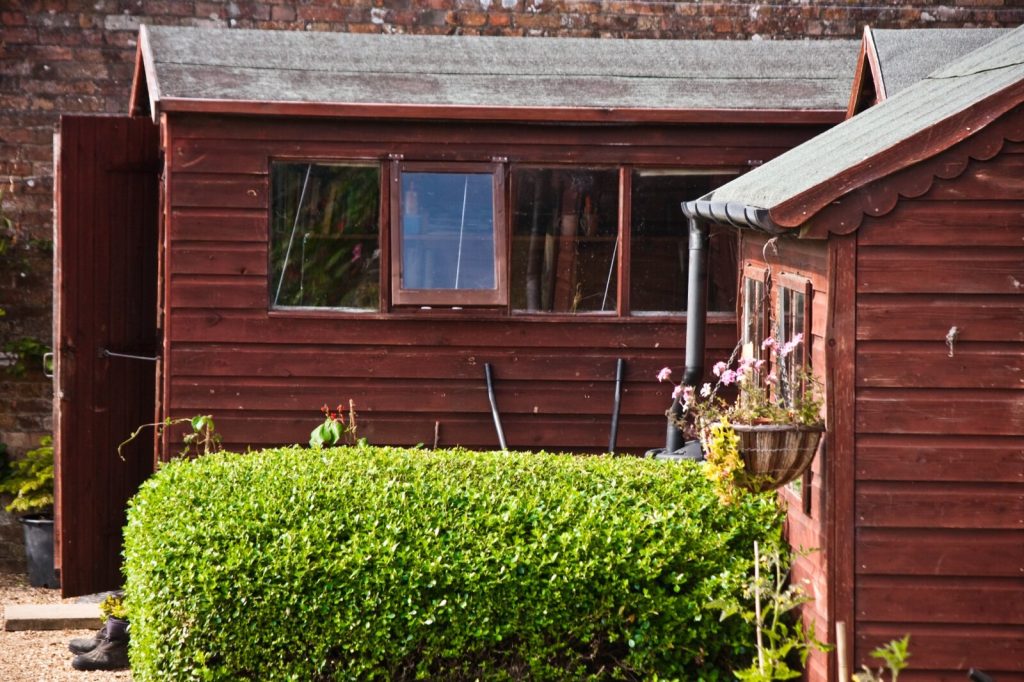
A garden shed roof is usually the first part of a shed to fail, and in autumn it is the part worth checking before the wet months set in. Most sheds leave the factory with a single layer of green mineral felt nailed over thin boards. That covering does its job for a few years, then it cracks, lifts at the edges and lets water into the boards underneath. Once the boards are wet, the problem stops being a £30 roll of felt and becomes a new roof deck.
This covers how to tell whether your shed roof needs work, which covering suits which roof pitch, what each one realistically lasts, and how to refelt a shed roof properly if felt is still the right answer.
Signs your garden shed roof needs work
Go up a stepladder on a dry day and look at the felt, then go inside and look at the underside of the boards with a torch.
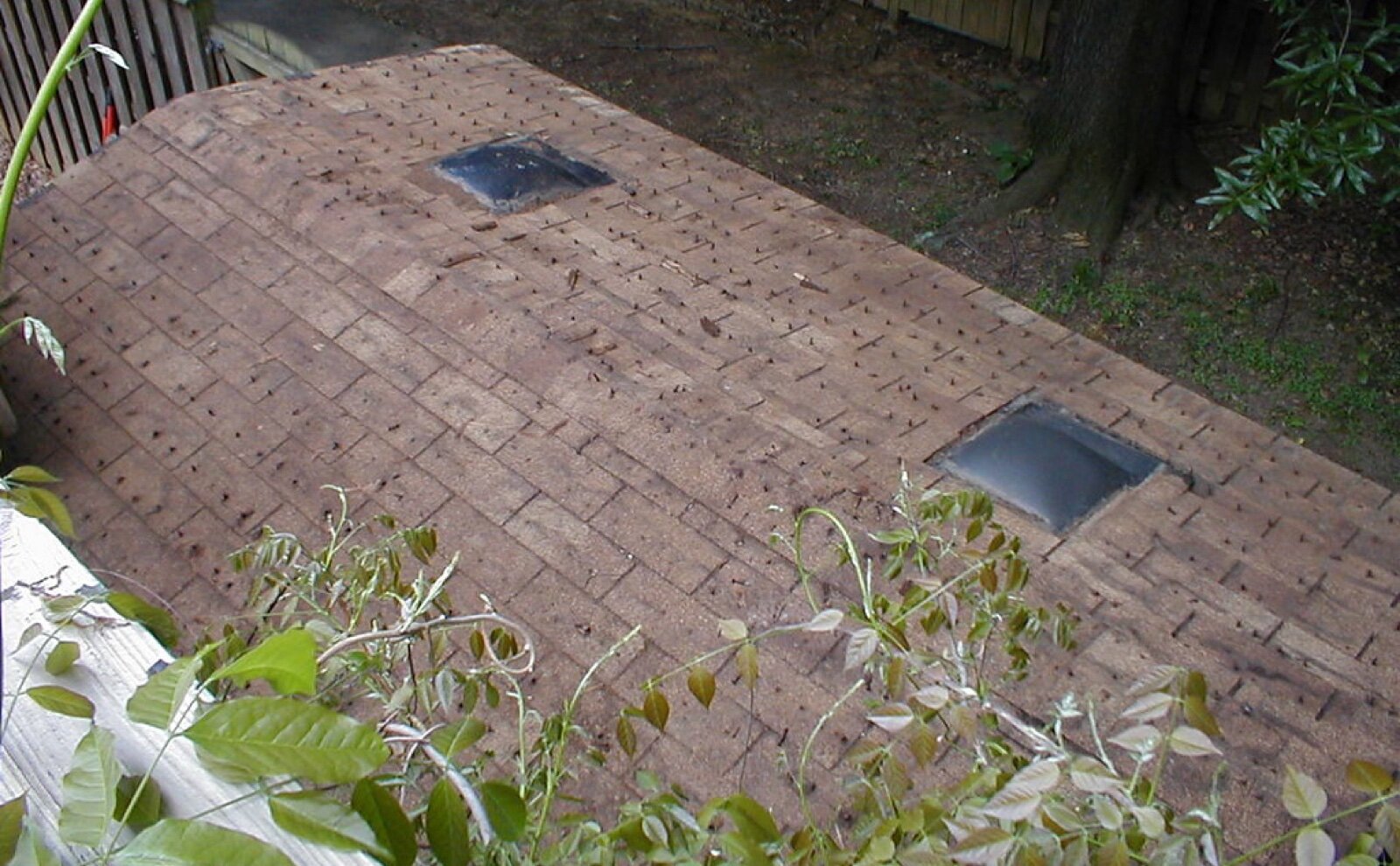
- Cracks and crazing across the felt, often worst on the sunny side where UV has dried out the bitumen.
- Blisters and bubbles, which trap water and split open with the next frost.
- Lifting edges at the eaves and gables, where wind gets under the felt and tears it from the nails.
- Nail heads showing or rusting through, a sign the covering has thinned or the boards have shrunk.
- Moss and algae holding water against the surface, typically under overhanging trees.
- Inside: dark stains, soft spots or daylight between the boards. Push a screwdriver into any stained patch. If it sinks in, that section of deck is rotten and has to come out before any new covering goes on.
If the boards are sound and only the felt is tired, you can simply refelt. If boards are soft or the roof sags between the frame, replace the deck first. New felt nailed to rotten timber will pull through within a winter.
Garden shed roof materials compared
Each covering has a minimum pitch below which it will not shed water reliably, so start with the shape of your roof. An apex shed usually has a pitch steep enough for most options; a pent (single slope) shed is often shallow, and a near-flat roof narrows the choice to felt systems or EPDM.
| Covering | Typical life | Minimum pitch | Best for |
|---|---|---|---|
| Standard shed felt | About 5 to 10 years | Low pitch, not truly flat | Cheap refresh on a sound deck |
| Heavier “super” shed felt | Up to 15 years (maker’s claim) | Low pitch | Better felt at modest extra cost |
| Felt shingles | Roughly 10 to 25 years | About 12.5 degrees | Apex sheds and summer houses |
| Onduline (corrugated bitumen) | 15-year waterproofing warranty | 5 degrees on boards, 10 on purlins | Pent roofs, open log stores |
| EPDM rubber | Often 20 years plus | Flat or low pitch, with a fall | Pent and flat roofs, garden offices |
| Metal box profile | Depends on coating, 8 to 25 years plus | About 4 degrees | Workshops, bike stores |
Lifespans vary a lot by source and by how well the roof is fitted and kept clear; treat the figures above as ranges, not promises. IKO, which makes much of the UK’s shed felt, says its Super Shed Felt lasts up to 15 years but still advises checking and replacing shed felt every 5 to 10 years.
Shed felt
Mineral felt is a bitumen sheet with a mineral chipping surface, sold in rolls, usually green or grey. It is the cheapest option and the easiest to fit with a hammer and clout nails. Cheap sanded felt is intended as an underlay beneath shingles, not as a finished covering, so check the label. Felt is fine on a small apex shed if you accept refelting every several years.
Felt shingles
Shingles are strips of bitumen felt cut to look like tiles, nailed in overlapping courses over a felt underlay. They look far better than roll felt, which is why many summer houses use them, and a damaged strip can be replaced on its own. They need a steeper pitch than roll felt, and in exposed gardens the tabs can lift in high winds until the self-seal strips bond in warm weather.
Onduline and corrugated sheets
Onduline is a corrugated sheet made from bitumen-impregnated fibres. It is light, at about 3.4kg per square metre, and quick to fix. Onduline states a minimum pitch of 5 degrees on a solid deck of OSB or plywood, or 10 degrees on purlins. It is a good fit for pent sheds and log stores where a felt roof keeps tearing.
EPDM rubber
EPDM is a synthetic rubber membrane bonded to the deck. For most sheds it comes as one piece cut to size, so there are no seams on the main roof, which is where felt roofs usually leak. It is the best option for flat and low-pitched shed roofs and for garden offices, where a leak means damaged equipment, not just damp tools. It costs more than felt, needs a smooth, clean OSB or ply deck, and must be finished with edge trims. Give the roof a slight fall so water does not pond.
Check the roof deck before you choose a covering
Most budget sheds have a roof of thin tongue-and-groove boards or thin OSB sheet. Neither is designed to carry much weight, which matters if you plan to stand on the roof to fit it. Spread your weight with a board across the rafters rather than kneeling on the middle of a panel.
When you strip the old felt:
- Pull out or hammer home every old nail and tack so nothing punctures the new covering.
- Replace any soft boards. Match the thickness so the surface stays flat.
- If the boards have gaps or are uneven, overlay the whole roof with OSB3 or exterior plywood. This is essential for EPDM and Onduline at low pitches, and makes felt last longer too.
- Check the fascia boards and bargeboards. Rotten fascias are where felt edges pull away first.
How to refelt a shed roof
These steps follow IKO’s published shed felt instructions for a roll-felt apex roof. Pick a dry, calm day; felt is stiff and cracks when cold, so unroll it and let it relax in the sun or a warm room first.
- Measure and cut. Cut lengths to run along the roof, allowing about 50mm of overhang at the eaves and at each gable end.
- Start at the bottom. Lay the first strip along the lowest edge so it overhangs the eaves by 50mm. Nail the top edge with galvanised clout nails at about 500mm centres.
- Fold and fix the edges. Fold the overhangs down over the fascia and nail them at roughly 50mm intervals. Fold the corners neatly rather than cutting them.
- Work up the roof. Lay each next strip so it overlaps the one below by 75mm, stick the overlap down with felt adhesive, and fix it the same way.
- Finish the ridge. On an apex roof, run a final strip over the ridge so it laps down both slopes, bond it with felt adhesive and nail it closely.
- Refit the fascias and bargeboards over the folded edges so the wind cannot get under them.
For a pent roof, the same principle applies: start at the lowest edge and lap each strip over the one below, so water always runs over a joint, never into it.
Gutters, overhangs and what makes a shed roof last
How long a roof lasts depends as much on what surrounds it as on the covering.
- Clear leaves and moss each autumn. Debris holds water against the felt and speeds up rot at the eaves.
- Cut back branches that brush the roof. They scour the surface in the wind.
- Add a gutter on the low side and run it into a water butt. It stops water splashing back onto the cladding and base, which is where many sheds rot first.
- Keep a gap from fences and walls. A shed jammed against a fence cannot dry out, and you cannot reach the roof edge to maintain it.
If you are raising the roof or rebuilding the shed, remember the permitted development height limits for outbuildings. Our guide to planning permission for a garden shed sets out the 2.5m rule near boundaries. For insulated garden buildings, our garden room roof guide covers warm-roof build-ups.
Frequently asked questions
How often should a shed roof be refelted?
Standard shed felt usually needs replacing every 5 to 10 years, depending on exposure, sun and how well it was fitted. Heavier felts last longer. Check it every autumn and patch small splits with felt adhesive before they let water into the boards.
What is the best material for a flat shed roof?
EPDM rubber is generally the best choice for a flat or very low-pitched shed roof, because it goes on as a single sheet with no joins and copes with standing water far better than felt. Give the roof a slight fall and fit proper edge trims.
Can I put new felt over old felt?
It is better not to. Nailing over old felt hides rotten boards, traps moisture and gives the new nails a poor fixing. Strip the old covering, check the deck, replace any soft boards and then refelt.
Can you fit Onduline on a shed roof with a low pitch?
Onduline sheets can go down to 5 degrees if they are laid over a solid deck of OSB or plywood. Below that, use EPDM or a felt system instead.
Why is my shed roof leaking when the felt looks fine?
Check the ridge, the edges and the nail holes. Leaks often start where felt has pulled away from the fascia, at a poorly lapped joint, or around nails that have lifted. Water can also track in along the top of the cladding if there is no overhang or gutter.
For more practical advice on garden buildings, from sheds to fully insulated rooms, explore Best Garden Room.
Related guides
- Garden Room Planning Permission UK: The 30m² and 50% Rules Explained
- How Much Does a Garden Room Cost to Run in Winter? Real UK Figures
- Garden Room vs Extension: Honest Cost, Value and When Each Wins
- How Much Does It Cost to Run Electrics to a Garden Room in 2026?
- Ground Screws vs Concrete Base: Which Garden Room Foundation Is Right for You?
- Do Garden Rooms Need Building Regulations? The 15, 30 and 1m Rules Explained
- Prefab vs Bespoke Garden Rooms: Which Is Right for You?
- Garden Room Buying Mistakes: 12 Costly Errors to Avoid
- Garden Room News: June 2026
- How to Buy a Garden Room: The Complete UK Buyer’s Guide (2026)
- What to Look for in a Garden Room: 15 Things to Check Before You Buy
- Buying a Second-Hand Garden Room: Is It Worth It?
- Garden Room Kits vs Fully Installed: Should You Self-Build or Buy Turnkey?
- Garden Room Deposits, Contracts and Deliverables: Protecting Your Money
- How Long Does a Garden Room Last? Lifespan and Maintenance
- Garden Room Cost Per Square Metre: 2026 UK Rates Explained
- How Much Does a Garden Room Cost in the UK? (2026 Price Guide)
- Garden Room Prices by Size: From 3x3m to 8x4m and Beyond
- How Much Does a Garden Office Cost? (2026 UK Breakdown)
- Garden Room Planning News: Late June 2026
- How Much Does a Garden Room with a Bathroom Cost?
- Hidden Garden Room Costs: Foundations, VAT and the Extras Quotes Miss
- Garden Room Finance: Loans, Mortgages and Payment Options Explained
- Garden Room News: Early July 2026
- Do Garden Rooms Add Value to Your House? What the UK Resale Data Shows
- Permitted Development Rights for Garden Rooms: Size, Height and the 2m Boundary Rule
- Do Garden Rooms Affect Council Tax? Business Rates and Reassessment
- Garden Room News: Mid-July 2026
- How a Garden Room Is Built: Foundations to Finish (UK Guide)
- SIPs vs Timber Frame Garden Rooms: Which Construction Is Better?
- How Close to a Boundary Can a Garden Room Be? UK Rules Explained
- How to Apply for Garden Room Planning Permission: Step by Step
- Can You Build a Garden Room on Decking, Slabs or a Patio?
- Is a Garden Room Cheaper Than an Extension? 2026 Cost Comparison
- Garden Room News: Mid-July 2026
- Garden Room Cladding: Cedar vs Composite vs Larch vs Render
- Garden Room Roof Guide: Flat vs Pitched and the Best Materials
- Garden Room Windows and Doors: Bifold, Sliding and Glazing
- How to Build a Garden Room: A DIY Step-by-Step Guide (UK)
- How Long Does It Take to Build a Garden Room?
- How to Make a Garden Room Usable All Year Round
- Garden Room Insulation: Best Materials and U-Values for the UK
- How to Heat a Garden Room: 9 Options Compared by Cost and Warmth
- Best Heating for a Garden Office: Warm Without a Huge Bill
- Air Conditioning for Garden Rooms: Cooling and Heating in One
- Stopping Condensation and Damp in a Garden Room (UK Guide)
- How to Get Wi-Fi in a Garden Office: 6 Ways That Actually Work
- Garden Office Ideas: Designing the Perfect Work-From-Home Space
- Garden Room Ideas: 20 Popular Uses to Inspire Your Build
- Garden Room Annexe: Rules, Costs and How to Build One
- Garden Bar Ideas: The Height Rules, Power and Layout
- Garden Room Business: What Changes Once Clients Visit
- Garden Studio Ideas: Sizes, Light and the 2.5m Rule
- Garden Room Lighting: IP20 Inside, IP65 Out, Part P Rules
- Landscaping Around a Garden Room: the 30cm Decking Trap
- Garden Room Design: Why 2.5m Decides Everything
- Garden Room Planning Permission: the 2.5m Boundary Rule
- Garden Room News: New NPPF Lands, PD Rules Unchanged
- Garden Saunas UK: Planning, Building Regs and Electrics
- Best Garden Room Companies UK: Guarantees of 10 to 25 Years
- Garden Room Electrics: The Rules Change on 15 Oct 2026
- Golf Simulator Garden Room: The 2.5m Rule That Stops It
- Garden Screens: the 2m Rule, and Why Trellis Counts
- Cheap Garden Rooms: What 19mm Walls Really Get You
- Green Retreats Review: 12-Year Cover, 60% Upfront
- Booths Garden Studios Review: Steel Build, 25 Years
- Eden Garden Rooms Review: £23,500 Start, 10-Year Cover
- Green Retreats vs Booths: 25-Year Steel or Timber?
- Garden Rooms London: 6 Companies and the 2.5m Limit
- Garden Room Bedroom: Why a Bed Changes the Rules
- Do I Need Planning Permission for a Garden Shed? Usually Not
- Garden Room News: Staged Payments Arrive, Timber Stays Dear
- Garden Gym Ideas: Sizes, Ceilings and the 2.5m Height Rule
- Garden Gazebo Rules: 2.5m Near a Boundary, 4m Max
- Garden Arch: Wood or Metal, and the 2.7m Height Rule
- Garden Arbour: Sizes That Seat Two, and Wood vs Metal
- Wooden Garden Gates: Sizes, UC4 Posts and the 1m Rule
- Garden Room News: Rates Held, Materials Up 5.9%
- Summer House Interior Ideas: 9 That Work in Winter
- Garden Trellis Panels: the 2m Rule Most Buyers Miss
- Garden Shelters: Six Types and When You Need Permission
- Garden Greenhouses: Glass Gives 90% Light, Plastic 80%
- Summer House Doors and Windows: 4mm Toughened or Styrene?
- Log Stores: Size, Siting and the 20% Moisture Rule