

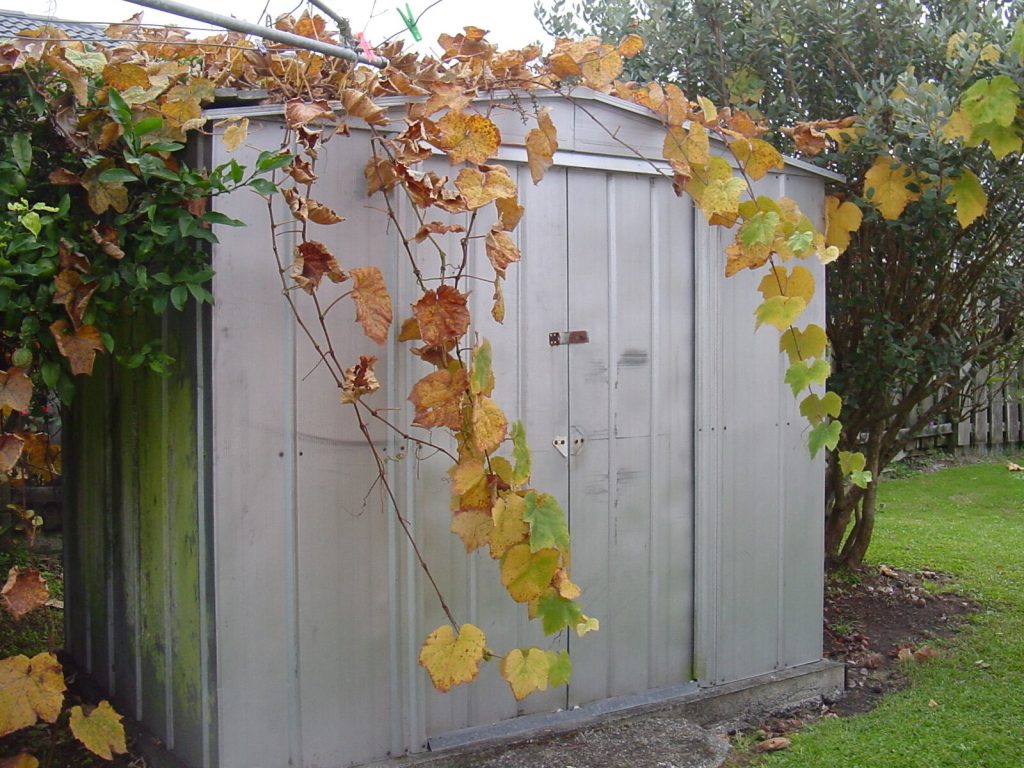
Metal garden sheds are the low-maintenance option: no rot, no annual wood treatment, and nothing for insects to eat. The trade-off people rarely hear about until the first cold night is condensation. Thin steel cools fast, moisture in the air condenses on the underside of the roof, and it drips on whatever you have stored. Pick the right shed, put it on the right base and ventilate it, and a metal shed will stay dry and need almost nothing for years.
This page covers what the steel and the guarantees actually mean, how to stop condensation, the base and anchoring a light steel shed needs, and when planning rules apply.
How metal garden sheds are made
Most metal sheds sold in the UK are a steel frame clad in thin, profiled sheet steel, supplied flat-packed and screwed or bolted together. The steel is protected from rust by hot-dip galvanising, a zinc coating, usually with a paint finish over it.
The cladding is thin. Globel’s Lotus range, for example, is described by stockists as a heavy gauge galvanised steel frame clad in 0.3mm hot-dipped galvanised steel on the sides and roof. Thin sheet is why these sheds are light and cheap to deliver, and also why the frame, bracing and base matter so much: the panels give the shed its skin, not its strength.
What the rust guarantees cover
Brands advertise long anti-rust or anti-perforation guarantees, commonly 10 or 15 years depending on the model. Read the wording. Yardmaster’s guarantee, for instance, pledges to replace free of charge any undamaged panel that has been perforated by rust within the guarantee period. That excludes panels that are scratched, dented or drilled. In practice the biggest rust risks are things you do yourself: scratching the coating during assembly, drilling extra holes without sealing them, and leaving the bottom rail sitting in wet soil or puddles.
Metal vs wood vs plastic
Each material suits a different job:
- Metal: no rot, no treatment, non-combustible cladding, good value for size. Prone to condensation and dents, and a long flat-pack build with a lot of small fixings.
- Wood: easy to fix shelves and hooks to, takes insulation well, quieter in rain. Needs treatment every few years and a raised floor to avoid rot.
- Plastic and resin: no rot or rust and very light. Can flex and fade in strong sun. See our page on plastic garden sheds for who they suit.
If you want somewhere to work, sit or keep anything damp-sensitive, a metal shed can still do it, but it needs the condensation steps below. If it is purely for mowers, bikes and garden tools, metal is hard to beat for the money.
Condensation in metal sheds and how to stop it
Condensation forms when warm, moist air meets a surface colder than its dew point. On a clear night a thin steel roof radiates heat to the sky and drops below air temperature quickly. The air inside the shed is often damp, especially if the floor is soil or an unsealed slab, and the moisture condenses on the underside of the roof and runs down the walls. In the morning it can look like the roof leaks when it does not.
The fixes, roughly in order of how much they help:
- Stop moisture coming up from the ground. A concrete base laid over a damp-proof membrane, or a slab base with a membrane beneath, cuts the biggest source of water vapour. A shed sitting on bare earth or grass will always run wet.
- Ventilate. Air movement carries moisture out before it condenses. Choose a shed with vents; Lotus sheds, for example, have screened vents in the apex above the door and at the rear. Do not block them with stored items.
- Line the roof. An anti-condensation membrane or fleece fixed to the underside of the roof sheets holds droplets and lets them evaporate rather than drip. Some metal roofing is sold with an anti-condensation backing already applied.
- Keep wet things out. A damp mower, wet tarpaulins or bags of compost add a lot of moisture. Let them dry first.
- Avoid gas heaters. Burning gas produces water vapour, which makes condensation worse, and running fuel-burning heaters in a small enclosed building is a fumes risk. If you need heat, use electric and have the supply installed properly.
Insulating a metal shed with rigid boards is possible but takes care, because any gap behind the insulation becomes a cold, hidden condensation surface. Our page on insulated garden sheds explains how to leave a drained, ventilated gap behind the lining.
The base and anchoring a metal shed needs
A metal shed is light for its size, and its flat panels catch the wind. An unanchored shed can rack, twist or lift in a storm, and once a frame is out of square the doors stop sliding properly.
Choosing a base
The best base is a level concrete slab or a slabbed area slightly larger than the shed’s footprint, laid on a damp-proof membrane and sitting a little above the surrounding ground so rainwater runs away from the bottom rail. A timber frame base works too, but the frame must be level and treated for ground contact.
Check the floor arrangement before you buy. Many metal sheds have no floor at all; the frame sits on the base. Some brands sell a separate floor support kit: Yardmaster’s, for example, is a set of metal battens that support a timber floor, with the timber boards not included.
Anchoring
Fix the base rail down at every point the instructions allow. Yardmaster includes an anchor bolt kit for fixing the perimeter base to hard standing such as a concrete pad or patio. On a timber base use the coach screws or brackets specified. Do this before fitting the roof if the instructions allow, because a half-built shed is at its most vulnerable to wind.
Assembly: what to expect
Flat-pack metal sheds come with hundreds of small screws, washers and bolts, and the panels have sharp edges. Plan for:
- Two people and a full day for a mid-size shed.
- A calm, dry day, because loose panels act like sails.
- Gloves for the cut edges, and a cordless driver with a clutch set low so screws do not strip the thin steel.
- Checking the frame is square by measuring both diagonals before tightening everything, or the doors will bind.
Touch up any scratches to the coating with a zinc-rich paint as you go. Bare steel at a scratch is where rust starts.
Planning permission and building regulations
Most garden sheds fall under permitted development for outbuildings, so no planning application is needed, as long as they stay within the limits. The main ones, set out by the Planning Portal, are:
- no part in front of the principal elevation of the house facing a road;
- a maximum height of 2.5m if it is within 2m of a boundary;
- otherwise a maximum of 4m with a dual-pitched roof or 3m for other roofs, and eaves no higher than 2.5m;
- outbuildings and extensions together covering no more than half the land around the original house.
Different rules apply to listed buildings, flats and maisonettes, and in some protected areas, so check with your council if any of those apply. Building regulations generally do not apply to a small detached outbuilding under 15 square metres with no sleeping accommodation. Our page on planning permission for a garden shed goes through the edge cases.
Security and lifespan
A metal shed cannot be kicked through like thin timber cladding, but sheet panels can be prised or cut, and many doors are sliding pairs closed with a padlock. Fit a good closed-shackle padlock, keep valuables out of sight, and for bikes fix a ground anchor into the concrete base inside the shed.
Lifespan comes down to three things: a base that keeps the bottom rail out of standing water, a coating that stays intact, and a roof kept clear of leaves and moss so water drains off rather than sitting in the profiles. Look after those and the steel is rarely what fails first.
For more on choosing and building garden structures, browse Best Garden Room.
Frequently asked questions
Do metal garden sheds get condensation?
Yes, more than wooden ones, because thin steel cools quickly on clear nights. A concrete base over a damp-proof membrane, working vents and an anti-condensation roof lining keep it under control.
Do metal sheds rust?
Galvanised steel resists rust well while the coating is intact. Rust usually starts at scratches made during assembly, at drilled holes, or where the bottom rail sits in water, so touch up damage and keep the base drained.
Does a metal shed need a base?
Yes. It needs a firm, level base it can be bolted to, ideally a concrete slab or paving with a damp-proof membrane beneath. Building one on grass leads to racking, damp and rust.
How do I stop a metal shed blowing away?
Anchor the base rail to the slab or timber base at every fixing point using the supplied anchor kit or suitable bolts, and build it on a calm day. Keep the doors closed and locked in high winds.
Do I need planning permission for a metal shed?
Usually not. Under permitted development it must be no taller than 2.5m within 2m of a boundary, must not sit in front of the house, and must not take up more than half the garden with other outbuildings. Listed buildings and some protected areas have stricter rules.
Are metal sheds better than wooden sheds?
For tool and bike storage, they are cheaper to maintain and do not rot. Wooden sheds are easier to insulate, fit out and work in. Choose metal for low upkeep, wood for a shed you want to spend time in.
Related guides
- Garden Room Planning Permission UK: The 30m² and 50% Rules Explained
- How Much Does a Garden Room Cost to Run in Winter? Real UK Figures
- Garden Room vs Extension: Honest Cost, Value and When Each Wins
- How Much Does It Cost to Run Electrics to a Garden Room in 2026?
- Ground Screws vs Concrete Base: Which Garden Room Foundation Is Right for You?
- Do Garden Rooms Need Building Regulations? The 15, 30 and 1m Rules Explained
- Prefab vs Bespoke Garden Rooms: Which Is Right for You?
- Garden Room Buying Mistakes: 12 Costly Errors to Avoid
- How to Buy a Garden Room: The Complete UK Buyer’s Guide (2026)
- What to Look for in a Garden Room: 15 Things to Check Before You Buy
- Buying a Second-Hand Garden Room: Is It Worth It?
- Garden Room Kits vs Fully Installed: Should You Self-Build or Buy Turnkey?
- Garden Room Deposits, Contracts and Deliverables: Protecting Your Money
- How Long Does a Garden Room Last? Lifespan and Maintenance
- Garden Room Cost Per Square Metre: 2026 UK Rates Explained
- How Much Does a Garden Room Cost in the UK? (2026 Price Guide)
- Garden Room Prices by Size: From 3x3m to 8x4m and Beyond
- How Much Does a Garden Office Cost? (2026 UK Breakdown)
- How Much Does a Garden Room with a Bathroom Cost?
- Hidden Garden Room Costs: Foundations, VAT and the Extras Quotes Miss
- Garden Room Finance: Loans, Mortgages and Payment Options Explained
- Do Garden Rooms Add Value to Your House? What the UK Resale Data Shows
- Permitted Development Rights for Garden Rooms: Size, Height and the 2m Boundary Rule
- Do Garden Rooms Affect Council Tax? Business Rates and Reassessment
- How a Garden Room Is Built: Foundations to Finish (UK Guide)
- SIPs vs Timber Frame Garden Rooms: Which Construction Is Better?
- How Close to a Boundary Can a Garden Room Be? UK Rules Explained
- How to Apply for Garden Room Planning Permission: Step by Step
- Can You Build a Garden Room on Decking, Slabs or a Patio?
- Is a Garden Room Cheaper Than an Extension? 2026 Cost Comparison
- Garden Room Cladding: Cedar vs Composite vs Larch vs Render
- Garden Room Roof Guide: Flat vs Pitched and the Best Materials
- Garden Room Windows and Doors: Bifold, Sliding and Glazing
- How to Build a Garden Room: A DIY Step-by-Step Guide (UK)
- How Long Does It Take to Build a Garden Room?
- How to Make a Garden Room Usable All Year Round
- Garden Room Insulation: Best Materials and U-Values for the UK
- How to Heat a Garden Room: 9 Options Compared by Cost and Warmth
- Best Heating for a Garden Office: Warm Without a Huge Bill
- Air Conditioning for Garden Rooms: Cooling and Heating in One
- Stopping Condensation and Damp in a Garden Room (UK Guide)
- How to Get Wi-Fi in a Garden Office: 6 Ways That Actually Work
- Garden Office Ideas: Designing the Perfect Work-From-Home Space
- Garden Room Ideas: 20 Popular Uses to Inspire Your Build
- Garden Room Annexe: Rules, Costs and How to Build One
- Garden Bar Ideas: The Height Rules, Power and Layout
- Garden Room Business: What Changes Once Clients Visit
- Garden Studio Ideas: Sizes, Light and the 2.5m Rule
- Garden Room Lighting: IP20 Inside, IP65 Out, Part P Rules
- Landscaping Around a Garden Room: the 30cm Decking Trap
- Garden Room Design: Why 2.5m Decides Everything
- Garden Room Planning Permission: the 2.5m Boundary Rule
- Garden Saunas UK: Planning, Building Regs and Electrics
- Best Garden Room Companies UK: Guarantees of 10 to 25 Years
- Garden Room Electrics: The Rules Change on 15 Oct 2026
- Golf Simulator Garden Room: The 2.5m Rule That Stops It
- Garden Screens: the 2m Rule, and Why Trellis Counts
- Cheap Garden Rooms: What 19mm Walls Really Get You
- Green Retreats Review: 12-Year Cover, 60% Upfront
- Booths Garden Studios Review: Steel Build, 25 Years
- Eden Garden Rooms Review: £23,500 Start, 10-Year Cover
- Green Retreats vs Booths: 25-Year Steel or Timber?
- Garden Rooms London: 6 Companies and the 2.5m Limit
- Garden Room Bedroom: Why a Bed Changes the Rules
- Do I Need Planning Permission for a Garden Shed? Usually Not
- Garden Gym Ideas: Sizes, Ceilings and the 2.5m Height Rule
- Garden Gazebo Rules: 2.5m Near a Boundary, 4m Max
- Garden Arch: Wood or Metal, and the 2.7m Height Rule
- Garden Arbour: Sizes That Seat Two, and Wood vs Metal
- Wooden Garden Gates: Sizes, UC4 Posts and the 1m Rule
- Summer House Interior Ideas: 9 That Work in Winter
- Garden Trellis Panels: the 2m Rule Most Buyers Miss
- Garden Shelters: Six Types and When You Need Permission
- Garden Greenhouses: Glass Gives 90% Light, Plastic 80%
- Summer House Doors and Windows: 4mm Toughened or Styrene?
- Log Stores: Size, Siting and the 20% Moisture Rule
- Garden Shed Roof: Felt, EPDM or Onduline by Pitch
- Insulated Garden Shed: The 25mm Gap That Stops Damp
- Composite Garden Sheds: Rot-Proof, But Check These 6 Things
- How to Build a Garden Shed: Base, Frame and Roof in 5 Steps
- Garden Workshop: Size, Base, Power and the Planning Rules
- Plastic Garden Sheds: Who They Suit and 6 Checks First