

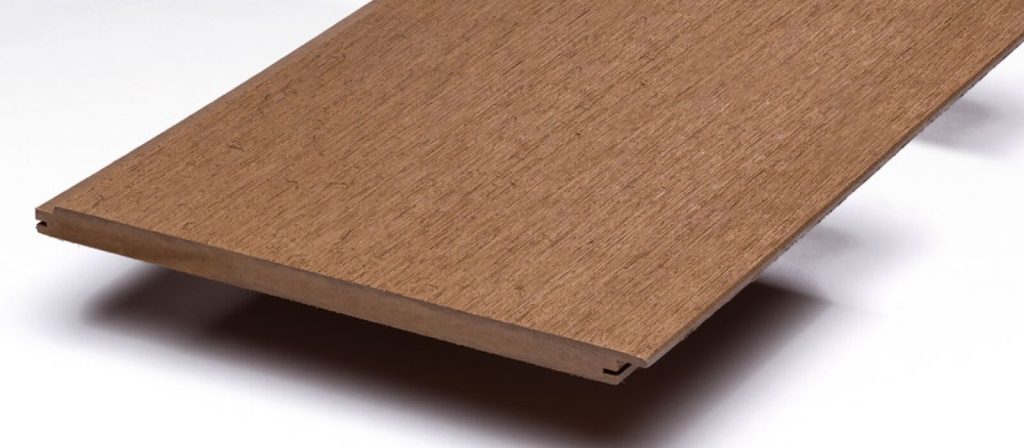
Composite garden sheds are built from wood-plastic composite panels: wood fibre or wood flour bound into a plastic such as polyethylene, polypropylene or PVC, then moulded with a wood-grain face. They will not rot like timber and they look more solid than a thin plastic shed, which is why they have become the middle option on most UK shed retailers’ websites. They also have limits that the product pages tend to skip, and those limits decide whether one suits your garden. Below are the six things we would check before buying one.
What composite actually is, and what it does well
Wood-plastic composite (WPC) is the same family of material as composite decking and composite cladding. The plastic coats and binds the wood fibres, so the panel does not rot, split or splinter, needs no preservative and does not need painting. Retailers such as Waltons sell composite sheds with a 10-year anti-rot guarantee and panels guaranteed against fading for 10 years.
Against the other common shed materials, it sits like this:
- Timber: the cheapest way into a good-sized shed and the easiest to adapt, fix shelves to and insulate, but it needs treating every few years and rots if the base holds water.
- Plastic (resin or HDPE): light, cheap and maintenance-free, but thin walls flex, feel insubstantial and can be easier to break into.
- Metal: secure and fire-resistant, but prone to condensation and dents, and steel will rust where the coating is scratched.
- Composite: rot-proof and low maintenance like plastic, heavier and more solid-feeling than plastic, closer to timber in looks. Usually priced above a plastic shed of the same footprint.
Waltons’ own buying advice sums the trade-off up fairly: a composite shed “will feel sturdier and look more premium, while a plastic shed is chosen for its convenience and simplicity.”
What composite does not do
The material science is worth knowing, because it explains most of the complaints owners have later.
- It is less stiff than timber. WPC has lower strength and stiffness than wood and creeps under a sustained load, meaning it slowly deforms over months. A shelf screwed only into a composite panel and loaded with paint tins will sag.
- It moves with temperature. Its behaviour depends on time and temperature, so panels expand on a hot day and contract in a frost. This is why manufacturers specify gaps and fixing tolerances, and why overtightening fixings causes bowing.
- It is not immune to mould. The plastic fully coats most of the wood fibres, but the wood particles can still be attacked by fungi, though less than solid timber. A shady, north-facing shed will grow green algae on the surface and needs a wash once or twice a year.
- The plastic fades. The polymer degrades under UV, which is why fade guarantees exist. Expect a dark brown panel to lighten over the first year or two in full sun.
- Fire behaviour varies by product. The plastics used in WPC generally have higher fire hazard properties than wood alone, because plastic carries more heat energy and can melt. Some composite sheds are sold as fire retardant; if the shed will sit near a house wall or a barbecue area, check whether that claim applies to the one you are buying.
Six checks before you buy a composite shed
1. What the frame is made of
The panels give a composite shed its looks; the frame gives it its strength. Some use steel or aluminium framing, some use timber, some rely mostly on interlocking panels. Ask what holds the roof up and what you will fix shelving and tool racks into. If the answer is “the panels”, plan to fit your own timber battens to carry any weight.
2. Whether a floor is included
Some composite sheds come with a composite floor; many smaller ones arrive with no floor at all, meaning the base you build is the floor. A shed without a floor needs a properly finished slab or paved base, laid to fall slightly so water runs out under the door rather than pooling inside.
3. What the roof is
Composite walls are often paired with a PVC or corrugated plastic roof, which is light and leakproof but noisy in rain and can transmit heat in summer. Check how the roof sheets are fixed and sealed, and whether they are rated for snow load. Our garden shed roof page compares the common coverings by pitch.
4. What the guarantee actually covers
A “10-year guarantee” on a composite shed is often an anti-rot guarantee on the panels, plus a separate fade guarantee. It may not cover hinges, locks, roof sheets, window glazing or damage from an uneven base. Read the terms before comparing guarantees between brands, because the headline number may not mean the same thing.
5. Doors, windows and security
Look at the hinge fixings (bolts through the frame are better than screws into composite), the lock, and whether the door can be padlocked. Tinted or opaque windows keep tools out of view. If you will store bikes or power tools, a composite shed can be secured well, but only if the door and frame are as solid as the walls.
6. How it handles condensation
Composite, like plastic and metal, does not breathe the way timber does. On cold nights, moisture in the air condenses on the inside of the roof and walls and drips onto what you store. Check for built-in vents and keep them clear. If you plan to keep anything that rusts or rots, read our page on insulated garden sheds, which covers the ventilation gap that stops damp.
The base matters more than the panels
Every shed retailer says the same thing, and with composite it is not optional: the shed must sit on a firm, level base, or the panels will twist and the doors will stop closing. Composite panels are rigid enough to show any twist in the base but not stiff enough to bridge it.
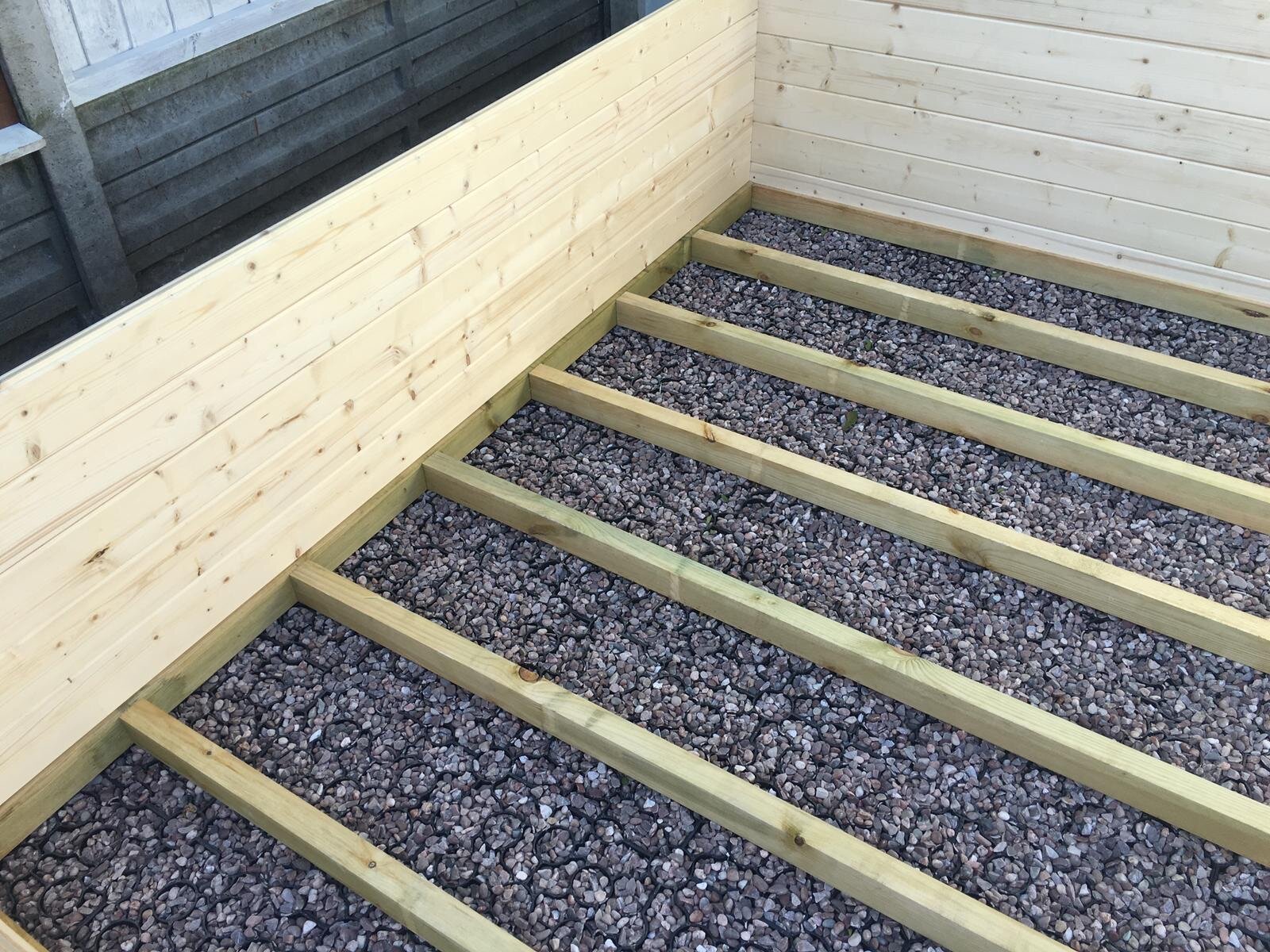
Three bases work well:
- Concrete slab: the strongest option, and what retailers recommend for heavy storage. Set it level and slightly larger than the shed footprint.
- Paving slabs on a compacted sub-base: the common DIY option. Lay them level on a mortar bed, not just on sand, so they do not settle unevenly.
- Plastic grid base filled with gravel: quick to lay, drains well and needs no concrete. It suits lighter sheds and is often combined with treated timber bearers to lift the floor clear of the ground.
Whatever the base, keep the bottom edge of the panels clear of soil and standing water, and leave enough room on every side to reach in and clean the walls.
Planning permission and building regulations
A composite shed is treated the same as any other garden outbuilding. In England, most sheds are permitted development, provided the usual limits are met: for example, a maximum height of 2.5 metres if the shed is within 2 metres of a boundary, and outbuildings covering no more than half the garden around the original house. Listed buildings, flats and some conservation areas have tighter rules. The Planning Portal’s outbuildings guidance sets out the full conditions, and our page on planning permission for a garden shed works through them with examples.
Building regulations normally do not apply to a detached outbuilding under 15 square metres with no sleeping accommodation, which covers nearly every composite shed on sale.
Looking after a composite shed
Maintenance is light but not zero. Twice a year:
- Wash the panels with warm soapy water and a soft brush, especially on shaded sides where algae builds up.
- Clear leaves and debris off the roof and out of any gutters.
- Check door hinges, locks and fixings, and tighten anything loose without overtightening into the composite.
- Look at the base: a slab that has settled at one corner shows first as a door that sticks.
Unlike timber, there is nothing to paint or treat, which over ten years is the main reason people pay extra for composite.
Frequently asked questions
Are composite sheds better than wooden sheds?
They are better on maintenance: no rot, no preservative and no painting. Timber is better for strength, for fixing heavy shelving to, for adapting and for insulating. If you want a shed that is left alone for years, composite wins; if you want a workshop you will modify, timber usually does.
Do composite sheds get condensation?
Yes, more than timber, because composite does not absorb and release moisture. Good ventilation is the fix: vents high and low, kept clear, and nothing stored hard against the walls.
Do composite sheds need a base?
Yes, a firm and level one. A concrete slab or mortared paving slabs suit most composite sheds; a gravel-filled plastic grid with timber bearers suits lighter ones. An uneven base twists the panels and jams the door.
How long do composite sheds last?
The panels are commonly guaranteed against rot for 10 years and will usually outlast that. In practice, the life of the shed tends to be limited by the roof sheets, hinges, locks and base rather than the composite walls.
Can you put shelves up in a composite shed?
Yes, but fix them into the frame or into timber battens bolted through to the frame. Composite panels creep under a constant load, so shelves screwed only into the panels will sag over time.
For more on choosing and siting garden buildings, from sheds to fully insulated rooms, see the rest of Best Garden Room.
Related guides
- Garden Room Planning Permission UK: The 30m² and 50% Rules Explained
- How Much Does a Garden Room Cost to Run in Winter? Real UK Figures
- Garden Room vs Extension: Honest Cost, Value and When Each Wins
- How Much Does It Cost to Run Electrics to a Garden Room in 2026?
- Ground Screws vs Concrete Base: Which Garden Room Foundation Is Right for You?
- Do Garden Rooms Need Building Regulations? The 15, 30 and 1m Rules Explained
- Prefab vs Bespoke Garden Rooms: Which Is Right for You?
- Garden Room Buying Mistakes: 12 Costly Errors to Avoid
- Garden Room News: June 2026
- How to Buy a Garden Room: The Complete UK Buyer’s Guide (2026)
- What to Look for in a Garden Room: 15 Things to Check Before You Buy
- Buying a Second-Hand Garden Room: Is It Worth It?
- Garden Room Kits vs Fully Installed: Should You Self-Build or Buy Turnkey?
- Garden Room Deposits, Contracts and Deliverables: Protecting Your Money
- How Long Does a Garden Room Last? Lifespan and Maintenance
- Garden Room Cost Per Square Metre: 2026 UK Rates Explained
- How Much Does a Garden Room Cost in the UK? (2026 Price Guide)
- Garden Room Prices by Size: From 3x3m to 8x4m and Beyond
- How Much Does a Garden Office Cost? (2026 UK Breakdown)
- Garden Room Planning News: Late June 2026
- How Much Does a Garden Room with a Bathroom Cost?
- Hidden Garden Room Costs: Foundations, VAT and the Extras Quotes Miss
- Garden Room Finance: Loans, Mortgages and Payment Options Explained
- Garden Room News: Early July 2026
- Do Garden Rooms Add Value to Your House? What the UK Resale Data Shows
- Permitted Development Rights for Garden Rooms: Size, Height and the 2m Boundary Rule
- Do Garden Rooms Affect Council Tax? Business Rates and Reassessment
- Garden Room News: Mid-July 2026
- How a Garden Room Is Built: Foundations to Finish (UK Guide)
- SIPs vs Timber Frame Garden Rooms: Which Construction Is Better?
- How Close to a Boundary Can a Garden Room Be? UK Rules Explained
- How to Apply for Garden Room Planning Permission: Step by Step
- Can You Build a Garden Room on Decking, Slabs or a Patio?
- Is a Garden Room Cheaper Than an Extension? 2026 Cost Comparison
- Garden Room News: Mid-July 2026
- Garden Room Cladding: Cedar vs Composite vs Larch vs Render
- Garden Room Roof Guide: Flat vs Pitched and the Best Materials
- Garden Room Windows and Doors: Bifold, Sliding and Glazing
- How to Build a Garden Room: A DIY Step-by-Step Guide (UK)
- How Long Does It Take to Build a Garden Room?
- How to Make a Garden Room Usable All Year Round
- Garden Room Insulation: Best Materials and U-Values for the UK
- How to Heat a Garden Room: 9 Options Compared by Cost and Warmth
- Best Heating for a Garden Office: Warm Without a Huge Bill
- Air Conditioning for Garden Rooms: Cooling and Heating in One
- Stopping Condensation and Damp in a Garden Room (UK Guide)
- How to Get Wi-Fi in a Garden Office: 6 Ways That Actually Work
- Garden Office Ideas: Designing the Perfect Work-From-Home Space
- Garden Room Ideas: 20 Popular Uses to Inspire Your Build
- Garden Room Annexe: Rules, Costs and How to Build One
- Garden Bar Ideas: The Height Rules, Power and Layout
- Garden Room Business: What Changes Once Clients Visit
- Garden Studio Ideas: Sizes, Light and the 2.5m Rule
- Garden Room Lighting: IP20 Inside, IP65 Out, Part P Rules
- Landscaping Around a Garden Room: the 30cm Decking Trap
- Garden Room Design: Why 2.5m Decides Everything
- Garden Room Planning Permission: the 2.5m Boundary Rule
- Garden Room News: New NPPF Lands, PD Rules Unchanged
- Garden Saunas UK: Planning, Building Regs and Electrics
- Best Garden Room Companies UK: Guarantees of 10 to 25 Years
- Garden Room Electrics: The Rules Change on 15 Oct 2026
- Golf Simulator Garden Room: The 2.5m Rule That Stops It
- Garden Screens: the 2m Rule, and Why Trellis Counts
- Cheap Garden Rooms: What 19mm Walls Really Get You
- Green Retreats Review: 12-Year Cover, 60% Upfront
- Booths Garden Studios Review: Steel Build, 25 Years
- Eden Garden Rooms Review: £23,500 Start, 10-Year Cover
- Green Retreats vs Booths: 25-Year Steel or Timber?
- Garden Rooms London: 6 Companies and the 2.5m Limit
- Garden Room Bedroom: Why a Bed Changes the Rules
- Do I Need Planning Permission for a Garden Shed? Usually Not
- Garden Room News: Staged Payments Arrive, Timber Stays Dear
- Garden Gym Ideas: Sizes, Ceilings and the 2.5m Height Rule
- Garden Gazebo Rules: 2.5m Near a Boundary, 4m Max
- Garden Arch: Wood or Metal, and the 2.7m Height Rule
- Garden Arbour: Sizes That Seat Two, and Wood vs Metal
- Wooden Garden Gates: Sizes, UC4 Posts and the 1m Rule
- Garden Room News: Rates Held, Materials Up 5.9%
- Summer House Interior Ideas: 9 That Work in Winter
- Garden Trellis Panels: the 2m Rule Most Buyers Miss
- Garden Shelters: Six Types and When You Need Permission
- Garden Greenhouses: Glass Gives 90% Light, Plastic 80%
- Summer House Doors and Windows: 4mm Toughened or Styrene?
- Log Stores: Size, Siting and the 20% Moisture Rule
- Garden Shed Roof: Felt, EPDM or Onduline by Pitch
- Insulated Garden Shed: The 25mm Gap That Stops Damp