

Garden room air conditioning is what turns a building that bakes in July and chills in January into a space you can actually use every day of the year. A well-insulated garden room still has a lot of glass and a small volume of air, so it heats up and cools down fast. A single wall-mounted air conditioner solves both problems at once, cooling in summer and, because it is a heat pump, warming the room efficiently in winter. This guide explains how garden room air conditioning works, what size unit you need, why the install has to be done by a qualified engineer, and what it costs to run.
Why a garden room gets so hot and cold
Garden rooms are lightweight buildings with large windows and doors, often facing the sun to make the most of the garden. That glazing is a greenhouse in summer and a heat sink in winter. Good insulation slows the swing but does not stop it, which is why so many owners who fitted only a plug-in heater find the room unusable on the hottest and coldest days. Air conditioning is the one appliance that deals with both ends of the problem.
How garden room air conditioning works
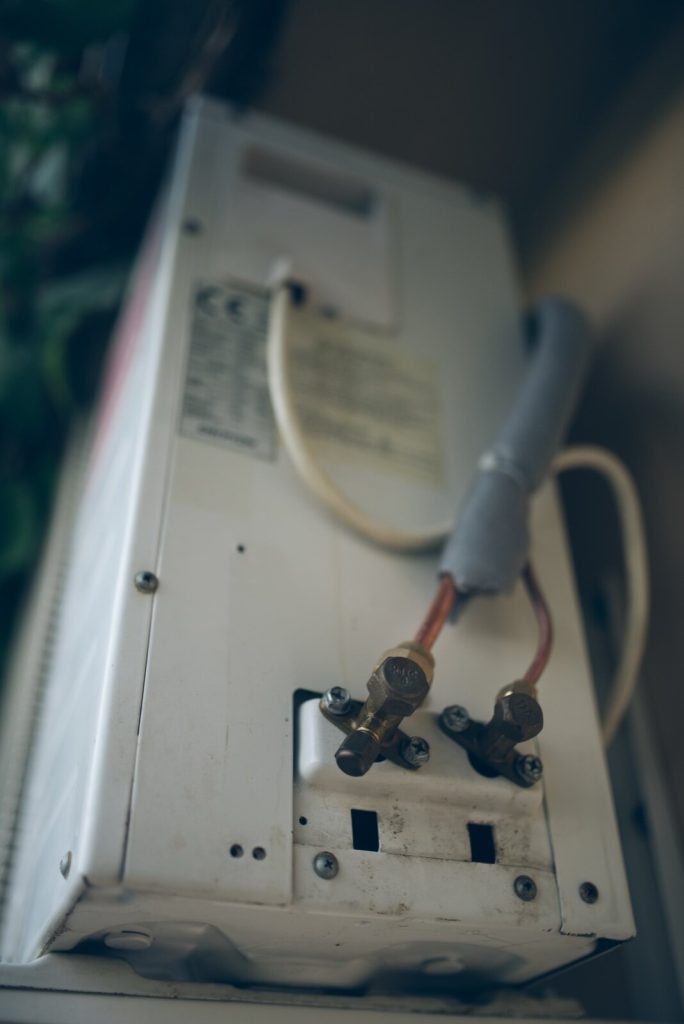
The standard choice is an air-to-air split system. It has two parts: a slim indoor head mounted high on a wall, and an outdoor condenser unit sited on the ground or a bracket outside. Insulated copper pipework carrying refrigerant links the two, along with a power cable and a small drain for condensate. The indoor unit moves heat out of the room in summer, and the process runs in reverse to bring heat in during winter.
Cooling and heating in one unit
This is the part people miss. A modern split air conditioner is a reverse-cycle heat pump, so the same box that cools in August heats in December. In heating mode it is remarkably efficient, typically delivering around three to four units of heat for every unit of electricity it draws, which is far cheaper to run than an electric fan or panel heater. For a garden office used all year, that efficiency usually justifies the higher upfront cost over a plug-in heater.
What size air conditioner does a garden room need?
Air conditioners are rated in kilowatts, and older listings in BTU, where roughly 3,400 BTU equals 1kW. As a rough starting point, a well-insulated garden room needs in the region of 0.15kW of cooling per square metre of floor, so a typical small room of around 15 square metres suits a 2.5kW (about 9,000 BTU) unit, and a larger 25 square metre room points towards 3.5kW (around 12,000 BTU). Glazing, orientation and insulation all shift the figure, so treat these as a guide only. The installer should carry out a proper heat-gain and heat-loss calculation before recommending a model, because an oversized unit cycles inefficiently and an undersized one never keeps up.
Installation: why you need an F-Gas engineer
This is not a DIY job. The refrigerant inside a split system is a fluorinated gas, and by law it may only be handled by a qualified, certified engineer. In practice that means using a company registered with a body such as REFCOM, and an individual engineer who holds the relevant F-Gas certification. The electrical connection is also notifiable work under Part P of the building regulations, so it needs a competent electrician. A properly commissioned system is pressure-tested, vacuumed and charged correctly, which is what makes it reliable and keeps the warranty valid.
Running costs and efficiency
Running cost depends on the unit’s efficiency rating, how well the room is insulated and how long you run it. Because the system is a heat pump, its heating efficiency is measured as a coefficient of performance, and good units sit around three to four, meaning most of the warmth is effectively free heat moved from outside. In cooling mode a small 2.5kW unit draws only a few hundred watts once it has reached temperature, so a few hours of use costs relatively little at typical electricity prices. Choosing a model with a high SEER and SCOP rating, and keeping the filters clean, keeps those bills down.
Do you need planning permission?
For most garden rooms the building itself is put up under permitted development, and a small external air conditioning unit is usually treated as a minor addition. The points to watch are noise and position: the outdoor unit should be sited where its hum will not disturb you or a neighbour, and ideally away from a boundary. If your property is listed or in a conservation area the rules are tighter, so check with your local planning authority before committing. Always confirm your specific situation rather than assuming.
Alternatives to a fixed air conditioner
A fixed split system is the best all-round answer, but it is not the only one. A portable air conditioner needs no engineer and can be wheeled in, though it is noisier, less efficient and needs a hose vented through a window or wall. Infrared or electric panel heaters handle winter warmth cheaply to buy but cost more to run and do nothing for summer heat. For cooling alone, good shading, an opening rooflight and a ceiling fan all help. For a room used seriously all year, though, most owners come back to a proper split unit.
Frequently asked questions
Can you put air conditioning in a garden room?
Yes. A wall-mounted split air conditioner is one of the most popular upgrades for a garden room. It cools in summer and heats efficiently in winter, and only needs an outdoor unit, refrigerant pipework and a power supply.
Does garden room air conditioning also heat the room?
Almost all modern split units are reverse-cycle heat pumps, so they heat as well as cool. In heating mode they are efficient, delivering roughly three to four times more heat than the electricity they use, which makes them cheaper to run than plug-in heaters.
Do I need planning permission for a garden room air conditioner?
Usually not, as the small external unit is generally treated as a minor addition to a permitted development building. Noise and the position near boundaries matter, and stricter rules apply to listed buildings and conservation areas, so check with your council if in doubt.
Can I install a garden room air conditioner myself?
No. The refrigerant is a controlled fluorinated gas that only a certified F-Gas engineer may handle, and the electrical work is notifiable under Part P. Portable air conditioners are the only type you can set up yourself.
What size air conditioning unit do I need for a garden office?
As a rough guide, allow about 0.15kW of cooling per square metre, so a small office of around 15 square metres suits a 2.5kW unit. Glazing and insulation change this, so ask the installer for a proper heat calculation.
Related guides
- Garden Room Planning Permission UK: The 30m² and 50% Rules Explained
- How Much Does a Garden Room Cost to Run in Winter? Real UK Figures
- Garden Room vs Extension: Honest Cost, Value and When Each Wins
- How Much Does It Cost to Run Electrics to a Garden Room in 2026?
- Ground Screws vs Concrete Base: Which Garden Room Foundation Is Right for You?
- Do Garden Rooms Need Building Regulations? The 15, 30 and 1m Rules Explained
- Prefab vs Bespoke Garden Rooms: Which Is Right for You?
- Garden Room Buying Mistakes: 12 Costly Errors to Avoid
- Garden Room News: June 2026
- How to Buy a Garden Room: The Complete UK Buyer’s Guide (2026)
- What to Look for in a Garden Room: 15 Things to Check Before You Buy
- Buying a Second-Hand Garden Room: Is It Worth It?
- Garden Room Kits vs Fully Installed: Should You Self-Build or Buy Turnkey?
- Garden Room Deposits, Contracts and Deliverables: Protecting Your Money
- How Long Does a Garden Room Last? Lifespan and Maintenance
- Garden Room Cost Per Square Metre: 2026 UK Rates Explained
- How Much Does a Garden Room Cost in the UK? (2026 Price Guide)
- Garden Room Prices by Size: From 3x3m to 8x4m and Beyond
- How Much Does a Garden Office Cost? (2026 UK Breakdown)
- Garden Room Planning News: Late June 2026
- How Much Does a Garden Room with a Bathroom Cost?
- Hidden Garden Room Costs: Foundations, VAT and the Extras Quotes Miss
- Garden Room Finance: Loans, Mortgages and Payment Options Explained
- Garden Room News: Early July 2026
- Do Garden Rooms Add Value to Your House? What the UK Resale Data Shows
- Permitted Development Rights for Garden Rooms: Size, Height and the 2m Boundary Rule
- Do Garden Rooms Affect Council Tax? Business Rates and Reassessment
- Garden Room News: Mid-July 2026
- How a Garden Room Is Built: Foundations to Finish (UK Guide)
- SIPs vs Timber Frame Garden Rooms: Which Construction Is Better?
- How Close to a Boundary Can a Garden Room Be? UK Rules Explained
- How to Apply for Garden Room Planning Permission: Step by Step
- Can You Build a Garden Room on Decking, Slabs or a Patio?
- Is a Garden Room Cheaper Than an Extension? 2026 Cost Comparison
- Garden Room News: Mid-July 2026
- Garden Room Cladding: Cedar vs Composite vs Larch vs Render
- Garden Room Roof Guide: Flat vs Pitched and the Best Materials
- Garden Room Windows and Doors: Bifold, Sliding and Glazing
- How to Build a Garden Room: A DIY Step-by-Step Guide (UK)
- How Long Does It Take to Build a Garden Room?
- How to Make a Garden Room Usable All Year Round
- Garden Room Insulation: Best Materials and U-Values for the UK
- How to Heat a Garden Room: 9 Options Compared by Cost and Warmth
- Best Heating for a Garden Office: Warm Without a Huge Bill
- Stopping Condensation and Damp in a Garden Room (UK Guide)
- How to Get Wi-Fi in a Garden Office: 6 Ways That Actually Work
- Garden Office Ideas: Designing the Perfect Work-From-Home Space
- Garden Room Ideas: 20 Popular Uses to Inspire Your Build
- Garden Room Annexe: Rules, Costs and How to Build One
- Garden Bar Ideas: The Height Rules, Power and Layout
- Garden Room Business: What Changes Once Clients Visit
- Garden Studio Ideas: Sizes, Light and the 2.5m Rule
- Garden Room Lighting: IP20 Inside, IP65 Out, Part P Rules
- Landscaping Around a Garden Room: the 30cm Decking Trap
- Garden Room Design: Why 2.5m Decides Everything
- Garden Room Planning Permission: the 2.5m Boundary Rule
- Garden Room News: New NPPF Lands, PD Rules Unchanged
- Garden Saunas UK: Planning, Building Regs and Electrics
- Best Garden Room Companies UK: Guarantees of 10 to 25 Years
- Garden Room Electrics: The Rules Change on 15 Oct 2026
- Golf Simulator Garden Room: The 2.5m Rule That Stops It
- Garden Screens: the 2m Rule, and Why Trellis Counts
- Cheap Garden Rooms: What 19mm Walls Really Get You
- Green Retreats Review: 12-Year Cover, 60% Upfront
- Booths Garden Studios Review: Steel Build, 25 Years
- Eden Garden Rooms Review: £23,500 Start, 10-Year Cover
- Green Retreats vs Booths: 25-Year Steel or Timber?
- Garden Rooms London: 6 Companies and the 2.5m Limit
- Garden Room Bedroom: Why a Bed Changes the Rules
- Do I Need Planning Permission for a Garden Shed? Usually Not
- Garden Room News: Staged Payments Arrive, Timber Stays Dear
- Garden Gym Ideas: Sizes, Ceilings and the 2.5m Height Rule
- Garden Gazebo Rules: 2.5m Near a Boundary, 4m Max
- Garden Arch: Wood or Metal, and the 2.7m Height Rule
- Garden Arbour: Sizes That Seat Two, and Wood vs Metal
- Wooden Garden Gates: Sizes, UC4 Posts and the 1m Rule
- Garden Room News: Rates Held, Materials Up 5.9%
- Summer House Interior Ideas: 9 That Work in Winter