

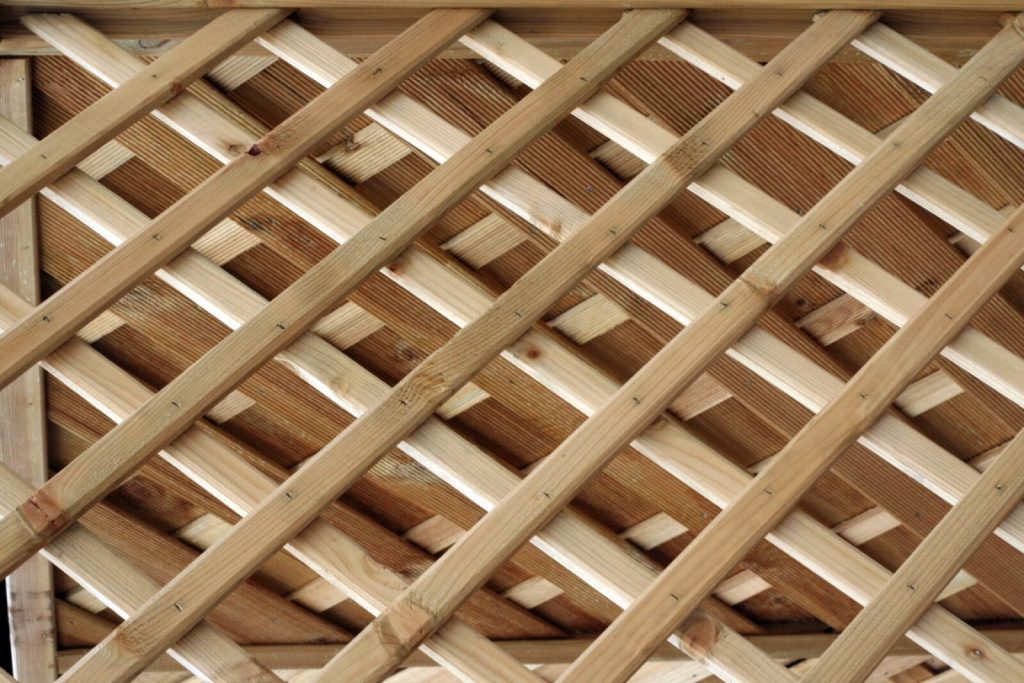
Garden trellis panels are the cheapest way to add height, privacy and a growing frame to a boundary, and they are also the single most common reason a perfectly ordinary garden fence ends up needing planning permission. Trellis is not treated as decoration in planning terms. It forms part of the means of enclosure, so its height counts towards the height of whatever it sits on.
That decides most trellis purchases before the timber spec or the lattice pattern matters. Here is the rule, then what separates a panel that lasts twenty years from one that sags in three.
The height rule that catches most trellis buyers
Permitted development rights for boundaries in England come from the Town and Country Planning (General Permitted Development) (England) Order 2015, Schedule 2, Part 2, Class A. It refers throughout to a “gate, fence, wall or other means of enclosure”, and a trellis fixed to a fence is part of that enclosure.
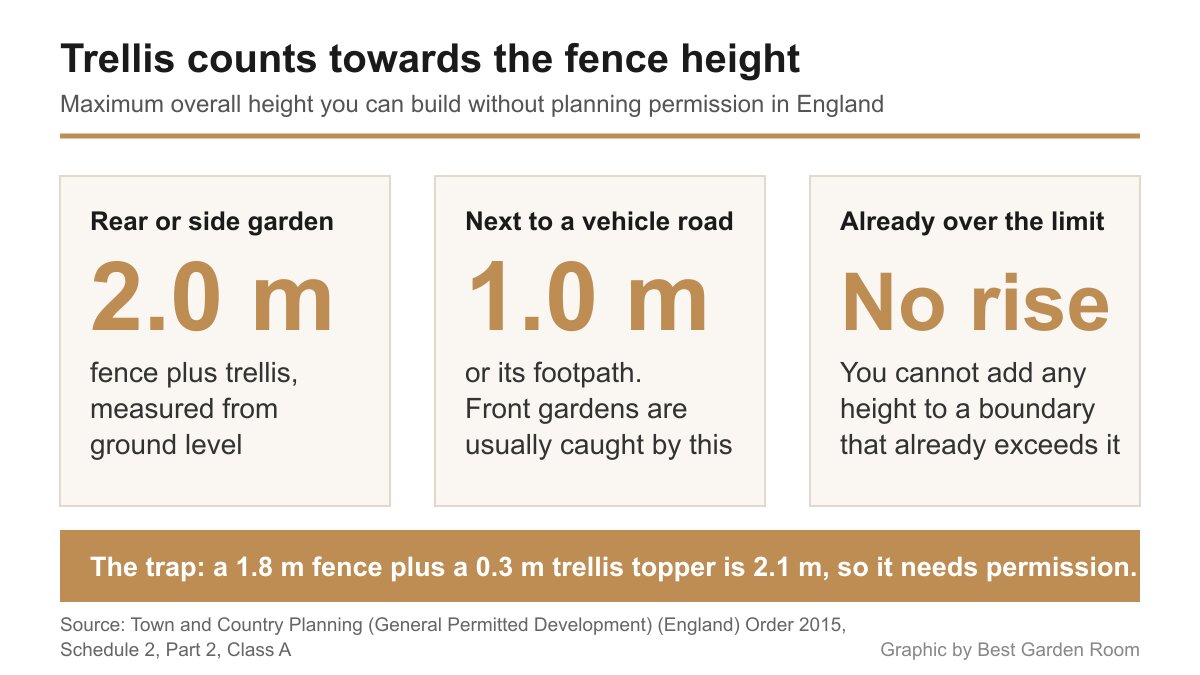
Development is not permitted where:
- the height of any gate, fence, wall or means of enclosure adjacent to a highway used by vehicular traffic, or the footpath of such a highway, would exceed 1 metre above ground level (2 metres for a school, subject to sight lines);
- the height of any other gate, fence, wall or means of enclosure would exceed 2 metres above ground level;
- a boundary that is being maintained, improved or altered would, as a result, exceed its former height or the limits above;
- the work is within the curtilage of, or forms the boundary of, a listed building.
Read the third bullet again, because it is the one people fall foul of. A standard 1.8 metre close board fence plus a 300mm trellis topper comes to 2.1 metres. That is over the limit, and it is also an increase in height on an existing structure. Both routes to permitted development are closed at once.
The Planning Portal guidance on fences, gates and garden walls adds one more trap: the right can be removed entirely by an article 4 direction or by a planning condition on the property, which is common on newer estates and in conservation areas. The full wording is in Schedule 2, Part 2 of the Order.
In practice a 1.5 metre fence with a 450mm trellis on top is fine in a back garden, and the same combination facing the road is not. If you want trellis above an existing 1.8 metre fence, you are either applying for permission or lowering the fence.
Panel sizes and what the timber spec actually tells you
Almost every UK trellis panel is 1.83 metres wide, because that is 6 feet and it matches standard fence post spacing. Heights then step in roughly 300mm increments from 0.3 metres up to 1.83 metres, which is what lets you tune the total height to stay under the limit.
The spec that matters is the timber section, and it varies enormously between products that look alike in a photograph. A heavy-duty square trellis from a manufacturer such as Jacksons is built from 25 by 19mm infill battens with a 38 by 19mm side and bottom frame and a 45 by 51mm capping rail, with squares of 112mm or 138mm depending on the panel height. That panel carries a twenty-five year guarantee.
At the other end, a budget diamond lattice panel is commonly built from laths around 6mm thick and 30mm wide, stapled rather than nailed, often with no capping rail at all. It is a different product wearing the same name. A 6mm lath will not carry a mature climber through a gale, and it will not survive being cut down on site.
Three things to check before buying:
- Batten thickness. Anything under 15mm is a screening product, not a structural one.
- Whether the panel is framed. An unframed panel has no way to resist racking and relies entirely on the posts.
- Fixings. Nailed or stainless-steel fixed lasts. Staples pull out as the timber cycles wet and dry.
Square lattice or diamond lattice?
Square trellis has vertical and horizontal battens meeting at right angles. Diamond lattice runs them at 45 degrees. The difference is not only cosmetic.
Square lattice is easier to tie a climber into, because the horizontals give a natural training line at regular heights, and it is far easier to cut down accurately for a narrower opening. It also reads as more formal, which suits a town garden.
Diamond lattice gives a denser visual screen for the same amount of timber, because the diagonals cross more often across the eye line. It suits expanding, lightweight panels and decorative uses. It is harder to cut down without the whole panel losing its geometry, and the thin laths used in most diamond panels are the weakest part of the product.
For a boundary that will carry a climbing rose, a clematis or a jasmine, square lattice in a heavier section is the better buy. For screening a bin store or a hot tub, diamond lattice does the job for less.
Fixing trellis to a wall, a fence or its own posts
Each of the three has a failure mode worth knowing about.
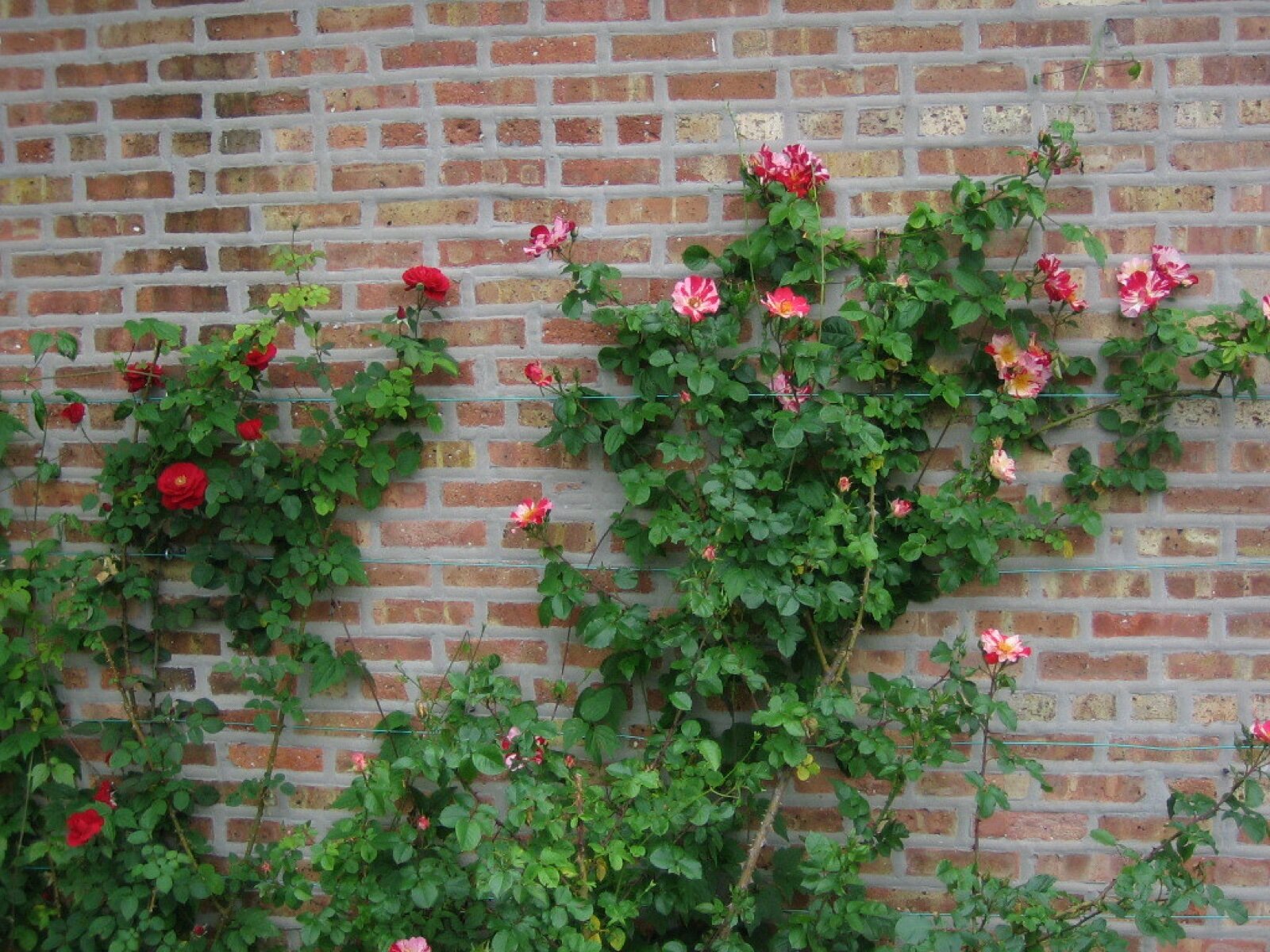
Against a wall, the panel should never sit flat against the brickwork. Fix it on battens so there is a gap of at least 25mm behind it, which lets air circulate, gives you somewhere to pass a tie behind the stems, and stops the timber sitting permanently damp. Keep the bottom of the panel well clear of the ground and above the damp proof course, and use a batten down the centre as well as at each edge on anything wider than about 900mm. Fixing straight to render or to a single-skin wall with short plugs is how panels come off in the first winter storm.
On top of an existing fence, the problem is wind rather than weight. A fence post was sized for the sail area of the fence it holds. Add 300 to 450mm of trellis and then grow something dense through it, and you have increased both the lever arm and the surface the wind pushes against, on a post that may already be a few years into its life. If the posts are timber and set directly in concrete, check them at ground level with a screwdriver before adding anything. This is also the point at which you need to be sure whose fence it is. You have no right to fix anything to a neighbour’s boundary without their agreement.
On its own posts, the trellis becomes a free-standing structure and the posts carry everything. Use Use Class 4 treated posts, set them properly, and space them to suit the 1.83 metre panel width rather than cutting panels to fit posts you have already concreted in.
Wires are the quiet alternative that most garden centres will not sell you. Vine eyes and tensioned galvanised wire, run horizontally about 450mm apart up a wall, cost a fraction of a trellis panel, disappear visually, and are what most walled gardens actually use for climbers. They are less good at screening and give you nothing to look at in winter, so the choice comes down to whether you want the structure itself to be part of the garden.
Treatment, rot and how long a panel lasts
Preservative-treated timber in the UK is specified by Use Class, under BS EN 335 and the treatment standard BS 8417. For garden timber the two that matter are Use Class 3, for wood used outdoors above ground, and Use Class 4, for wood in permanent ground or fresh water contact or providing exterior structural support.
Trellis panels, fence panels and rails are Use Class 3 components because they are out of ground contact. Posts are Use Class 4, and the Wood Protection Association is blunt that Use Class 4 levels of protection must be achieved for anything in permanent ground contact. Treated posts are normally sold to a stated desired service life of either 15 or 30 years.
The practical failure is almost always at the ground line, and almost always because a Use Class 3 component was used where Use Class 4 was needed. UC3 and UC4 timber look identical and cost about the same. If a supplier cannot tell you the use class of the posts, assume it is the lower one.
Two habits extend the life of a panel more than any product you can paint on it. Keep the bottom rail clear of soil, mulch and leaf litter, which otherwise holds moisture against the timber all winter. And re-treat any cut end on site, because cutting a panel down exposes untreated heartwood that the factory process never reached.
Frequently asked questions
Does trellis on top of a fence count towards the 2 metre limit?
Yes. The Order refers to a gate, fence, wall or other means of enclosure, and trellis fixed to a fence is part of that enclosure. The combined height is what counts, measured from ground level. A 1.8 metre fence with a 300mm topper is 2.1 metres and needs planning permission.
How high can a garden fence with trellis be without planning permission?
Two metres in a rear or side garden, and one metre where the boundary is next to a highway used by vehicles or its footpath, which usually captures a front garden. If the existing boundary already exceeds those heights, you cannot add to it at all under permitted development.
What size are standard garden trellis panels?
1.83 metres, or 6 feet, wide as standard, with heights typically available in six steps from 0.3 metres up to 1.83 metres. That range exists so you can combine a panel with an existing fence and land on a legal total height.
Can I fix trellis to my neighbour’s fence?
Not without their permission. If the fence is theirs, fixing anything to it, or increasing its height, is not yours to do. Where ownership is unclear, the title plan may show a T mark on the boundary indicating who maintains it, though it is not conclusive. A free-standing panel on your own posts, set just inside your boundary, avoids the argument entirely.
How long does a trellis panel last?
A thin, stapled diamond lattice panel is often finished in three to five years. A framed panel in 25mm timber from a manufacturer with a long guarantee will comfortably outlast the climber growing on it. The difference is timber section and treatment, not price alone.
Is trellis better than wires for climbing plants?
For twining climbers such as clematis and honeysuckle, trellis is easier because they grip it themselves. For wall shrubs and climbing roses that have to be tied in, tensioned wires are cheaper, last longer and look better once the plant covers them. Trellis wins when you also want the screening, or when you want something to look at in winter.
More on boundaries and garden structures in our guides to garden screening, garden gates and garden arches, or start from the Best Garden Room homepage.
Related guides
- Garden Room Planning Permission UK: The 30m² and 50% Rules Explained
- How Much Does a Garden Room Cost to Run in Winter? Real UK Figures
- Garden Room vs Extension: Honest Cost, Value and When Each Wins
- How Much Does It Cost to Run Electrics to a Garden Room in 2026?
- Ground Screws vs Concrete Base: Which Garden Room Foundation Is Right for You?
- Do Garden Rooms Need Building Regulations? The 15, 30 and 1m Rules Explained
- Prefab vs Bespoke Garden Rooms: Which Is Right for You?
- Garden Room Buying Mistakes: 12 Costly Errors to Avoid
- Garden Room News: June 2026
- How to Buy a Garden Room: The Complete UK Buyer’s Guide (2026)
- What to Look for in a Garden Room: 15 Things to Check Before You Buy
- Buying a Second-Hand Garden Room: Is It Worth It?
- Garden Room Kits vs Fully Installed: Should You Self-Build or Buy Turnkey?
- Garden Room Deposits, Contracts and Deliverables: Protecting Your Money
- How Long Does a Garden Room Last? Lifespan and Maintenance
- Garden Room Cost Per Square Metre: 2026 UK Rates Explained
- How Much Does a Garden Room Cost in the UK? (2026 Price Guide)
- Garden Room Prices by Size: From 3x3m to 8x4m and Beyond
- How Much Does a Garden Office Cost? (2026 UK Breakdown)
- Garden Room Planning News: Late June 2026
- How Much Does a Garden Room with a Bathroom Cost?
- Hidden Garden Room Costs: Foundations, VAT and the Extras Quotes Miss
- Garden Room Finance: Loans, Mortgages and Payment Options Explained
- Garden Room News: Early July 2026
- Do Garden Rooms Add Value to Your House? What the UK Resale Data Shows
- Permitted Development Rights for Garden Rooms: Size, Height and the 2m Boundary Rule
- Do Garden Rooms Affect Council Tax? Business Rates and Reassessment
- Garden Room News: Mid-July 2026
- How a Garden Room Is Built: Foundations to Finish (UK Guide)
- SIPs vs Timber Frame Garden Rooms: Which Construction Is Better?
- How Close to a Boundary Can a Garden Room Be? UK Rules Explained
- How to Apply for Garden Room Planning Permission: Step by Step
- Can You Build a Garden Room on Decking, Slabs or a Patio?
- Is a Garden Room Cheaper Than an Extension? 2026 Cost Comparison
- Garden Room News: Mid-July 2026
- Garden Room Cladding: Cedar vs Composite vs Larch vs Render
- Garden Room Roof Guide: Flat vs Pitched and the Best Materials
- Garden Room Windows and Doors: Bifold, Sliding and Glazing
- How to Build a Garden Room: A DIY Step-by-Step Guide (UK)
- How Long Does It Take to Build a Garden Room?
- How to Make a Garden Room Usable All Year Round
- Garden Room Insulation: Best Materials and U-Values for the UK
- How to Heat a Garden Room: 9 Options Compared by Cost and Warmth
- Best Heating for a Garden Office: Warm Without a Huge Bill
- Air Conditioning for Garden Rooms: Cooling and Heating in One
- Stopping Condensation and Damp in a Garden Room (UK Guide)
- How to Get Wi-Fi in a Garden Office: 6 Ways That Actually Work
- Garden Office Ideas: Designing the Perfect Work-From-Home Space
- Garden Room Ideas: 20 Popular Uses to Inspire Your Build
- Garden Room Annexe: Rules, Costs and How to Build One
- Garden Bar Ideas: The Height Rules, Power and Layout
- Garden Room Business: What Changes Once Clients Visit
- Garden Studio Ideas: Sizes, Light and the 2.5m Rule
- Garden Room Lighting: IP20 Inside, IP65 Out, Part P Rules
- Landscaping Around a Garden Room: the 30cm Decking Trap
- Garden Room Design: Why 2.5m Decides Everything
- Garden Room Planning Permission: the 2.5m Boundary Rule
- Garden Room News: New NPPF Lands, PD Rules Unchanged
- Garden Saunas UK: Planning, Building Regs and Electrics
- Best Garden Room Companies UK: Guarantees of 10 to 25 Years
- Garden Room Electrics: The Rules Change on 15 Oct 2026
- Golf Simulator Garden Room: The 2.5m Rule That Stops It
- Garden Screens: the 2m Rule, and Why Trellis Counts
- Cheap Garden Rooms: What 19mm Walls Really Get You
- Green Retreats Review: 12-Year Cover, 60% Upfront
- Booths Garden Studios Review: Steel Build, 25 Years
- Eden Garden Rooms Review: £23,500 Start, 10-Year Cover
- Green Retreats vs Booths: 25-Year Steel or Timber?
- Garden Rooms London: 6 Companies and the 2.5m Limit
- Garden Room Bedroom: Why a Bed Changes the Rules
- Do I Need Planning Permission for a Garden Shed? Usually Not
- Garden Room News: Staged Payments Arrive, Timber Stays Dear
- Garden Gym Ideas: Sizes, Ceilings and the 2.5m Height Rule
- Garden Gazebo Rules: 2.5m Near a Boundary, 4m Max
- Garden Arch: Wood or Metal, and the 2.7m Height Rule
- Garden Arbour: Sizes That Seat Two, and Wood vs Metal
- Wooden Garden Gates: Sizes, UC4 Posts and the 1m Rule
- Garden Room News: Rates Held, Materials Up 5.9%
- Summer House Interior Ideas: 9 That Work in Winter