

The best garden shed storage ideas all do the same thing: get everything off the floor and onto the walls and roof, so you can walk in and reach the mower without moving three bags of compost first. A typical 8×6 shed has only around 4.5 square metres of floor, but its walls offer far more usable surface, and most of it is wasted.
Below are twelve ideas that work in real UK sheds, roughly in the order we would do them, plus the two things most storage articles skip: how to fix shelves so they actually hold, and what you should not keep in a shed at all. October is a good month for it, with the mower about to be put away for winter.
Start with a clear-out and a floor plan
Empty the shed completely on a dry day. Bin broken tools, dried-up paint and anything you have not touched in two seasons. Then sort what is left into groups by how often you use it:
- Weekly: hand tools, gloves, secateurs, watering can, hose.
- Seasonal: mower, strimmer, hedge trimmer, garden furniture cushions, Christmas lights.
- Bulk and occasional: compost, bird seed, paint, spare timber, the barbecue.
The weekly group goes nearest the door at waist to eye height. Seasonal kit goes at the back or up high. Heavy bulk items go low, on a shelf just off the floor rather than on it, so damp cannot wick into bags and cardboard.
12 garden shed storage ideas
1. A pegboard tool wall
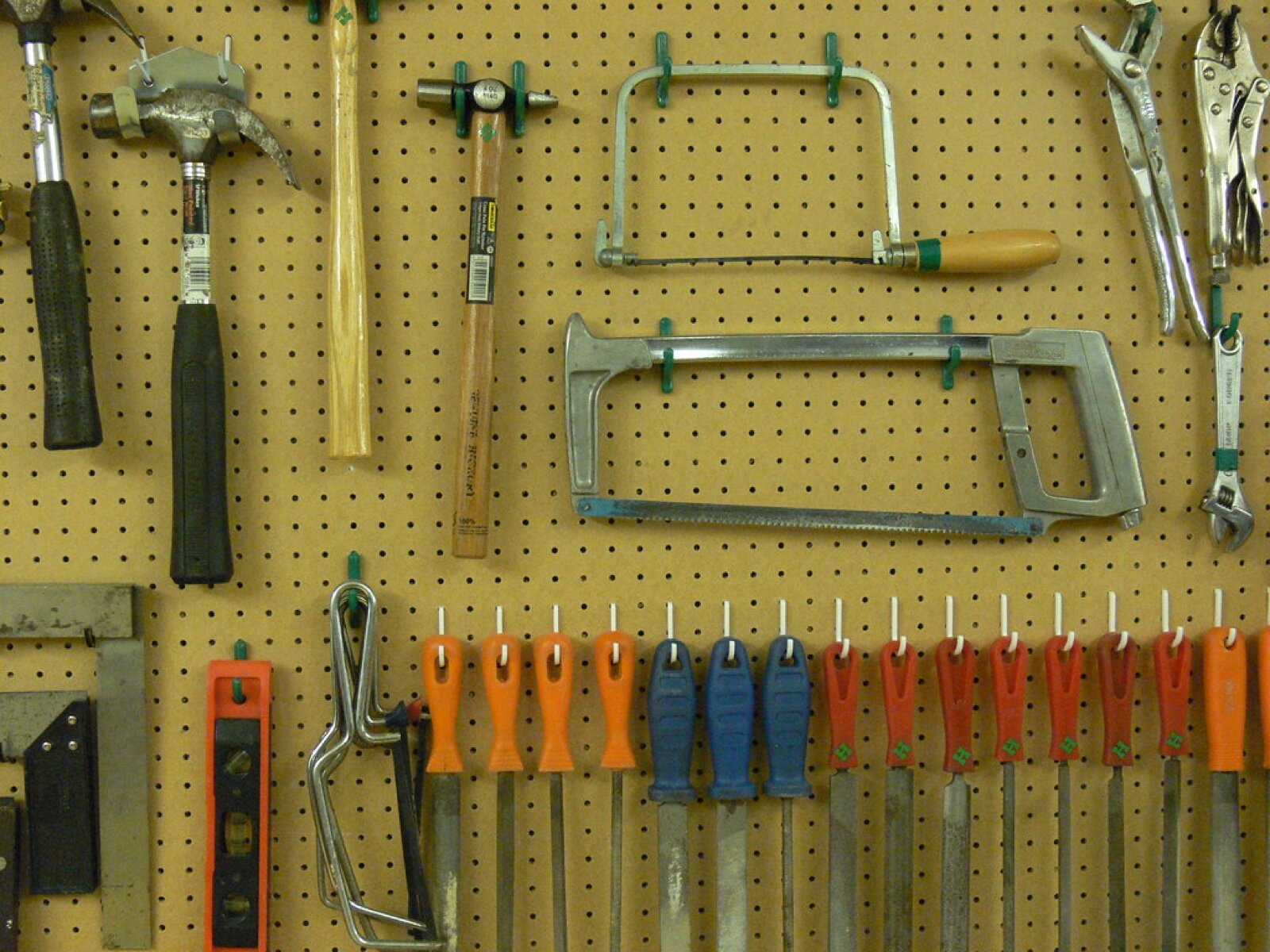
A sheet of pegboard on battens, with hooks for each hand tool, is the single biggest improvement in most sheds. Draw round each tool with a marker so you can see at a glance what is missing. Fix the battens into the shed’s framing, not just the cladding.
2. Rail and hook systems for long-handled tools
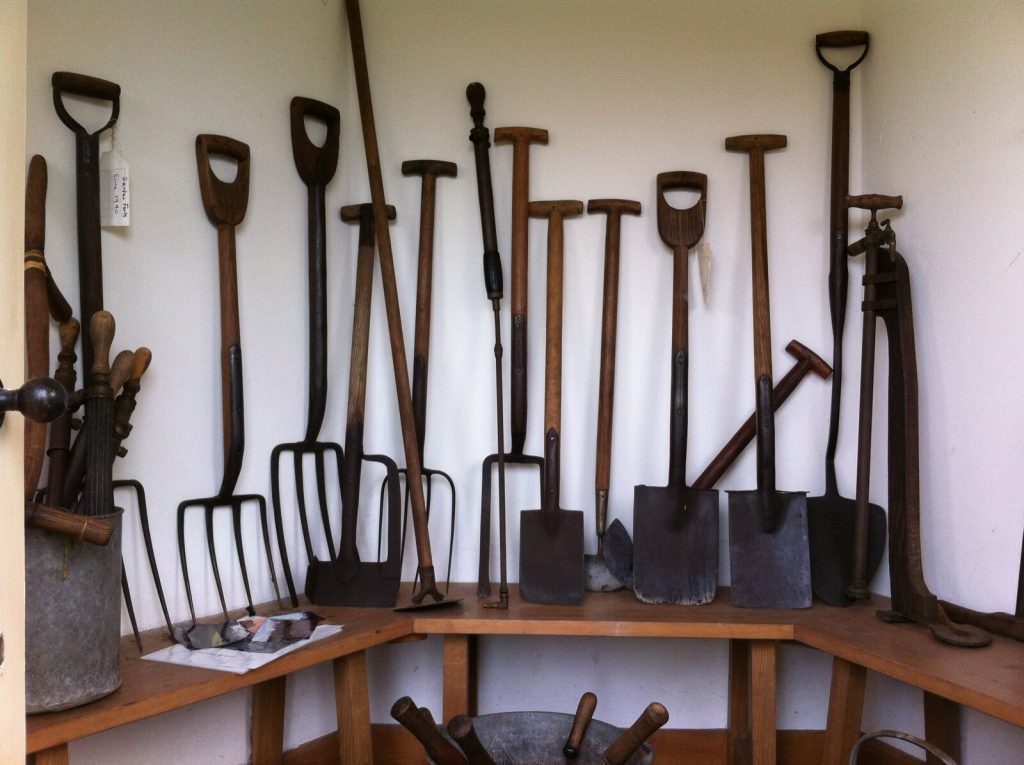
Spades, forks, rakes and hoes stored heads up on a wall rail take a fraction of the space of a corner pile, and they stop sharp edges being trodden on. Steel rails with movable hooks let you rearrange as your tools change.
3. Deep shelving on one side only
Run deep shelves along one long wall and keep the other wall for hanging tools. Shelves on both sides make a narrow shed feel like a corridor, and you end up stacking in front of them.
4. A high shelf above the door
The space above the door is nearly always empty. A shelf there suits light, rarely used items such as plant pots, netting and spare hose fittings.
5. Roof joist storage
Laid across the ceiling joists, a few boards or a pair of overhead racks can hold canes, spare timber and folded windbreaks. Keep it light: shed roof timbers are not designed for heavy loads.
6. Clear, labelled boxes
Clear lidded boxes on shelves let you see contents without opening them, and the lids keep out mice and damp. Label the end facing out. Bird seed and grass seed in particular belong in rodent-proof containers.
7. A small workbench with storage under it
Even a narrow fold-down bench gives you somewhere to pot up and sharpen tools. Put a set of drawers or a crate under it for small parts. If you want a proper workshop, our page on the garden workshop covers sizes and power.
8. Magnetic strips for small metal tools
A magnetic knife strip screwed above the bench holds secateurs, snips, screwdrivers and drill bits where you can see them.
9. Door-back storage
The inside of the door takes a shallow rack for gloves, string and plant labels, or hooks for a hose reel. Check the door still closes and the hinges can take the extra weight.
10. A hose reel or wall-mounted hose hanger
A hose left in a heap on the floor kinks, cracks and trips you up. Drain it at the end of the season and hang it on a reel or bracket.
11. A designated mower bay
Mark out a space near the door for the mower so it can roll in and out without a shuffle. Many modern mowers have folding or vertical-storage handles; check yours before you plan the bay. Brush off grass and let it dry before putting it away, because wet clippings rot and rust the deck.
12. A separate log store or lean-to for bulky items
Logs, bags of compost and the bins do not need to take up shed floor. A slim lean-to or log store against the side of the shed often frees more space than any shelving.
How to fix shelves and hooks so they hold
Most sheds have thin cladding, often 12mm or less on budget models, nailed to a frame of small-section timbers. A shelf screwed only into the cladding will pull out once it is loaded. To make storage last:
- Find the framing. The vertical studs are visible inside most timber sheds. Fix brackets and battens into them.
- Use a batten as a spreader. Screw a horizontal batten across several studs, then fix pegboard, rails or brackets to the batten.
- Keep the heavy stuff low. Paint tins, bags of feed and toolboxes go on the bottom shelf.
- Metal and plastic sheds need their own fixings. On thin metal panels, use the manufacturer’s shelf kits or a freestanding unit rather than drilling the walls. We cover the condensation problem in metal sheds in our page on metal garden sheds.
Freestanding steel or plastic shelving units are a good alternative where walls are weak. Leave a small gap behind them so air can move and the wall can dry.
What not to store in a garden shed
A shed is unheated, often damp and rarely secure, so some things are better elsewhere:
- Too much petrol. The HSE says you can keep up to 30 litres of petrol at home in suitable containers without telling your local Petroleum Enforcement Authority, and never in living accommodation. Fire and rescue services advise plastic containers of no more than 10 litres and metal ones of no more than 20 litres, kept away from anything that could spark.
- Chemicals within reach of children. Weedkillers and pest controls go on a high shelf or in a lockable cabinet, in their original containers.
- Batteries in a freezing shed. Cordless tool batteries are best kept indoors over winter. Check the storage temperatures in the tool’s manual.
- Paper, fabric and electronics unless the shed is properly insulated and dry. Cushions and soft furnishings go mouldy in a damp shed; sealed storage bags help.
Keep stored tools secure
Better storage makes a shed more attractive to thieves, because everything is easy to grab. Police crime prevention advice for sheds is consistent:
- Fit a closed-shackle padlock and a heavy-duty hasp and staple.
- Replace hinge screws with coach bolts or security screws so the door cannot be unscrewed.
- Cover or frost windows so tools are not on display.
- Mark valuable tools with your postcode and house number, and register serial numbers on the free Immobilise database.
- Chain bikes and mowers to a ground anchor or a fixed point inside.
- Consider a battery shed alarm and motion-sensor lighting outside.
Check whether your home insurance covers shed contents, and the conditions attached; some policies require a lock on the door to pay out.
Frequently asked questions
How do I maximise storage in a small shed?
Use the walls and roof rather than the floor. A pegboard tool wall, a long-handled tool rail and one run of deep shelves will usually double the usable space in a small shed.
How do I stop things going damp in my shed?
Keep everything off the floor, use lidded plastic boxes rather than cardboard, leave a gap behind shelving, and ventilate on dry days. A roof in poor condition is the usual cause of damp, so check the felt each autumn.
Can I store petrol in my garden shed?
Yes, in suitable containers and up to 30 litres in total without notifying your Petroleum Enforcement Authority, according to the HSE. Keep it away from ignition sources and well ventilated.
What is the best way to store garden tools?
Hang them on the wall, clean and dry. Wipe soil off blades after use, and oil metal parts before winter to stop rust.
Should I put shelves in a metal shed?
Use the manufacturer’s shelf kit or a freestanding unit. Drilling thin metal panels can let water in and weaken the walls.
Choosing a new shed or garden building? Best Garden Room covers sizes, bases and planning rules before you buy.
Related guides
- Garden Room Planning Permission UK: The 30m² and 50% Rules Explained
- How Much Does a Garden Room Cost to Run in Winter? Real UK Figures
- Garden Room vs Extension: Honest Cost, Value and When Each Wins
- How Much Does It Cost to Run Electrics to a Garden Room in 2026?
- Ground Screws vs Concrete Base: Which Garden Room Foundation Is Right for You?
- Do Garden Rooms Need Building Regulations? The 15, 30 and 1m Rules Explained
- Prefab vs Bespoke Garden Rooms: Which Is Right for You?
- Garden Room Buying Mistakes: 12 Costly Errors to Avoid
- How to Buy a Garden Room: The Complete UK Buyer’s Guide (2026)
- What to Look for in a Garden Room: 15 Things to Check Before You Buy
- Buying a Second-Hand Garden Room: Is It Worth It?
- Garden Room Kits vs Fully Installed: Should You Self-Build or Buy Turnkey?
- Garden Room Deposits, Contracts and Deliverables: Protecting Your Money
- How Long Does a Garden Room Last? Lifespan and Maintenance
- Garden Room Cost Per Square Metre: 2026 UK Rates Explained
- How Much Does a Garden Room Cost in the UK? (2026 Price Guide)
- Garden Room Prices by Size: From 3x3m to 8x4m and Beyond
- How Much Does a Garden Office Cost? (2026 UK Breakdown)
- How Much Does a Garden Room with a Bathroom Cost?
- Hidden Garden Room Costs: Foundations, VAT and the Extras Quotes Miss
- Garden Room Finance: Loans, Mortgages and Payment Options Explained
- Do Garden Rooms Add Value to Your House? What the UK Resale Data Shows
- Permitted Development Rights for Garden Rooms: Size, Height and the 2m Boundary Rule
- Do Garden Rooms Affect Council Tax? Business Rates and Reassessment
- How a Garden Room Is Built: Foundations to Finish (UK Guide)
- SIPs vs Timber Frame Garden Rooms: Which Construction Is Better?
- How Close to a Boundary Can a Garden Room Be? UK Rules Explained
- How to Apply for Garden Room Planning Permission: Step by Step
- Can You Build a Garden Room on Decking, Slabs or a Patio?
- Is a Garden Room Cheaper Than an Extension? 2026 Cost Comparison
- Garden Room Cladding: Cedar vs Composite vs Larch vs Render
- Garden Room Roof Guide: Flat vs Pitched and the Best Materials
- Garden Room Windows and Doors: Bifold, Sliding and Glazing
- How to Build a Garden Room: A DIY Step-by-Step Guide (UK)
- How Long Does It Take to Build a Garden Room?
- How to Make a Garden Room Usable All Year Round
- Garden Room Insulation: Best Materials and U-Values for the UK
- How to Heat a Garden Room: 9 Options Compared by Cost and Warmth
- Best Heating for a Garden Office: Warm Without a Huge Bill
- Air Conditioning for Garden Rooms: Cooling and Heating in One
- Stopping Condensation and Damp in a Garden Room (UK Guide)
- How to Get Wi-Fi in a Garden Office: 6 Ways That Actually Work
- Garden Office Ideas: Designing the Perfect Work-From-Home Space
- Garden Room Ideas: 20 Popular Uses to Inspire Your Build
- Garden Room Annexe: Rules, Costs and How to Build One
- Garden Bar Ideas: The Height Rules, Power and Layout
- Garden Room Business: What Changes Once Clients Visit
- Garden Studio Ideas: Sizes, Light and the 2.5m Rule
- Garden Room Lighting: IP20 Inside, IP65 Out, Part P Rules
- Landscaping Around a Garden Room: the 30cm Decking Trap
- Garden Room Design: Why 2.5m Decides Everything
- Garden Room Planning Permission: the 2.5m Boundary Rule
- Garden Saunas UK: Planning, Building Regs and Electrics
- Best Garden Room Companies UK: Guarantees of 10 to 25 Years
- Garden Room Electrics: The Rules Change on 15 Oct 2026
- Golf Simulator Garden Room: The 2.5m Rule That Stops It
- Garden Screens: the 2m Rule, and Why Trellis Counts
- Cheap Garden Rooms: What 19mm Walls Really Get You
- Green Retreats Review: 12-Year Cover, 60% Upfront
- Booths Garden Studios Review: Steel Build, 25 Years
- Eden Garden Rooms Review: £23,500 Start, 10-Year Cover
- Green Retreats vs Booths: 25-Year Steel or Timber?
- Garden Rooms London: 6 Companies and the 2.5m Limit
- Garden Room Bedroom: Why a Bed Changes the Rules
- Do I Need Planning Permission for a Garden Shed? Usually Not
- Garden Gym Ideas: Sizes, Ceilings and the 2.5m Height Rule
- Garden Gazebo Rules: 2.5m Near a Boundary, 4m Max
- Garden Arch: Wood or Metal, and the 2.7m Height Rule
- Garden Arbour: Sizes That Seat Two, and Wood vs Metal
- Wooden Garden Gates: Sizes, UC4 Posts and the 1m Rule
- Summer House Interior Ideas: 9 That Work in Winter
- Garden Trellis Panels: the 2m Rule Most Buyers Miss
- Garden Shelters: Six Types and When You Need Permission
- Garden Greenhouses: Glass Gives 90% Light, Plastic 80%
- Summer House Doors and Windows: 4mm Toughened or Styrene?
- Log Stores: Size, Siting and the 20% Moisture Rule
- Garden Shed Roof: Felt, EPDM or Onduline by Pitch
- Insulated Garden Shed: The 25mm Gap That Stops Damp
- Composite Garden Sheds: Rot-Proof, But Check These 6 Things
- How to Build a Garden Shed: Base, Frame and Roof in 5 Steps
- Garden Workshop: Size, Base, Power and the Planning Rules
- Plastic Garden Sheds: Who They Suit and 6 Checks First
- Metal Garden Sheds: Stop Condensation Before You Buy