

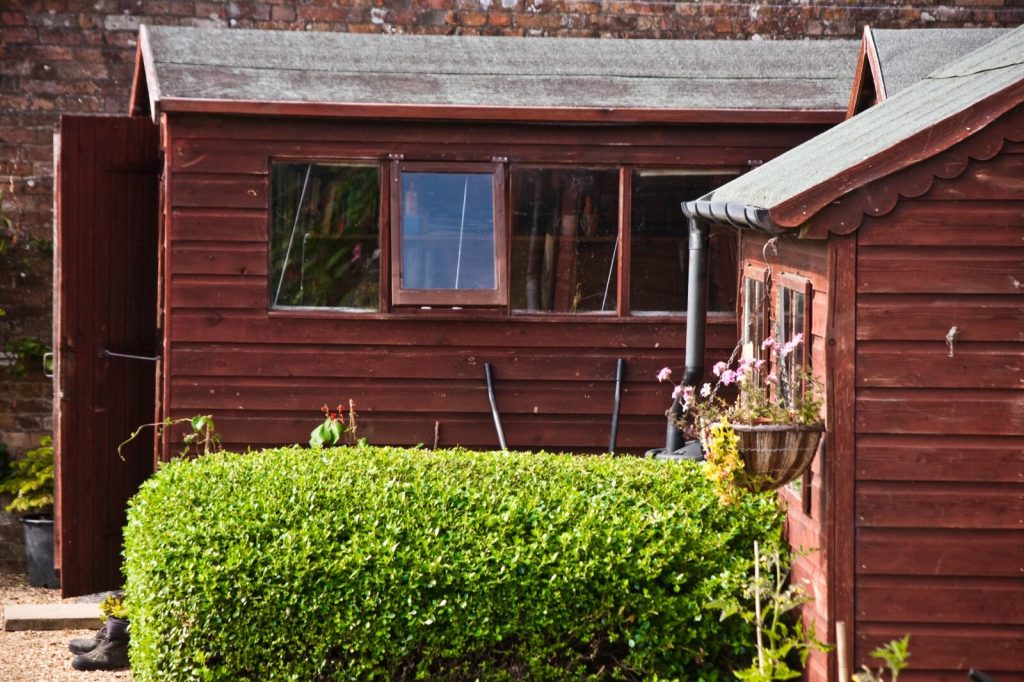
Wooden garden sheds look alike in the catalogue photos, but two sheds of the same size can last five years or twenty-five depending on a handful of specs that are easy to miss: how the cladding boards join, how thick they are, how the timber was treated, what the floor is made of and what it sits on. This page goes through those specs in the order that matters, so you can compare a wooden garden storage shed from one retailer against another and know which one is worth the money.
Cladding: overlap, shiplap or tongue and groove
The walls are the first thing to check, because the board style decides how weathertight the shed is and how stiff it feels.
- Overlap. Rough-sawn boards fixed so each one laps over the one below, like a clinker boat. It is the cheapest style. Forest Garden describes its overlap boards as straight cut and overlapped so the timber can move with the weather and shed rainwater. The catch is that boards can gap as they dry and twist, letting in light and draughts. Fine for tools and the mower; not ideal for anything that minds damp.
- Shiplap. Planed boards with a rebate along each edge, so they interlock and present a flat, stepped face. Much tighter than overlap.
- Tongue and groove. A tongue on one board slots into a groove on the next. Tongue and groove garden sheds give the most rigid, weathertight wall and are the usual choice for a workshop or anything you will spend time in. Many retailers sell “shiplap tongue and groove”, which combines the two profiles.
Thickness matters as much as profile. Budget overlap sheds commonly use boards around 7mm thick: the Forest Garden 7 x 5ft apex overlap shed sold by Wickes lists 7mm walls. Heavier tongue and groove sheds use 12mm boards or more. Thicker boards resist splitting when you screw shelves or hooks into them and hold their shape better over the years.
Framing and floor
The frame is what keeps the walls square and stops the doors dropping out of line. Look for the framing size in the spec: the Forest Garden shed above uses 28 x 28mm framing. Sturdier sheds use thicker sections, and on bigger sheds that difference shows within a couple of winters.
Floors come in two main types:
- OSB or chipboard sheet. Cheap and flat, but it can swell if it gets wet and does not cope well with heavy, concentrated loads like a ride-on mower.
- Solid timber boards. Usually tongue and groove, stronger and more forgiving of damp. Forest Garden describes its solid timber floor as much stronger than OSB.
Check the floor sits on bearers: treated timbers running underneath that lift the floor off the base and let air circulate. Without them, the floor sits in any water that pools on the slab.
Dip treated or pressure treated
This is the spec that most affects how long a wooden shed lasts, and how much work it is.
Dip treated timber is passed through a preservative that stays mostly on the surface. It is cheaper, and the colour is usually a stain. Guarantees on dip treated sheds typically depend on you re-treating the shed with a preservative every year and keeping it off the ground. Miss a year and both the protection and the guarantee lapse.
Pressure treated timber (often called tanalised) is put in a vacuum tank and the preservative forced deep into the wood. It costs more but needs far less upkeep. The Forest Garden pressure treated overlap shed at Wickes, for example, carries a 15 year anti-rot guarantee.
For cladding and other exterior timber kept off the ground, the British standard BS 8417 calls the exposure Use Class 3. Use Class 4 is for timber in or near the ground, such as posts and base bearers. If you are building a shed yourself or ordering bespoke, ask for the right use class for each part, especially anything touching the base. Our guide to how to build a garden shed covers the base, bearers and frame in order.
Roof shape and covering
Wooden sheds come with three common roof shapes:
- Apex. A ridge in the middle, giving the most headroom down the centre. Best if you will stand and work inside.
- Pent. A single slope, high at the front or back. Good against a fence or wall, and often easier to fit under the planning height limits near a boundary.
- Reverse apex. The ridge runs front to back with the door on the long side, which makes long items easier to reach.
Most come with a sheet roof covered in sand felt, which is the part that fails first. Expect to re-felt at some point; heavier mineral felt, shingles or EPDM rubber last longer. Our page on the garden shed roof compares the options and how to refelt one.
Sizes and what fits
Shed sizes are sold in feet, width by depth, and the “nominal” size is often a little more than the floor you get inside. Check the internal dimensions before you buy.
- Small wooden garden shed (3 x 2ft to 6 x 4ft). A bin store, a few tools, a push mower. Most 6 x 4ft sheds take a mower plus a wall of hand tools.
- 7 x 5ft to 8 x 6ft. The most popular range for a family garden: mower, bikes, garden furniture cushions and shelving.
- 10 x 6ft and up. Room for a workbench as well as storage, or a double door for wide items.
Measure the door opening as well as the floor. A large shed with a narrow single door is still useless for a ride-on mower.
Bases, damp and planning
No wooden shed survives long on bare earth. Put it on a level concrete slab, paving slabs on a compacted sub-base, a treated timber frame or a plastic grid base, and keep it at least a little away from fences so you can reach the walls to treat them and air can move around it. Our comparison of ground screws and concrete bases works for larger sheds too.
Most sheds are permitted development and do not need planning permission, as long as they stay within the height and position limits: no more than 2.5 metres high within 2 metres of a boundary, not in front of the house, and not covering more than half the garden. The Planning Portal’s outbuildings guidance sets out the full rules, and our page on planning permission for a garden shed covers listed buildings and conservation areas.
Painting and upkeep
A wooden shed is the only type that needs regular care, so budget the time before you buy:
- Dip treated: re-treat every year with a shed preservative or a coloured wood treatment, on a dry day, including the underside of any exposed boards you can reach.
- Pressure treated: no preservative needed during the guarantee period, though a stain or paint still helps it keep its colour.
- Everything: check the felt each autumn, clear leaves off the roof, keep soil and plants off the bottom boards, and oil the hinges and lock.
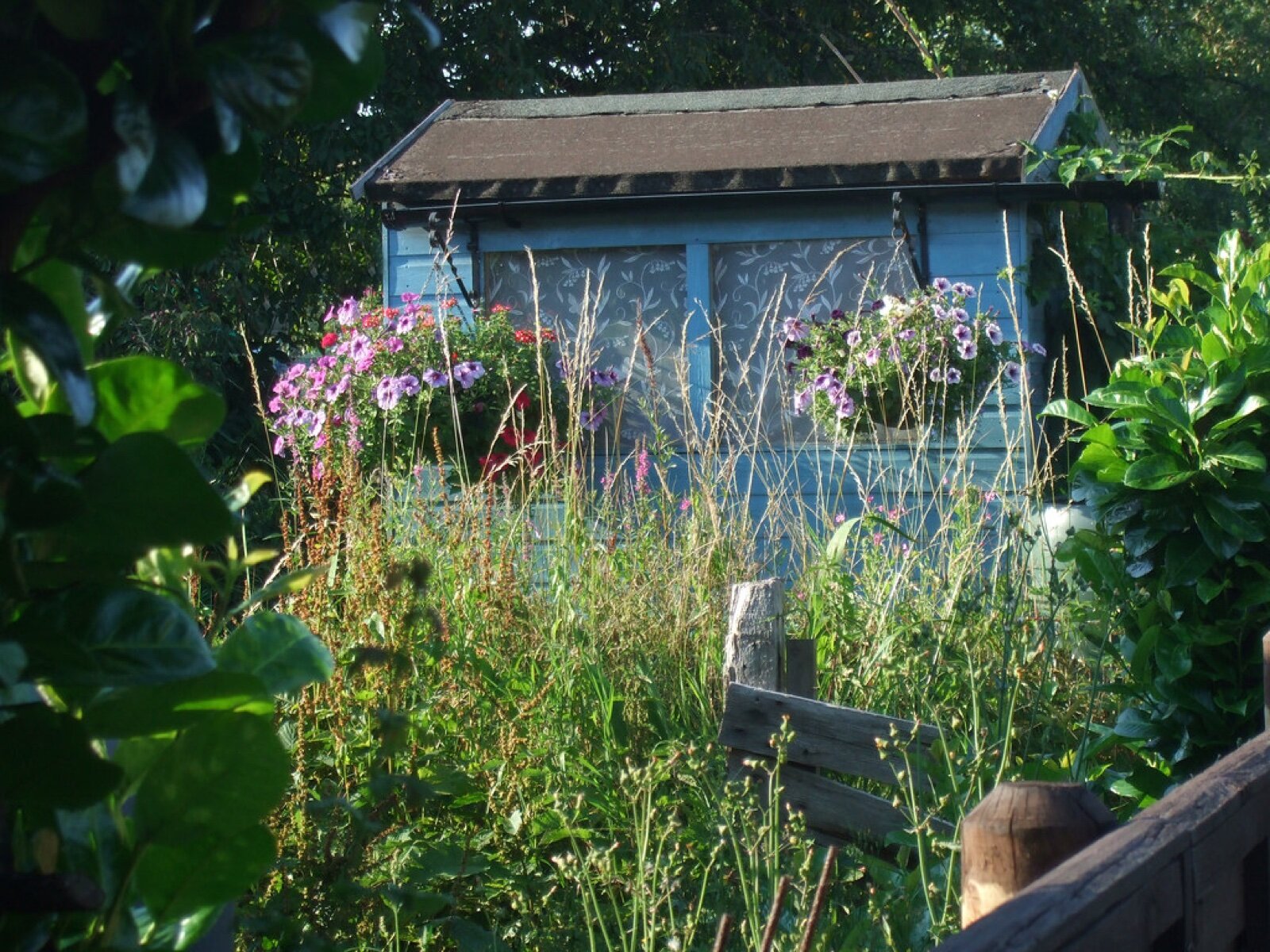
Painting a shed with a microporous exterior wood paint changes its look completely and adds a weather layer. Pale and pastel shades suit cottage gardens; dark greens and greys sit back into planting.
Wooden vs metal, plastic or composite
Timber is the easiest material to customise: you can screw shelves and hooks anywhere, add windows, insulate it or paint it. It is also the one that needs most upkeep and is most vulnerable to rot. If you want a shed you can ignore, compare metal garden sheds, plastic garden sheds and composite garden sheds. If you plan to spend time in it, read our guide to insulated garden sheds, and for fitting it out, our garden shed storage ideas. More garden building advice is on the Best Garden Room homepage.
Frequently asked questions
How long does a wooden garden shed last?
It depends on treatment, base and upkeep more than price. A pressure treated shed on a dry, level base with bearers can outlast its guarantee, which is 15 years on the Forest Garden shed mentioned above. A dip treated shed left untreated on wet ground can rot within a few years.
Is tongue and groove better than overlap?
Yes, for weathertightness and strength. Tongue and groove boards interlock, so they gap less and make a stiffer wall. Overlap is cheaper and fine for basic tool storage.
Do I need to treat a new wooden shed?
A dip treated shed, yes, usually soon after assembly and then every year; most guarantees require it. A pressure treated shed does not need preservative during its guarantee period, but you can stain or paint it.
What thickness of cladding should a wooden shed have?
Budget overlap sheds often use about 7mm boards. For a shed you will fix shelves to or use as a workshop, look for 12mm tongue and groove or thicker.
Does a wooden shed need a base?
Yes. A level concrete, paving or timber base keeps the floor out of standing water, stops the frame twisting and keeps the doors closing properly.
Do I need planning permission for a wooden shed?
Usually not. Sheds are normally permitted development if they stay under 2.5 metres high within 2 metres of a boundary, sit behind the house and cover no more than half the garden. Listed buildings and some designated areas have tighter rules.
Related guides
- Garden Room Planning Permission UK: The 30m² and 50% Rules Explained
- How Much Does a Garden Room Cost to Run in Winter? Real UK Figures
- Garden Room vs Extension: Honest Cost, Value and When Each Wins
- How Much Does It Cost to Run Electrics to a Garden Room in 2026?
- Ground Screws vs Concrete Base: Which Garden Room Foundation Is Right for You?
- Do Garden Rooms Need Building Regulations? The 15, 30 and 1m Rules Explained
- Prefab vs Bespoke Garden Rooms: Which Is Right for You?
- Garden Room Buying Mistakes: 12 Costly Errors to Avoid
- How to Buy a Garden Room: The Complete UK Buyer’s Guide (2026)
- What to Look for in a Garden Room: 15 Things to Check Before You Buy
- Buying a Second-Hand Garden Room: Is It Worth It?
- Garden Room Kits vs Fully Installed: Should You Self-Build or Buy Turnkey?
- Garden Room Deposits, Contracts and Deliverables: Protecting Your Money
- How Long Does a Garden Room Last? Lifespan and Maintenance
- Garden Room Cost Per Square Metre: 2026 UK Rates Explained
- How Much Does a Garden Room Cost in the UK? (2026 Price Guide)
- Garden Room Prices by Size: From 3x3m to 8x4m and Beyond
- How Much Does a Garden Office Cost? (2026 UK Breakdown)
- How Much Does a Garden Room with a Bathroom Cost?
- Hidden Garden Room Costs: Foundations, VAT and the Extras Quotes Miss
- Garden Room Finance: Loans, Mortgages and Payment Options Explained
- Do Garden Rooms Add Value to Your House? What the UK Resale Data Shows
- Permitted Development Rights for Garden Rooms: Size, Height and the 2m Boundary Rule
- Do Garden Rooms Affect Council Tax? Business Rates and Reassessment
- How a Garden Room Is Built: Foundations to Finish (UK Guide)
- SIPs vs Timber Frame Garden Rooms: Which Construction Is Better?
- How Close to a Boundary Can a Garden Room Be? UK Rules Explained
- How to Apply for Garden Room Planning Permission: Step by Step
- Can You Build a Garden Room on Decking, Slabs or a Patio?
- Is a Garden Room Cheaper Than an Extension? 2026 Cost Comparison
- Garden Room Cladding: Cedar vs Composite vs Larch vs Render
- Garden Room Roof Guide: Flat vs Pitched and the Best Materials
- Garden Room Windows and Doors: Bifold, Sliding and Glazing
- How to Build a Garden Room: A DIY Step-by-Step Guide (UK)
- How Long Does It Take to Build a Garden Room?
- How to Make a Garden Room Usable All Year Round
- Garden Room Insulation: Best Materials and U-Values for the UK
- How to Heat a Garden Room: 9 Options Compared by Cost and Warmth
- Best Heating for a Garden Office: Warm Without a Huge Bill
- Air Conditioning for Garden Rooms: Cooling and Heating in One
- Stopping Condensation and Damp in a Garden Room (UK Guide)
- How to Get Wi-Fi in a Garden Office: 6 Ways That Actually Work
- Garden Office Ideas: Designing the Perfect Work-From-Home Space
- Garden Room Ideas: 20 Popular Uses to Inspire Your Build
- Garden Room Annexe: Rules, Costs and How to Build One
- Garden Bar Ideas: The Height Rules, Power and Layout
- Garden Room Business: What Changes Once Clients Visit
- Garden Studio Ideas: Sizes, Light and the 2.5m Rule
- Garden Room Lighting: IP20 Inside, IP65 Out, Part P Rules
- Landscaping Around a Garden Room: the 30cm Decking Trap
- Garden Room Design: Why 2.5m Decides Everything
- Garden Room Planning Permission: the 2.5m Boundary Rule
- Garden Saunas UK: Planning, Building Regs and Electrics
- Best Garden Room Companies UK: Guarantees of 10 to 25 Years
- Garden Room Electrics: The Rules Change on 15 Oct 2026
- Golf Simulator Garden Room: The 2.5m Rule That Stops It
- Garden Screens: the 2m Rule, and Why Trellis Counts
- Cheap Garden Rooms: What 19mm Walls Really Get You
- Green Retreats Review: 12-Year Cover, 60% Upfront
- Booths Garden Studios Review: Steel Build, 25 Years
- Eden Garden Rooms Review: £23,500 Start, 10-Year Cover
- Green Retreats vs Booths: 25-Year Steel or Timber?
- Garden Rooms London: 6 Companies and the 2.5m Limit
- Garden Room Bedroom: Why a Bed Changes the Rules
- Do I Need Planning Permission for a Garden Shed? Usually Not
- Garden Gym Ideas: Sizes, Ceilings and the 2.5m Height Rule
- Garden Gazebo Rules: 2.5m Near a Boundary, 4m Max
- Garden Arch: Wood or Metal, and the 2.7m Height Rule
- Garden Arbour: Sizes That Seat Two, and Wood vs Metal
- Wooden Garden Gates: Sizes, UC4 Posts and the 1m Rule
- Summer House Interior Ideas: 9 That Work in Winter
- Garden Trellis Panels: the 2m Rule Most Buyers Miss
- Garden Shelters: Six Types and When You Need Permission
- Garden Greenhouses: Glass Gives 90% Light, Plastic 80%
- Summer House Doors and Windows: 4mm Toughened or Styrene?
- Log Stores: Size, Siting and the 20% Moisture Rule
- Garden Shed Roof: Felt, EPDM or Onduline by Pitch
- Insulated Garden Shed: The 25mm Gap That Stops Damp
- Composite Garden Sheds: Rot-Proof, But Check These 6 Things
- How to Build a Garden Shed: Base, Frame and Roof in 5 Steps
- Garden Workshop: Size, Base, Power and the Planning Rules
- Plastic Garden Sheds: Who They Suit and 6 Checks First
- Metal Garden Sheds: Stop Condensation Before You Buy
- Garden Shed Storage Ideas: 12 That Free Up Floor Space